I need some help with Magnetic Fields & Computer Science

Click For Summary

Discussion Overview

The discussion revolves around the interaction between magnetic fields generated by direct current in wires and the methods for capturing and analyzing disturbances in these fields using computer technology. Participants explore the theoretical and practical aspects of measuring magnetic fields, data acquisition, and modeling in the context of computer science and engineering applications.

Discussion Character

  • Exploratory
  • Technical explanation
  • Conceptual clarification
  • Debate/contested

Main Points Raised

  • One participant questions how disturbances in a magnetic field can be detected and analyzed by a computer, suggesting a need for a connection method.
  • Another participant mentions that disturbances in the field would induce changes in the circuit, which could be detected, but notes that a circuit is necessary to create a constant current.
  • A different participant points out the difficulty of measuring a magnetic field everywhere and suggests using magnetometers or hall-effect sensors for localized measurements.
  • There is a discussion about creating computer models of magnetic fields, with one participant speculating on the process of harnessing information from the field into a computer.
  • Participants consider the possibility of measuring the field at multiple points to create a comprehensive model, akin to methods used in differential equations.
  • One participant proposes that building a model based on physics and fitting it to measured data is a viable approach, similar to weather modeling, while noting that real-time applications may be complex and costly.
  • Data acquisition methods such as Bluetooth, WiFi, and TCPIP are mentioned as ways to transfer data to a computer, emphasizing the need for programmers to understand the data's meaning.

Areas of Agreement / Disagreement

Participants express various viewpoints on the methods of measuring and modeling magnetic fields, with no consensus reached on a single approach or methodology. The discussion remains open-ended regarding the best practices for data acquisition and analysis.

Contextual Notes

Participants highlight the limitations of measuring magnetic fields and the dependence on specific technologies and methodologies for data acquisition. There is also an acknowledgment of the complexity involved in real-time modeling and analysis.

Who May Find This Useful

This discussion may be of interest to individuals studying physics, electrical engineering, computer science, or anyone involved in data acquisition and modeling of physical phenomena.

No_Money
Messages
3
Reaction score
0
TL;DR
I need to know what to study to gain this particular knowledge
Lets say we have a Direct Current (not an alternating current) going through a wire ; so there is a steady-state magnetic field created around the wire.
Then let's say we move some object into the magnetic field that disturbs the field.
.
My question is : How do we/they get information about the disturbance-of-the-field into a computer to analyse the disturbance ?
.
Like, is there a hook-up procedure for the computer to the field ?...if you know what i mean ?...Like, i mean I'm sure they don't just plug a usb cable into the magnetic field - there is no place to plug it in.
.
Is there a name for this type of study ?
Are there books on this stuff ?
Is there a branch of Computer Science for this ?
.
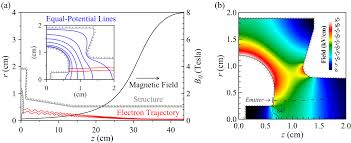
Like sometimes i see a photo of an object in a magnetic field. The object is represented with colors like red and arange and blue, etc...How do they capture this magnetic-image ?...A computer must be hooked up to the expirement some how i imagine
.
If someone can lead me to some books on the subject that would be nice.
Or if there is the name of a university
246780
course or something like that.
.
Thanks
 
Engineering news on Phys.org
Welcome to PF.

A disturbance in the field near the wire would induce a disturbance in the circuit. That would be the easiest thing to detect.

When you said constant current, that ignores the fact that it takes a circuit to create that current.
 
It's pretty hard to measure a field everywhere. You can measure it a specific points. There are a bunch of different ways. For a DC field you can search on magnetometers or hall-effect sensors to start with. On the computation side, you could look at tomography (that is the "T" in CAT scan). What you are asking about isn't really a DIY thing, IMO.
Of course, I don't know what pictures you are referring to, but I would bet they are computer models of the field (maybe supported by some measurements).
 
Ok, i see what you are saying.
But how do they analyse the field using computers.
I'm guessing that they must be able to create a model of the field "inside" the computer somehow...like how do they harness the information in the field...how do they get this information into the computer ?
 
Yeah DaveE...i guess I'm asking how do they create a "computer model of the field" ?
.
And ok...i'll have a look at this "tomography " and see what that's about. I already checked out magnetometers or hall-effect sensors . And yes, they seem to be used to measure the field locally. But would be nice to have the whole field. Can it be that they actually measure the field at many many points and create a model that way ?!...like creating a direction field in differential equations ?
.
Thanks
 
No_Money said:
Can it be that they actually measure the field at many many points and create a model that way
That's probably how I would try it. First you build a model based on the physics, then you fit it to the measured data. Like what the weather guys do with their models. However, this all depends on what you need. Most engineering applications know what to expect and only need one, or a few, data points. The models may be used in the design phase, but they aren't often used in real-time. That would be expensive and complicated. However, complex control systems will do exactly that. You could also search for "modern controls", with "observers" and "estimators" if you want to learn more about that.

Getting the data into the computer is just like other data acquisition tasks, like a weather station, for example. There are different ways of doing it, bluetooth, WiFi, TCPIP, etc. The programmer then needs to know what the data he receives means.
 

Similar threads

  • · Replies 14 ·
Replies
14
Views
5K
Replies
8
Views
2K
  • · Replies 14 ·
Replies
14
Views
6K
  • · Replies 4 ·
Replies
4
Views
4K
Replies
3
Views
745
  • · Replies 20 ·
Replies
20
Views
5K
  • · Replies 4 ·
Replies
4
Views
2K
  • · Replies 3 ·
Replies
3
Views
1K
  • · Replies 25 ·
Replies
25
Views
4K
  • · Replies 5 ·
Replies
5
Views
2K