Kinematic car overtake problem: Don’t know what to do...

Click For Summary
SUMMARY

The forum discussion centers on solving a kinematic problem involving two cars, A and B, where car A accelerates while car B maintains a constant speed. The initial speeds are 54 km/h for car A and 72 km/h for car B, with car A accelerating at 2.0 m/s². Key calculations include the distances traveled by both cars over 10 seconds, resulting in car A covering 150 m and car B covering 200 m, creating a 50 m gap. The discussion emphasizes the need to apply the SUVAT equations for constant acceleration to determine the position of car A over time and suggests using velocity-time graphs to visualize the problem.

PREREQUISITES
  • Understanding of basic kinematics and motion equations (SUVAT equations).
  • Familiarity with velocity-time graphs and their interpretation.
  • Knowledge of acceleration and its impact on speed over time.
  • Ability to perform unit conversions (e.g., km/h to m/s).
NEXT STEPS
  • Study the SUVAT equations in detail to apply them effectively in kinematic problems.
  • Learn how to construct and interpret velocity-time graphs for objects in motion.
  • Practice solving simpler kinematic problems to build confidence before tackling more complex scenarios.
  • Explore resources such as YouTube videos that explain kinematic concepts and graphing techniques.
USEFUL FOR

Students in introductory physics courses, educators seeking to clarify kinematic concepts, and anyone interested in understanding motion dynamics and graphing techniques.

Syw
Messages
8
Reaction score
0
Homework Statement
Car A traveling at a speed of 54 km/h is overtaken by car B traveling at a speed of 72 km/h. after 10 s car A begins to accelerate with an acceleration of 2.0 m/s^2 and continues until he overtakes B. How long has passed between these overtakes?
Relevant Equations
..
This is what I've done so far:

54 km/h = m/s
72 km/h = m/s
a = 2,0 m/s^2

A = d_1 = v * t = 15 * 10 = 150 m
B = d_2 = v * t = 20 * 10 = 200 m
d_3 = d_1 - d_2 = 200 - 150 = 50 m

Don‘t know how to continue to solve the problem.
 
Physics news on Phys.org
What would be the equation for the position of car A as it is accelerating?
 
Syw said:
d_3 = d_1 - d_2 = 200 - 150 = 50 m

Don‘t know how to continue to solve the problem.
How would you define this d3 you have calculated? What does it represent?
 
haruspex said:
How would you define this d3 you have calculated? What does it represent?
After 10 seconds, car A has driven 150 m and car B 200 m. The difference is 50 meters.
 
Syw said:
After 10 seconds, car A has driven 150 m and car B 200 m. The difference is 50 meters.
ok, so what happens next? Can you write equations for where each car is time t later?
 
haruspex said:
ok, so what happens next? Can you write equations for where each car is time t later?
This is why I’m here. I don’t know how to solve the problem and need help. Been struggling with this problem for a while now. Been googling, watching YouTube videos trying to figure it stuff out. Unfortunately, my teacher is basically not present to help and is bad at explaining. My course book is even worse. I feel like I don’t understand what I’m doing, which I desperately want to. I want someone to explain it to me like I’m a dummie basically.
 
Syw said:
This is why I’m here. I don’t know how to solve the problem and need help. Been struggling with this problem for a while now. Been googling, watching YouTube videos trying to figure it stuff out. Unfortunately, my teacher is basically not present to help and is bad at explaining. My course book is even worse. I feel like I don’t understand what I’m doing, which I desperately want to. I want someone to explain it to me like I’m a dummie basically.
Are you familiar with the standard equations for constant acceleration, known as the SUVAT equations?
https://en.wikipedia.org/wiki/Equations_of_motion#Uniform_acceleration
 
  • Like
Likes   Reactions: MatinSAR
Hmm, I can’t find anything about that in my course book, so no.
 
Syw said:
Hmm, I can’t find anything about that in my course book, so no.
Well, those equations are what you need here.
Use the ones after "In elementary physics the same formulae are frequently written in different notation as:"
 
  • Like
Likes   Reactions: Syw
  • #10
Syw said:
Hmm, I can’t find anything about that in my course book, so no.
This is not a simple problem where you can just plug some numbers into a single equation. It requires you to think about the physical problem and formulation the equations (plural) that are needed.

Have you been successfully solving simpler kinematic problems? If not, this one is probably too difficult at this stage.

If you want to keep going with the problem, then I suggest you do a velocity against time graph for each car. Did you know that displacement is the area under a velocity/time graph? That might give you an insight into what equations to use and why.
 
  • #11
Car B isn't accelerating. So how long will it take car A to reach the same speed as car B, and how far ahead will car B at that point?
If car A keeps accelerating, how long will it take to catch up on car B?

In most problems, if the first half is solved correctly you can get close to half the total marks available, so giving up totally gets 0, but starting correctly is will still be worthwhile.
 
  • #12
DrJohn said:
Car B isn't accelerating. So how long will it take car A to reach the same speed as car B, and how far ahead will car B at that point?
If car A keeps accelerating, how long will it take to catch up on car B?

In most problems, if the first half is solved correctly you can get close to half the total marks available, so giving up totally gets 0, but starting correctly is will still be worthwhile.
PeroK said:
This is not a simple problem where you can just plug some numbers into a single equation. It requires you to think about the physical problem and formulation the equations (plural) that are needed.

Have you been successfully solving simpler kinematic problems? If not, this one is probably too difficult at this stage.

If you want to keep going with the problem, then I suggest you do a velocity against time graph for each car. Did you know that displacement is the area under a velocity/time graph? That might give you an insight into what equations to use and why.
Hmm, that’s weird in that case, cause I’m in a beginner physics course and it just started, so I haven’t learned a lot yet. It’s strange if I a got a homework this hard like you said then. I’ve just been taught some basic formulas, so felt so lost when this problem came up. I do want to understand it though. Do you have a YouTube video you could recommend that explains this well?
 
  • #13
Syw said:
Hmm, that’s weird in that case, cause I’m in a beginner physics course and it just started, so I haven’t learned a lot yet. It’s strange if I a got a homework this hard like you said then. I’ve just been taught some basic formulas, so felt so lost when this problem came up. I do want to understand it though. Do you have a YouTube video you could recommend that explains this well?
You sometimes get hard questions first up. Can you draw the two graphs of velocity against time?
 
  • Like
Likes   Reactions: MatinSAR
  • #14
Syw said:
Hmm, that’s weird in that case, cause I’m in a beginner physics course and it just started, so I haven’t learned a lot yet. It’s strange if I a got a homework this hard like you said then. I’ve just been taught some basic formulas, so felt so lost when this problem came up. I do want to understand it though. Do you have a YouTube video you could recommend that explains this well?
It is strange that you did not find equations for constant acceleration in your book! Can you say the book's name?
If you are an university student you can use "Fundamentals of Physics(Textbook by David Halliday)". You need to study 2nd chapter of the book called motion along a straight line befor answering this question.

You cannot answer the question without knowing related equations.
 
  • #15
The basic equations for 1-D kinematics contain an equation that relates position and time when the acceleration is constant. Can you identify this equation? If so, another approach is to make a table of times, positions and velocities to guide your thinking. A spreadsheet works wonders in this regard and can also be used to draw the graphs mentioned by @PeroK in post #13.
 
  • Like
Likes   Reactions: Syw and MatinSAR
  • #16
PeroK said:
This is not a simple problem where you can just plug some numbers into a single equation. It requires you to think about the physical problem and formulation the equations (plural) that are needed.

Have you been successfully solving simpler kinematic problems? If not, this one is probably too difficult at this stage.

If you want to keep going with the problem, then I suggest you do a velocity against time graph for each car. Did you know that displacement is the area under a velocity/time graph? That might give you an insight into what equations to use and why.
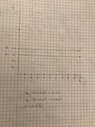
I did a v-t-graph. But I get lost on what to do when it’s starts to accelerate at 10 seconds. This is what I’ve done so far. Any suggestions on how I can move forward?
 

Attachments

  • IMG_8196.jpeg
    IMG_8196.jpeg
    46.4 KB · Views: 105
  • #17
At t = 10 s car A acquires an acceleration of 2 ##\frac{\text{m/s}}{\text{s}}.## This means that every second that goes by, 2 m/s are added to the speed that is already there. Some folks call acceleration "the speed of the speed" because it tells us how fast the speed is changing just like speed tells us how fast the position is changing.

Does this help with what to do next?
 
  • Like
Likes   Reactions: MatinSAR
  • #18
kuruman said:
At t = 10 s car A acquires an acceleration of 2 ##\frac{\text{m/s}}{\text{s}}.## This means that every second that goes by, 2 m/s are added to the speed that is already there. Some folks call acceleration "the speed of the speed" because it tells us how fast the speed is changing just like speed tells us how fast the position is changing.

Does this help with what to do next?
Yes, makes sense. It’s just that I don’t know how to tilt the line to get the proper answer in my graph. The reason I’m doing it is because I think I’ll understand it better once I can see it visually.
 
  • #19
Like I said, make a table. At t = 11 s the speed has increased to what value? Draw a dot at that value on the graph. At t = 12 s the speed has increased by 2 m/s from the value it had at 11 s. Put another dot on your graph at that new value. Keep going this way. After putting down a few values in your table and your graph, use a ruler to connect the dots.
 
  • Like
Likes   Reactions: Syw
  • #20
kuruman said:
Like I said, make a table. At t = 11 s the speed has increased to what value? Draw a dot at that value on the graph. At t = 12 s the speed has increased by 2 m/s from the value it had at 11 s. Put another dot on your graph at that new value. Keep going this way. After putting down a few values in your table and your graph, use a ruler to connect the dots.
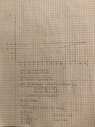
Okay, so this is what I did and I got the answer 15 s. I’m not fully sure if the answer is right so do you know if I’ve done everything correctly?
 

Attachments

  • IMG_8200.jpeg
    IMG_8200.jpeg
    51.3 KB · Views: 123
  • #21
Syw said:
Okay, so this is what I did and I got the answer 15 s. I’m not fully sure if the answer is right so do you know if I’ve done everything correctly?
You did a velocity vs time graph and found the car that accelerates has the same speed as the other car after 15 s. Does that mean they are at the same place?
 
  • #22
One important piece of information is that when you draw a v vs. t graph, the area under the curve is the displacement of the moving object. Look at your graph.

From t = 0 to t = 10 s
The area under the A curve is that of a rectangle of height 15 m/s and width 10 s.
The displacement of car A from 0 to 10 s is (15 m/s)×(10 s) = 150 m. You called that d_1 in post #1.
The area under the B curve is that of a rectangle of height 20 m/s and width 10 s.
The displacement of car B from 0 to 10 s is (20 m/s)×(10 s) = 200 m. You called that d_2 in post #1.
The difference in distance between the two cars is the difference of the areas between the two rectangles and you called that d_3. So far so good.

For car A to catch up with car B the areas under each curve must be equal. Now look at the graph from 10 to 15 seconds. The additional displacement of car B is a rectangle while the additional displacement of car A is a triangle.
What fraction of B's displacement is A's displacement?
Can you extrapolate at what time t_f the area under the triangle from 10 s to t_f will be equal to the area under the rectangle over the same time interval?
 
  • Like
Likes   Reactions: MatinSAR
  • #23
Syw said:
I did a v-t-graph. But I get lost on what to do when it’s starts to accelerate at 10 seconds. This is what I’ve done so far. Any suggestions on how I can move forward?
Hi @Syw. The graph in your Post #20 attachment (here) shows car A accelerating from
15m/s at t=10s
to
20m/s at t=15s.

This is an acceleration of
##\frac {\Delta v}{\Delta t} = \frac {20m/s – 15m/s}{20s - 15s} = \frac {5m/s}{5s} = 1 m/s^2##

But A’s acceleration is supposed to be ##2 m/s^2##. So the graph is incorrect.
 
  • Like
Likes   Reactions: MatinSAR

Similar threads

  • · Replies 20 ·
Replies
20
Views
2K
  • · Replies 6 ·
Replies
6
Views
3K
  • · Replies 12 ·
Replies
12
Views
2K
  • · Replies 6 ·
Replies
6
Views
2K
  • · Replies 2 ·
Replies
2
Views
7K
Replies
2
Views
1K
  • · Replies 7 ·
Replies
7
Views
2K
Replies
7
Views
2K
  • · Replies 5 ·
Replies
5
Views
8K
  • · Replies 6 ·
Replies
6
Views
2K