Location of a load on a platform

  • Thread starter Thread starter JosephNY
  • Start date Start date
  • Tags Tags
    Load Platform
Click For Summary

Discussion Overview

The discussion revolves around the physics of load placement on a storage platform constructed with a 2x6 header and vertical supports. Participants explore the implications of load distribution on structural integrity, particularly in relation to the materials used and their respective strengths.

Discussion Character

  • Technical explanation
  • Debate/contested

Main Points Raised

  • One participant suggests that the interior wall's 2x6 supports have a higher capacity for weight due to their compression strength, while the header's capacity is limited by the shear strength of the nails used.
  • Another participant advises ignoring friction in the analysis and emphasizes that the load capacity is primarily determined by the shear strength of the nails, recommending bolts instead.
  • A participant raises a concern about the potential danger of racking in the structure.
  • A later reply highlights the limitations of providing structural analysis advice, stressing the importance of consulting a certified local expert for safety and legal considerations.

Areas of Agreement / Disagreement

Participants express differing views on the structural analysis of the platform, particularly regarding the adequacy of the materials and the implications of load placement. The discussion remains unresolved, with no consensus on the best approach or solution.

Contextual Notes

Participants acknowledge the lack of complete information necessary for a thorough structural analysis, including variables and data that would inform a responsible judgment.

JosephNY
Messages
6
Reaction score
1
Hi,

I'm hoping to better understand the physics involved in building a platform for storage.

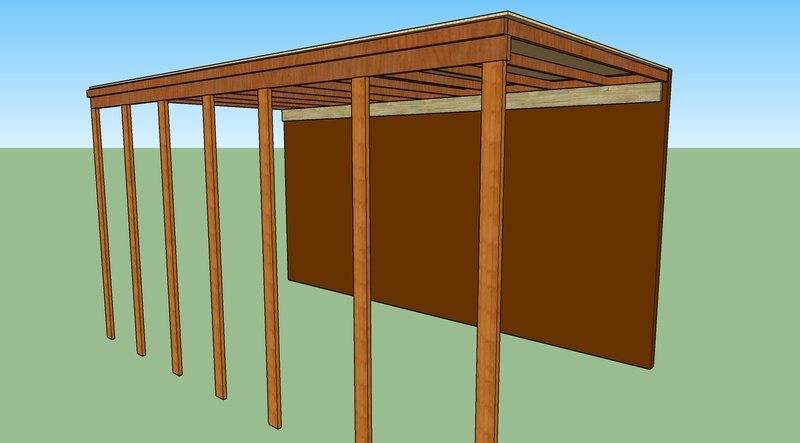
I have an exterior wall with a 2x6 header nailed horizontally into it.

10' in from that wall, I have 2x6's vertically from concrete floor up.

On the top of the header and vertical 2x6's is a 2x4 rectangular frame (10' x 20').

I believe that the interior wall of 2x6 has a far (far) greater capacity to hold weight because compression strength of 2x6 is pretty darn high (that's not a technical term).

The header, on the other hard, is nailed. This means (I believe) that the holding strength is a function of the sheer strentgth of the nails and the friction between the header and the wall.

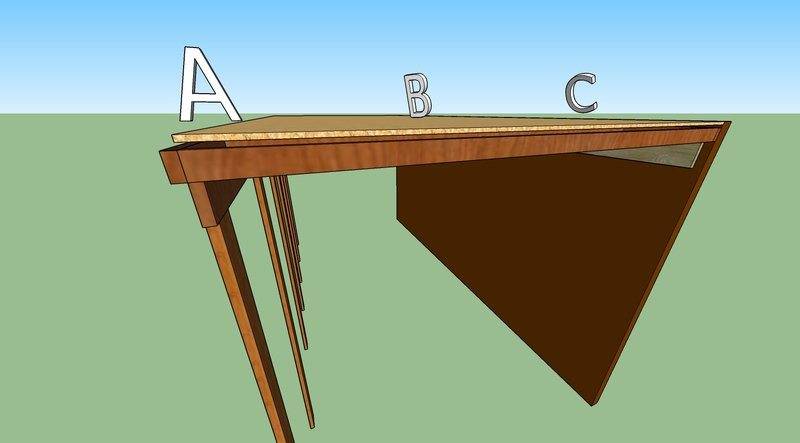
My question is: Does the placement of the load on the 3/4" plywood sitting on the 2x4 frame change the max weight capacity of that load?

Put another way (because I don't speak engineering or physics well), if I put the entire load on the inside edge of the platform (directly above the 2x6 supports) do I get a greater load capacity than putting the load directly above the header nailed to the wall?

Here's some pics to clarify.

Thank you!

Joseph
platform A B C.jpg
platform corner view.jpg
 

Attachments

  • platform A B C.jpg
    platform A B C.jpg
    22.4 KB · Views: 520
  • platform corner view.jpg
    platform corner view.jpg
    29.5 KB · Views: 501
Engineering news on Phys.org
You should probably ignore friction and say it's just limited by the shear strength of the nails. Thats because ails can't be relied on to provide a clamping force. Should use bolts for this instead of nails.

What size are the joists that run between the two walls? Looks like 2*4 from the description. That sounds too small to be "code" for a floor where I live.
 
PS is there a danger of racking?
 
I'm sorry. I myself would love to offer my advice. But you are asking about structural analysis for a building. Even storage buildings can injure people if they collapse. Below is our standard answer to all such topics.

We do not regulate who will answer, esp. not their expertise.
We cannot give statements with a potentially legal impact.
We are not certified.
We cannot know the entire situation, regardless how detailed your description might be. I.e. we have neither all variables nor enough statistical nor mechanical data, which a responsible judgement would require.
Even an informal answer cannot be given, as we do not have control over its usage.
So as in all of these cases, we strongly recommend to consult a local expert, who can inspect what you are talking about, has sufficient experience and data for comparison, plus most important: is certified, so that his expertise will be of legal value.

You already have some answers. Regrettably, thread locked.
 
  • Like
Likes   Reactions: berkeman

Similar threads

  • · Replies 8 ·
Replies
8
Views
4K
Replies
1
Views
22K
  • · Replies 5 ·
Replies
5
Views
3K
  • · Replies 4 ·
Replies
4
Views
10K
  • · Replies 9 ·
Replies
9
Views
2K
  • · Replies 15 ·
Replies
15
Views
48K
  • · Replies 6 ·
Replies
6
Views
12K
  • · Replies 17 ·
Replies
17
Views
5K
  • · Replies 1 ·
Replies
1
Views
8K
Replies
4
Views
31K