Matrix of rotated elements (stiffness matrix)

  • Thread starter Thread starter Amaelle
  • Start date Start date
  • Tags Tags
    Elements Matrix
Click For Summary
SUMMARY

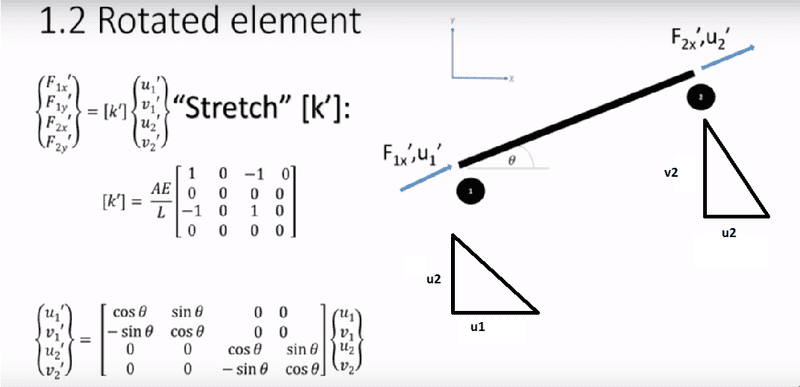
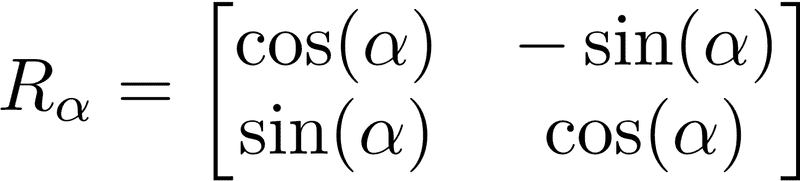
The discussion centers on the derivation of a stiffness matrix during a transformation from the basis (u1, v1, u2, v2) to the rotated basis (u'1, v'1, u'2, v'2) using a rotation matrix. The participants clarify that the confusion regarding the signs arises from the properties of orthogonal matrices and the effect of transposition, which can invert signs in the matrix. Understanding the relationship between the original matrix and its inverse is crucial for resolving these sign discrepancies.

PREREQUISITES
  • Understanding of rotation matrices in linear algebra
  • Familiarity with orthogonal matrices and their properties
  • Knowledge of matrix transposition and its effects
  • Basic concepts of stiffness matrices in structural analysis
NEXT STEPS
  • Study the properties of orthogonal matrices in detail
  • Learn about the derivation and application of stiffness matrices in finite element analysis
  • Explore the concept of matrix transposition and its implications in transformations
  • Investigate the role of inverse matrices in linear transformations
USEFUL FOR

Engineers, mathematicians, and students involved in structural analysis or computational mechanics who seek to deepen their understanding of matrix transformations and stiffness matrices.

Amaelle
Messages
309
Reaction score
54
Good day All
I have a doubt regarding the derivation of the following matrix
rotated matrix.png

according to my basic understanding we want to go from the basis u1 v1 u2 v2 to the basis u'1 v'1 u'2 v'2, and for doing so we use the rotation matrix

the rotation matrix is the following and the angle theta is positive
rotation matrix.png


but i still can 't understand why the signs are inverted?
any help would be highly appreciated
Many thanks in advance!
 

Attachments

  • rotated matrix.png
    rotated matrix.png
    24.9 KB · Views: 1,545
  • rotation matrix.png
    rotation matrix.png
    8 KB · Views: 833
Physics news on Phys.org
I'm not sure what the "stretch k" and some other symbols on here are referring to, but you may consider what happens if you multiply each side by the transpose of your matrix. Transposition 'flips' the negative signs that seem out of place here. The matrix is orthogonal, so you may just be missing which matrix is the "original one" and which one is the inverse.
 
  • Like
Likes   Reactions: Amaelle
StoneTemplePython said:
I'm not sure what the "stretch k" and some other symbols on here are referring to, but you may consider what happens if you multiply each side by the transpose of your matrix. Transposition 'flips' the negative signs that seem out of place here. The matrix is orthogonal, so you may just be missing which matrix is the "original one" and which one is the inverse.
Thanks a lot!
 

Similar threads

  • · Replies 9 ·
Replies
9
Views
4K
  • · Replies 18 ·
Replies
18
Views
4K
Replies
3
Views
4K
  • · Replies 3 ·
Replies
3
Views
1K
  • · Replies 3 ·
Replies
3
Views
3K
  • · Replies 7 ·
Replies
7
Views
3K
  • · Replies 12 ·
Replies
12
Views
2K
  • · Replies 1 ·
Replies
1
Views
4K
  • · Replies 2 ·
Replies
2
Views
2K
Replies
5
Views
8K