Maximum Radius for Wall of Death
- Level: High School
- Thread starter mgkii
- Start date
Join the discussion
Registration is free. Start your own thread to ask a follow-up.
38 replies · 9K views
Physics news on Phys.org
Jimbo54321
- 7
- 0
Quote: 187.5 mph squared over 3 equals 5468.75
I think your math is wrong, please feel free to correct me if my numbers don't add up.

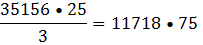 Quote: 187.5 mph squared equals 35156.25 divided by your 231 meters ! will be 35156.25 over 25 x 231 this equals 6.087 G not 3 g !
who taught you maths ?
mfb stated the radius was 231m
Radius is half the diameter, is it not?

If 300 kph = 186.411 mph then the G forces would be;

Which brings us back to what mfb started with, 3 G's or be it a couple of decimal places out. Hehe,
Hi mfb, can you expand on your formula please, I'm trying to learn this for fun and I'm not particularly good at math.
I can see part of your workings out with regards to velocity which is measured in m/s:


Using your formula I found:

But when I bash these numbers into the abacus, I get:

 What have I done wrong?
I think your math is wrong, please feel free to correct me if my numbers don't add up.
who taught you maths ?
mfb stated the radius was 231m
Radius is half the diameter, is it not?
If 300 kph = 186.411 mph then the G forces would be;
Which brings us back to what mfb started with, 3 G's or be it a couple of decimal places out. Hehe,
Hi mfb, can you expand on your formula please, I'm trying to learn this for fun and I'm not particularly good at math.
I can see part of your workings out with regards to velocity which is measured in m/s:
Using your formula I found:
But when I bash these numbers into the abacus, I get:
Jimbo54321
- 7
- 0
Hi Doc, I thought that was the case but when I used (rightly or wrongly) 83•33332 / (3 x 9•81) I got 235•964m
Which isn't what mfb got (231m), so I assumed I had done it wrong.
Which isn't what mfb got (231m), so I assumed I had done it wrong.
Mentor
- 37,555
- 14,432
I used ##g \approx 10 ms^{-2}##. The difference is just 2 %.
- 22,832
- 14,881
Just as a side note, ##a = v^2/r## is just the centripetal acceleration. If you want to find the total acceleration experienced by the rider, use Pythagoras' theorem to find that
$$
a_{\rm tot}^2 = g^2 + \frac{v^4}{r^2}.
$$
For a total acceleration of ##Ng## this would give a velocity
$$
v = \sqrt[4]{N^2 - 1}\, \sqrt{gr},
$$
indicating that for a fixed target acceleration, ##v## needs to grow as ##\sqrt{r}## (this was true already for the centripetal acceleration and follows directly from basic dimensional analysis). The angle is always the same for a given acceleration, ##\cos(\theta) = 1/N##, where ##\theta## is the angle of the rider from the vertical position.
$$
a_{\rm tot}^2 = g^2 + \frac{v^4}{r^2}.
$$
For a total acceleration of ##Ng## this would give a velocity
$$
v = \sqrt[4]{N^2 - 1}\, \sqrt{gr},
$$
indicating that for a fixed target acceleration, ##v## needs to grow as ##\sqrt{r}## (this was true already for the centripetal acceleration and follows directly from basic dimensional analysis). The angle is always the same for a given acceleration, ##\cos(\theta) = 1/N##, where ##\theta## is the angle of the rider from the vertical position.
Last edited:
Jimbo54321
- 7
- 0
I am the first to admit that I am not good at mathematics and have struggled all my life, but I do try, and I will persevere in improving my understanding.
I can see from other threads that this forum is used by Ladies and Gentleman that are so far above me in the league tables, that when it comes to understanding mathematics, physics and science, you guys leave me feeling like a Bum at a banquet. LOL.
Anyway, the only reason I questioned my math was to answer a nagging thought of how many G's Patch would be pulling at 48mph (as stated in the program), but when I worked out that there is no way he could do 48mph, I had to question (1) my math, or (2) the programs statement.
I'd like to thank you guys for helping me, mfb, Doc Al and Orodruin you three have given me a lot of self homework, (trying to decipher the formulas you used) PMSL.
But I will strive to understand this math. Oh the late nights.
Thanks again.
I can see from other threads that this forum is used by Ladies and Gentleman that are so far above me in the league tables, that when it comes to understanding mathematics, physics and science, you guys leave me feeling like a Bum at a banquet. LOL.
Anyway, the only reason I questioned my math was to answer a nagging thought of how many G's Patch would be pulling at 48mph (as stated in the program), but when I worked out that there is no way he could do 48mph, I had to question (1) my math, or (2) the programs statement.
I'd like to thank you guys for helping me, mfb, Doc Al and Orodruin you three have given me a lot of self homework, (trying to decipher the formulas you used) PMSL.
But I will strive to understand this math. Oh the late nights.
Thanks again.
Last edited by a moderator:
- 22,832
- 14,881
What is to be said on the topic has been said and several posts have already been deleted. It is time to close this thread.
Similar threads
- ehabmozart
- · Replies 3 ·
- Introductory Physics Homework Help
- Replies
- 3
- jklops686
- · Replies 4 ·
- Introductory Physics Homework Help
- Replies
- 4
- ab3477
- · Replies 6 ·
- Advanced Physics Homework Help
- Replies
- 6
- BeatTheRuckus
- · Replies 3 ·
- Introductory Physics Homework Help
- Replies
- 3
- blackbird2552
- · Replies 4 ·
- Introductory Physics Homework Help
- Replies
- 4
- am08
- · Replies 1 ·
- Introductory Physics Homework Help
- Replies
- 1
- bulldog23
- · Replies 2 ·
- Introductory Physics Homework Help
- Replies
- 2
- saltrock
- · Replies 5 ·
- Introductory Physics Homework Help
- Replies
- 5
- jwhitley
- · Replies 3 ·
- Introductory Physics Homework Help
- Replies
- 3
- Astronuc
- · Replies 8 ·
- Art, History, and Linguistics
- Replies
- 8