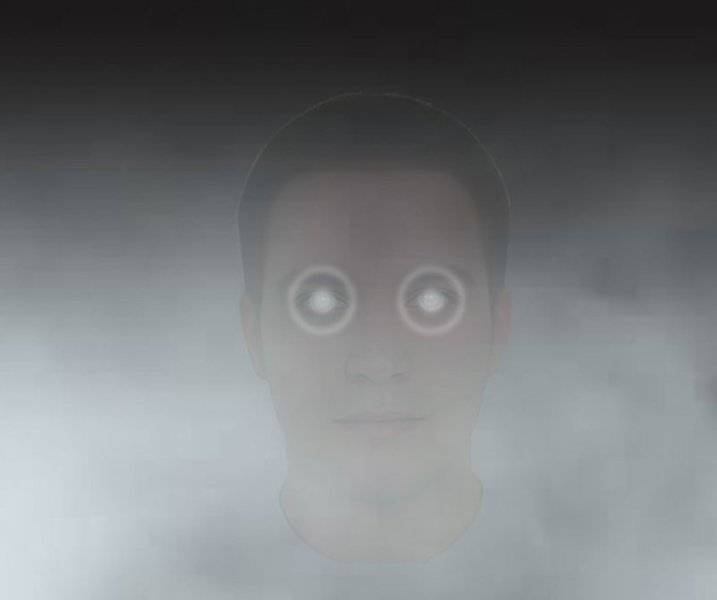
Mirror phenomenon — Concentric halos around eyes in a foggy bathroom

Click For Summary
SUMMARY

The forum discussion centers on the optical phenomenon of concentric halos observed around the eyes in a foggy bathroom mirror. Participants suggest that this effect may be related to spherical aberration, a common issue in optical instruments, where light is defocused due to the shape of the mirror and the presence of water droplets. The phenomenon is further likened to circular rainbows and halos seen around lights in foggy conditions. Several users share personal experiences and propose that the effect is enhanced by the interaction of light with the condensation on the mirror and the structure of the human eye.

PREREQUISITES
  • Understanding of spherical aberration in optics
  • Familiarity with light refraction and scattering
  • Basic knowledge of human eye anatomy and optics
  • Experience with photographic techniques and limitations
NEXT STEPS
  • Research "spherical aberration in optical systems" to understand its implications
  • Explore "light scattering in fog and water droplets" for insights into optical phenomena
  • Investigate "human eye anatomy and light perception" to grasp how the eye interacts with light
  • Learn about "photographic techniques for capturing optical effects" to document similar phenomena
USEFUL FOR

This discussion is beneficial for optical physicists, photographers, and anyone interested in the interplay between light and human perception, particularly in relation to optical phenomena in everyday environments.
aliasz
Messages
5
Reaction score
1
Follow up a former thread, about concentric halo`s around the eyes, in a foggy bathroom mirror.
I made an example picture of what was observed.
But i don't know what causes the phenomena
visual.jpg
 
  • Like
Likes   Reactions: Daz156
Science news on Phys.org
aliasz said:
Follow up a former thread, about concentric halo`s around the eyes, in a foggy bathroom mirror.
I made an example picture of what was observed.
But i don't know what causes the phenomena
View attachment 114858
Welcome to the PF.

So you can use Photoshop. Can you use Google Images or some other search tool to find real images of what you are asking about?
 
hi, no i am sorry i couldn't find any real images on this subject, so for now i made an observation and a mockup in photoshop.
maybe i can take a photo of it when it happens. but i don't think my camera on my phone will capture this effect/phenomena on photo
due to poor lighting conditions.
 
aliasz said:
Follow up a former thread, about concentric halo`s around the eyes, in a foggy bathroom mirror.
I made an example picture of what was observed.
But i don't know what causes the phenomena
View attachment 114858
I joined this forum today specifically because I had this happen to me this morning. i had dried off and turned round to look into mirror only to be greeted by the above- i likened it to two empty glasses that had been filled with milk. My gf thought I was going nuts, this eve she text me her google search and that lead me hear...
 
PS I tried taking pictures, but I assume that as the camera comes from a different angle it does not catch it.

it is clearly the mirror and condensation combined, amplifying the whites around the eyes to give the effect.
 
Looks like positive spherical aberration (bottom row of table), the column to the far left shows defocusing toward the inside, and that looks like the bright white rings round my eyes I witnessed. I note it was more pronounced the closer I got to the mirror, looking like a set of lit up bright white “John Lennon” glasses 😆

thank you for the link, seems to be the answer.
 
  • #10
Yeah, this optical phenomena can be a bane for amateur astronomers who try to get the most out of their reflector telescopes. It occurs in all sorts of other optical instruments too.
 
  • #11
I'm a little confused. What specifically about the foggy mirror would result in spherical aberration? SA is about focus, right? I see it looks the same, but is it the same phenomenon?

My first thought was that it was more akin to (though not the same as) circular rainbows:
1574365237872.png

or the halo around street lights in rain/fog/snow:
1574365494719.png


These phenomena are more about reflections from a halo of water around a central point.
 
  • Like
Likes   Reactions: hutchphd and Andy Resnick
  • #13
Isn't it simply the Fourier transform of the distribution of nano-droplets induced by the fog? If size distribution of droplets is quite uniform. Main weakness of this idea is: the scattering to far field has to be with a infinite focus point. Sounds contradictory.

Open to comments! :)


Thibault
 
  • Like
Likes   Reactions: sophiecentaur
  • #14
aliasz said:
Follow up a former thread, about concentric halo`s around the eyes, in a foggy bathroom mirror.
I made an example picture of what was observed.
But i don't know what causes the phenomena
I can't see how people would think in terms of SA because why would that only be visible with a fogged mirror? Any scope with that level of aberration would go in the bin.
I think your sketch(?) is suspect if you can't produce the same effect with a camera. If there is not enough light then take a lamp into the bathroom or take a mirror outside and boil a kettle near it. You need to experiment a bit and try to reproduce a genuine picture. That would establish some credibility.
There are many different 'halo' effects when light passes through water droplets or ice crystals. This looks like a version of that effect. Spherical / Hemispherical water drops on the glass would give circular symmetry. Try cleaning off half the mirror and see what happens.
 
  • Like
Likes   Reactions: Gleb1964
  • #15
Cybertib said:
Main weakness of this idea is: the scattering to far field has to be with a infinite focus point.
That doesn't follow. You will get a diffraction pattern at all distances and actually the distance from mirror to eye is pretty much ∞ in comparison to drop size and wavelength.
 
  • #16
Here is some information that may shed light on the subject. It lies in the realm of anatomy. Have you ever witnessed the reflection from a cat's eye at night? It is due to the micro-spherical shape of each eye cell, as well as a macro-spherical shape of the inner eye-cavity. Light which enters the eye, scatters in a spherical pattern, towards the light source/observer because of both, the micro and macro structures of the eye. The former is like reflective beads on a projector screen or road paint. The second is like the secondary mirror on a reflector-type telescope. In a foggy room, this complex light-scattering effect would tend to produce a uniform glow emanating from the pupil, almost like a hologram of the inner eye, as opposed to a point-source. This hologram-like light pattern can illuminate the inner eye, and the area of fog around the pupil, from the perspective of the viewer or camera. In humans, this reflection is attenuated by retinal pigments. But if the incident light is strong enough, or the person has very fair complexion, eye-reflections can be bright enough to see, and bright enough to illuminate the area around the eye.
 
Last edited:
  • Like
Likes   Reactions: sophiecentaur
  • #17
Samimnot said:
Light which enters the eye, scatters in a spherical pattern, towards the light source/observer
At night, a bright, localised source will form a point image on the retina that is intense. In human eyes, this intense spot will be bright red (blood colour) and the eye lens will focus this image at 'infinity' in the direction of the original source (reciprocal optics). That accounts for RedEye from flash photographs when the flash gun is near the camera axis and can be reduced by having the flashgun off axis. (Bad shadows can result from this so you can't win)

Cats use the reflective layer behind the light sensitive cells to make the light pass back through them, which will double the received signal and both increase the light level back at the source and lose the red colour. I can't find a diagram of the details of the reflective layer but you are implying that, behind each cell there is a curved reflector which provides a bigger gathering area than the cell itself. That's smart! I guess it may affect the cell spacing and hence, the resolving power of a cat's eye. But, hell, they don't need to read an eye test chart to spot prey within catching distance.
 
  • Like
Likes   Reactions: Gleb1964 and Samimnot
  • #18
sophiecentaur said:
At night, a bright, localised source will form a point image on the retina that is intense. In human eyes, this intense spot will be bright red (blood colour) and the eye lens will focus this image at 'infinity' in the direction of the original source (reciprocal optics). That accounts for RedEye from flash photographs when the flash gun is near the camera axis and can be reduced by having the flashgun off axis. (Bad shadows can result from this so you can't win)

Cats use the reflective layer behind the light sensitive cells to make the light pass back through them, which will double the received signal and both increase the light level back at the source and lose the red colour. I can't find a diagram of the details of the reflective layer but you are implying that, behind each cell there is a curved reflector which provides a bigger gathering area than the cell itself. That's smart! I guess it may affect the cell spacing and hence, the resolving power of a cat's eye. But, hell, they don't need to read an eye test chart to spot prey within catching distance.

I appreciate the compliment. Thanks for taking the time to explain that out in more detail, especially the on-off axis stuff!
 
  • #19
I see two vivid rainbow circles in the fog that encompass the pupil, or perhaps I should say visible spectrum of light begins pretty much right at the edge of the pupil. As the fog from the mirror clears, so to do the rainbows.
I assumed it was light source directly behind me refracting through the water droplets. But that still seemed a little off to me, seeing two of them perfectly around each eye instead of just one in the mirror in general. which is what got me googling my way here.
So its diffused light refracting on the inside of my eyes then?
 
  • #20
I love this phenomenon! You can vary the size of the "rings" by how close you move towards the mirror.
Unfortunately you won't be able to photograph this phenomenon unless you mount a camera on you retina ;)
(The camera lens will record its own "halo" depending on its distance to the mirror) I believe there is a retroreflective feedback loop from the tiny, spherical water droplets returning the light reflecting from your eyes, back to your eyes. (akin to the spherical glass beads in scotchbrite, which return the light back in the direction of its source) In my experience this effect is more pronounced when there is airborne fog present near the face of the mirror, in addition to slight condensation on the mirror itself.
 
  • #21
aliasz said:
and my question about the phenomena is the same as this user "see older thread" has questioned here, only i made an example of the effect
https://www.physicsforums.com/threads/mirror-phenomenon.432734/
I was on vacation in Arizona in June 2021. I experience the same phenomenon in the hotel bathroom. Every time that I would shower and look into the mirror my eyes would have perfectly round shapes illuminated. I just took a second trip back to Arizona and stayed at the same hotel, in a different room. Same phenomenon with every shower. 😳
I would love to understand what this is?
 
  • #22
Kweli said:
Same phenomenon with every shower
Perhaps the cleaning staff all use the same cleaning product and that gives consistent droplet sizes on the surface of the mirrors in that particular hotel. There are a lot of optical phenomena that work best with scattering particles of the same sizes. The scattering of sunlight by ice crystals can be very visible because of the consistent unit sizes that water molecules go together to form small ice crystals.
I know that's not a factor in rainbow formation but perhaps a machine could be made to select more uniform droplet sizes and shapes than rain or lawn sprinklers and the colour bands could be better defined. Some interesting effects might be seen with the width of bands from a laser pointer beam - narrower for more uniform droplets.
 
  • #23
rubix71 said:
Unfortunately you won't be able to photograph this phenomenon unless you mount a camera on you retina ;)
I can't see why that would be so. A camera of the same size as the eye (similar focal length) should do exactly the same thing. The only difference could be the reflectivity of the retina compared with that of the camera sensor. A phone camera has a very short f so that would probably fail. The problem would be that, once you have found a suitable mirror, you'd need a number of cameras to try to get the effect with.
Of course, we haven't yet managed to explain what's actually happening. Someone must have an answer. :smile:
 
  • #24
A retired science teacher, N James Bridge, wrote a great paper about this "novel interference effect in misty mirrors". A link to the paper is on his website. The first bright ring has an angular radius of 0.6°, so if you are at a distance of 1 meter in front of the mirror, the apparent diameter of the ring at the location of your mirror image is 4 cm. The ring appears when aiming the light of a hand torch at the foggy mirror, with an angle of incidence between 10° and 40°. It turns out that the angular radius of the ring is independent of the angle of incidence, so diffuse light from a white wall behind the observer will produce the same ring around the eye. The glass of the mirror must be very clean so that the condensation forms uniformly. The best droplet diameter on the mirror is 20 µm. The interference occurs between a light ray scattered by a droplet on the mirror, and another light ray scattered by the droplet's mirror image.

A real photo of the ring around the camera lens of a smartphone can be seen here.

On my mirror it is a weak effect. I need to move my head to distinguish the ring from other non-uniform light scattered by the foggy mirror. I guess it might be easier to record the ring on video than on a static photo.
 
Last edited:
  • Informative
  • Like
  • Love
Likes   Reactions: Delta2, sophiecentaur, DaveC426913 and 2 others
  • #25
Orthoceras said:
N James Bridge, wrote a great paper
Yes. Great bit of low tech research.
Orthoceras said:
The interference occurs between a light ray scattered by a droplet on the mirror, and another light ray scattered by the droplet's mirror image.
It strikes me as something along the lines of a 'Fresnel Lens' version of Newton's Rings where the image is formed by individual elements rather than a single dome of glass.
Orthoceras said:
The best droplet diameter on the mirror is 20 µm.
Could be to do with the consistency of drop size around that diameter rather than just the diameter.
 
  • #26
berkeman said:
Welcome to the PF.

So you can use Photoshop. Can you use Google Images or some other search tool to find real images of what you are asking about?
I found that I could get a similar effect when using my phones camera, it's just not as clear as it is to the direct eye
 
  • #27
VGswapped944 said:
I found that I could get a similar effect when using my phones camera, it's just not as clear as it is to the direct eye
 

Attachments

  • Screenshot_20211103-230208_Gallery.jpg
    Screenshot_20211103-230208_Gallery.jpg
    18.5 KB · Views: 360
  • Screenshot_20211103-230204_Gallery.jpg
    Screenshot_20211103-230204_Gallery.jpg
    17.5 KB · Views: 309
  • Screenshot_20211103-230159_Gallery.jpg
    Screenshot_20211103-230159_Gallery.jpg
    15.4 KB · Views: 234
  • Screenshot_20211103-230126_Gallery.jpg
    Screenshot_20211103-230126_Gallery.jpg
    16.6 KB · Views: 279
  • #28
I had a clip of me moving the camera around, but I couldn't post it. The further away the camera is from the mirror, the larger the ring is in comparison. The closer the camera is to the mirror, the smaller the ring appears in comparison.
 
  • #29
VGswapped944 said:
I found that I could get a similar effect when using my phones camera, it's just not as clear as it is to the direct eye
That was useful.
There are several effects on images that depend on the aperture of a camera lens. The pupils of the human eye and a modern cellphone camera have similar pupil sizes (2 - 8mm ish) so I'd expect a cellphone to give a similar effect where a DSLR wouldn't necessarily.
The pupil size depends on lighting conditions so you could test for the effect of bright vs dim conditions.
 
  • #30
I saw the phenomenon is discussed and explained in Jearl Walker’s The Flying Circus of Physics (the updated version of 2006):

6.110 rings around eyes in bathroom
After taking a hot shower and steaming up the bathroom mirror, turn off the lights, face the mirror ... Next, arrange for the misty mirror to be in front of you in a dim room with a brightly lit window at your back. Adjust your distance from the mirror until you see rings superimposed on your reflection in it. At the proper distance, I find that the images of my eyes are each replaced with an array of colored rings, looking like psychedelic graphics. What produces these rings? ... Link
 

Similar threads

  • · Replies 11 ·
Replies
11
Views
2K
  • · Replies 6 ·
Replies
6
Views
20K
  • · Replies 20 ·
Replies
20
Views
4K
  • · Replies 53 ·
2
Replies
53
Views
6K
Replies
3
Views
22K
  • · Replies 8 ·
Replies
8
Views
1K
  • · Replies 4 ·
Replies
4
Views
1K
  • · Replies 1 ·
Replies
1
Views
2K
  • · Replies 6 ·
Replies
6
Views
5K
  • · Replies 1 ·
Replies
1
Views
3K