Legolaz
- 32
- 3
Hello, given the figure above, how do I get the tangential and normal components of a vector in any plane by integration?
You don't, at least not by integration.Legolaz said: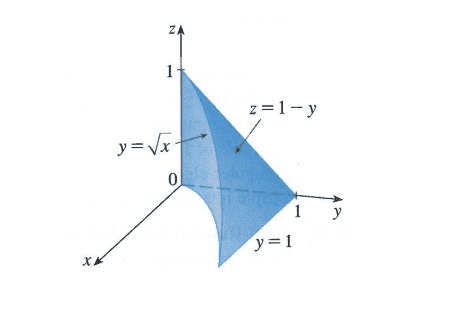
Hello, given the figure above, how do I get the tangential and normal components of a vector in any plane by integration?
SteamKing said:You don't, at least not by integration.
To find the normal vector to a surface, you need to use the gradient:
http://math.oregonstate.edu/home/programs/undergrad/CalculusQuestStudyGuides/vcalc/grad/grad.html
http://mathworld.wolfram.com/Gradient.html
Legolaz said:Thank you for the reply, Steamking.
Say, I got now the the normal equation for the surface, my tangential would be the 2nd derivative of the gradient function, right?
My next problem is, I want to sum up all Normal and Tangential vectors on the surface, so that I may find the net or resultant vector acting upon the centroid/center of mass of the surface, how to do it?
Legolaz said:]My next problem is, I want to sum up all Normal and Tangential vectors on the surface, so that I may find the net or resultant vector acting upon the centroid/center of mass of the surface, how to do it?
@Legolaz, the image you showed is just a 3-D figure defined by some surfaces. It makes no sense to sum vectors that are perpendicular to each of the bounding surfaces. For a resultant vector, you need to be working with forces, which are not mentioned so far in this thread.SteamKing said:Why? The resultant vector of what?
Yes Mark44, I understood and assume the ones I generally mentioned as "vectors" is referring to Force and Velocity gradients.Mark44 said:@Legolaz, the image you showed is just a 3-D figure defined by some surfaces. It makes no sense to sum vectors that are perpendicular to each of the bounding surfaces. For a resultant vector, you need to be working with forces, which are not mentioned so far in this thread.