SUMMARY
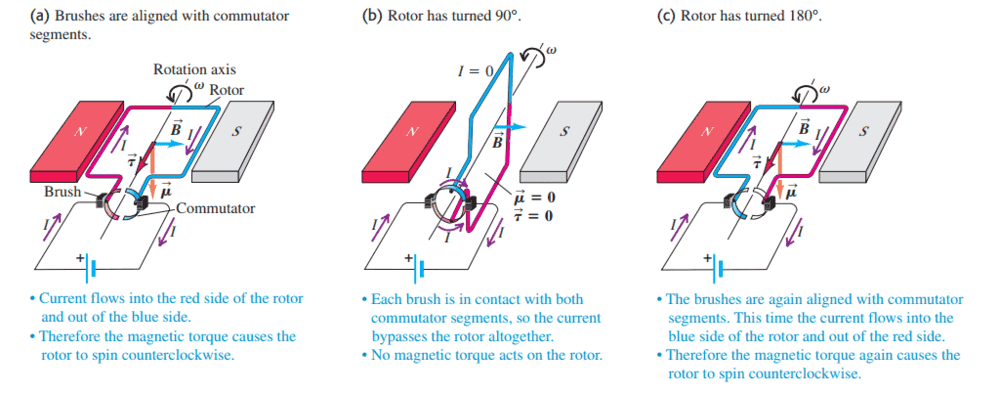
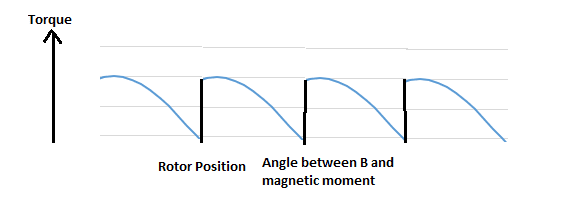
The discussion centers on the torque curve of a DC motor, emphasizing its symmetrical nature and the role of the commutator in reversing current flow at minimum torque. Participants confirm that the torque curve should be labeled with angle on the x-axis and zero on the y-axis. The conversation also explores the design of rotor coils at different angles to maintain constant torque and the implications of using multiple coils in armature slots. The analysis transitions into three-phase synchronous motors, highlighting the importance of understanding magnetic fields and coil configurations for effective motor operation.
PREREQUISITES
- Understanding of DC motor torque curves and their characteristics
- Familiarity with commutator function and current reversal in motors
- Knowledge of rotor coil configurations and their impact on torque
- Basic principles of three-phase synchronous motors and magnetic fields
NEXT STEPS
- Study the principles of DC motor torque curves and their graphical representation
- Learn about the design and function of commutators in electric motors
- Explore the configurations of rotor coils and their effects on torque consistency
- Investigate the operation of three-phase synchronous motors and their magnetic field dynamics
USEFUL FOR
Electrical engineers, motor design specialists, and students studying electromechanical systems will benefit from this discussion, particularly those interested in the performance and design of DC and synchronous motors.