Physics quest
- 88
- 5
Hello everyone, thank you for helping me in the other post, this one is different but includes pressure and how to calculate how much of it is present when an object is being "indented" or dug into.
I come from a forum that discusses fictional characters a lot and we find it highly enjoyable to try and apply our rules of physics to some of these fictions at least to a degree to try and calculate capabilities but since were not all as savvy as you ladies and gentlemen I wonder if you could help us with an issue, I hope it does not break any rules and may bring up some interesting physics and discussion.The issue concerns this fellow;
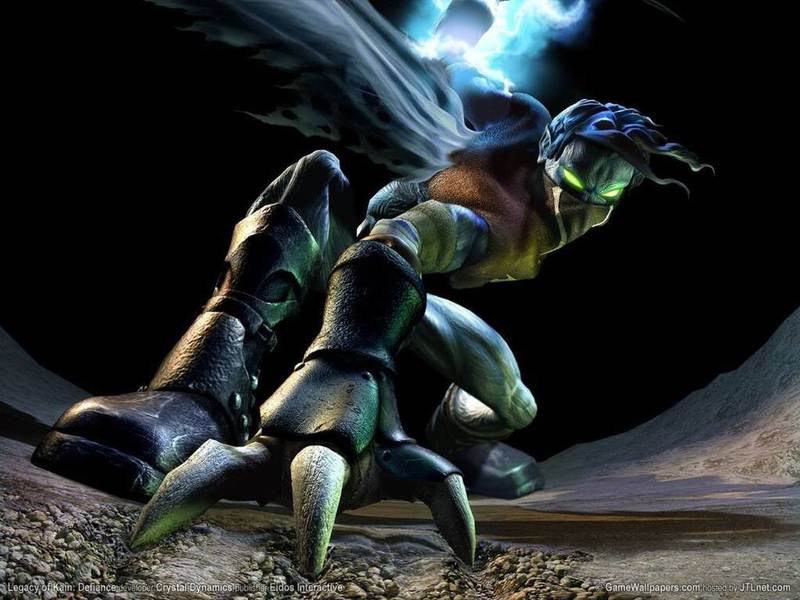 And his indenting/moving of the following block of stone;
19 minutes and 3 seconds into the video, he puts his claws into the block of stone which we often estimate for ease to be either limestone or granite (or black granite)Also metal, possibly iron;
36 minutes 55 seconds into the video. He does the same to what appears to be a lump of iron.
So I guess our problem is we are not sure how to find out how much pressure would be required to push his claws (using the image above you may be able to estimate their volume and/or surface area) into either granite or iron in such a way.
we have tried to find out ourselves with ideas such as the Brinell scale
http://en.wikipedia.org/wiki/Brinell_scale
And with help from other forums much like this one with masters of science/math we were granted calculations such as these;
Another;
This calculation estimated Raziels claws as having a Diameter of 20mmWould either of those calculations be correct, are there better methods of finding pressure for a cone like claw? Brinell seems to use a sphere, other scales like Rockwell;http://en.wikipedia.org/wiki/Rockwell_scaleBut I wonder at the end of the day is it only the diameter that's relevant? We sometimes feel like were either coming up with crazy high numbers or low numbers depending on how we do it.I would be very thankful to any professors or experts in physics who could shed some light on this situation, despite it being fictional it is sometimes fun to think of these worlds as real and then calculating what these superhumans can do pressure wise.
Further, I wonder if there are other chemical, physical or other processes in terms of heat, energy etc that the laymen such as myself would not have considered at these pressures? If a superhuman could do the things we see here in real life? Thank you again all!
I come from a forum that discusses fictional characters a lot and we find it highly enjoyable to try and apply our rules of physics to some of these fictions at least to a degree to try and calculate capabilities but since were not all as savvy as you ladies and gentlemen I wonder if you could help us with an issue, I hope it does not break any rules and may bring up some interesting physics and discussion.The issue concerns this fellow;
19 minutes and 3 seconds into the video, he puts his claws into the block of stone which we often estimate for ease to be either limestone or granite (or black granite)Also metal, possibly iron;
36 minutes 55 seconds into the video. He does the same to what appears to be a lump of iron.
So I guess our problem is we are not sure how to find out how much pressure would be required to push his claws (using the image above you may be able to estimate their volume and/or surface area) into either granite or iron in such a way.
we have tried to find out ourselves with ideas such as the Brinell scale
http://en.wikipedia.org/wiki/Brinell_scale
And with help from other forums much like this one with masters of science/math we were granted calculations such as these;
Mild steel has a hardess of about 120 and tool steel around 1500, so we can probably guess that granite might be a bit softer than tool steel - let's call it 1000. If we assume that the character's claws are each about 20 mm in diameter we get:
F = (1000 x pi x 20^2)/0.204 = 6.2 million Newtons, or about 1.4 million pounds.
F = (1000 x pi x 20^2)/0.204 = 6.2 million Newtons, or about 1.4 million pounds.
•I wish the Brinell scale had something for granite. Granite is harder than copper, however.
•There are different types of steel.
•Say we used 200 HB instead. That’s stainless steel.
•(200 * π * 20^2) / 0.204 = 1.2 million Newtons, or 137.9 tons
•There are different types of steel.
•Say we used 200 HB instead. That’s stainless steel.
•(200 * π * 20^2) / 0.204 = 1.2 million Newtons, or 137.9 tons
Further, I wonder if there are other chemical, physical or other processes in terms of heat, energy etc that the laymen such as myself would not have considered at these pressures? If a superhuman could do the things we see here in real life? Thank you again all!