Probability - Applications Normal Distribution - Analysis of Data

Click For Summary
SUMMARY

The discussion focuses on applying the Normal Distribution to allocate scores in a simplified SAI allocation system for a cohort of 15 students. The top student receives a score of 400, while the bottom receives 200, with scores distributed based on specific percentage breakdowns of overall positions (OPs). Key insights include dividing the score interval [200, 400] into subintervals that reflect the percentage groupings, allowing for a strategic approach to determine how many students can fit into each OP category based on the Normal Distribution. This method provides a framework for achieving optimal OP results for the cohort.

PREREQUISITES
  • Understanding of Normal Distribution and its application in statistics
  • Familiarity with SAI allocation systems and scoring mechanisms
  • Basic knowledge of statistical percentages and groupings
  • Ability to perform calculations involving mean and standard deviation
NEXT STEPS
  • Research the Normal Distribution Formula and its applications in educational assessments
  • Explore methods for calculating mean and standard deviation in small sample sizes
  • Learn about SAI allocation systems and their impact on student performance metrics
  • Investigate statistical sampling techniques to better understand cohort representation
USEFUL FOR

Students in high school mathematics, educators involved in assessment design, and anyone interested in statistical analysis of educational data.

oooobs
Messages
2
Reaction score
0
hey I am 16, grade 12 in australia, struggling on the hardest question on the current maths assignment.

i was wondering if someone could point me in the right direction?

i really have no idea where to start. and no one i seem to ask has any useful info.


Homework Statement


Background knowledge:

In a very simplified SAI allocation system, the top student is awarded 400, the bottom student is awarded 200 and the remainder of the cohort is given a whole number score beetween these values (reflecting their position in the cohort).

Across the state, OP's (overall positions) are awarded according to the following approximate percentage breakdown. the top 2% of students receive an OP of 1; the next 19% receive an OP 2-6; the next 73% receive an OP 7-21; the next 5% receive an OP 22-24; and the final 1% receive an OP 25.

QUESTION IS AS FOLLOWS:
Consider a cohort of 15 students. investigate possible SAI allocations with the gloal of achieving the best possible OP results for your cohort.


Homework Equations


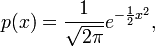
Normal Distribution Formula :

3d98340b74068e3913ad853595888232.png


Comments:

i don't expect anyone to give me the answer i just want to be pointed in the right direction

thanks in advance!

~Dru Arnfield

 
Physics news on Phys.org
What is SAI?

The most crucial information is the data for your cohort of 15 students. If this group is typical of all the students in the state, their scores will be distributed normally, with mean 300 and with a standard deviation comparable to that of the overall population of students. On the other hand, if the cohort consists of students who score higher on this test (and are therefore not reflective of the overall student population), they will get the higher OPs.

Since you are not given any information about the cohort of 15 students, I suppose that the best you can do is to assume that they are a small sample that reflects the attributes of the larger population.

For starters, what I would do is to divide up the interval [200, 400] into subintervals that correspond to the percentage groupings.
Top 2%: [396, 400]
Next 19%: [360, 395]
and so on for all 5 groups.

Of your 15 students, how many could go into each group? 2% of 15 = .3 student, so none, but 19% of 15 = 2.85 students, and that's close to 3, so conceivably 3 students could be in the top 20% without taking anything away from the other 80%.

Does that give you an idea of how you might tackle this problem? That's the best I can come up with given the limited data this problem provides.
 
Question: A clock's minute hand has length 4 and its hour hand has length 3. What is the distance between the tips at the moment when it is increasing most rapidly?(Putnam Exam Question) Answer: Making assumption that both the hands moves at constant angular velocities, the answer is ## \sqrt{7} .## But don't you think this assumption is somewhat doubtful and wrong?

Similar threads

Replies
7
Views
2K
  • · Replies 4 ·
Replies
4
Views
2K
  • · Replies 2 ·
Replies
2
Views
7K
  • · Replies 2 ·
Replies
2
Views
3K
  • · Replies 11 ·
Replies
11
Views
3K
Replies
9
Views
2K
  • · Replies 1 ·
Replies
1
Views
2K
  • · Replies 4 ·
Replies
4
Views
4K
Replies
2
Views
2K
  • · Replies 2 ·
Replies
2
Views
9K