Problem in identifying terminals of a capacitor of a fan

Click For Summary

Discussion Overview

The discussion revolves around identifying the terminals of a capacitor from a fan, determining its functionality, and understanding how to test it with a multimeter. Participants explore the nature of the capacitor, its polarity, and methods for testing and discharging it safely.

Discussion Character

  • Exploratory
  • Technical explanation
  • Debate/contested
  • Mathematical reasoning

Main Points Raised

  • One participant questions the electrician's assessment of the capacitor being dead and seeks to test it using a multimeter.
  • Some participants propose that the capacitor is a metalized polypropylene type, which is generally non-polarized, suggesting that polarity does not need to be considered during testing.
  • There is a discussion about the appropriate resistor to use for discharging the capacitor, with suggestions to start with a higher resistance to avoid damaging the resistor.
  • Participants clarify that checking for a short circuit to the case is important, and that a good capacitor should read as open between leads and the case.
  • One participant seeks clarification on the term "read open," leading to an explanation of how to interpret multimeter readings.
  • Another participant shares a method for checking if the capacitor is shorted and whether it holds a charge, emphasizing the importance of measuring resistance and voltage over time.

Areas of Agreement / Disagreement

There is no consensus on the specific testing methods or the interpretation of multimeter readings, as participants express varying levels of understanding and propose different approaches. Some participants agree on the non-polarized nature of the capacitor, while others seek further clarification on testing procedures.

Contextual Notes

Participants express uncertainty regarding the specific characteristics of the capacitor and the implications of their testing methods. There are mentions of potential risks associated with using certain resistors for discharging, and the need for careful measurement to avoid damage.

Who May Find This Useful

This discussion may be useful for individuals interested in electronics, particularly those looking to understand capacitor testing and troubleshooting in household appliances.

Wrichik Basu
Science Advisor
Insights Author
Gold Member
Messages
2,188
Reaction score
2,694
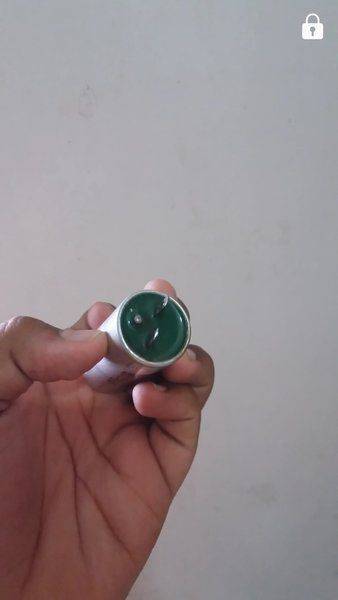
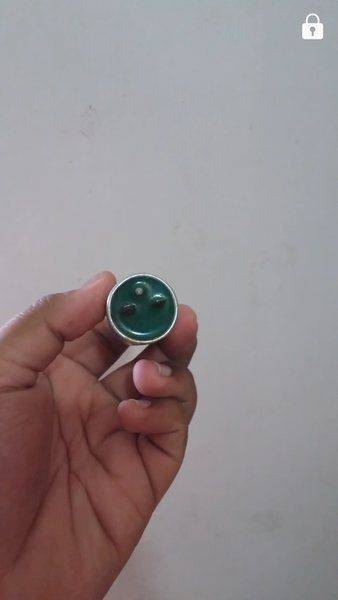
I have a capacitor from a fan. The electrician says it's dead, but I think he is lying. I want to test it with a multimeter. But I can't identify which terminal is positive or negative as it's old and from local company.

A poor video of the capacitor is below:


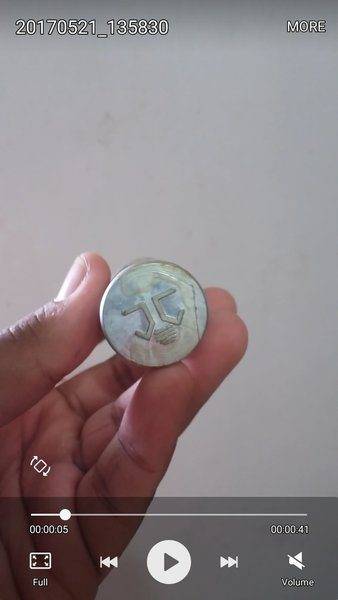
A few pics from the video:
rsz_1screenshot_20170521-164850.jpg


rsz_screenshot_20170521-164906.jpg


rsz_screenshot_20170521-164953.jpg

A sign on the bottom: company logo or identifier?

I came to kmow from a site that a fan capacitor used for starting the motor is unpolarised. Is that correct? If so, then I don't have to think of positive or negative terminals while testing, right?

If not, please help in identification.

Note the sign it has at its bottom: is that a company logo or an identifier?

I want to give the capacitor a death certificate, and I don't need to calculate the capacitance. I only want to see if it's OK. The electrician has charged quite a lot, and I want to see if he was telling the truth.

N.B.: The video quality might not be very good. It has no sound except background noise. I used it to show the capacitor from all sides.

Pics are from video which I uploaded, so the play and pause buttons have also come in the screenshot.
 
Last edited:
Engineering news on Phys.org
That appears to be a metalized polypropylene capacitor. They do not have a polarity as far as capacitor operation is concerned. They will often be marked as to which terminal is connected to the outer metal layer.

Also motor capacitors must be non-polarized in general.

BoB
 
  • Like
Likes   Reactions: jim hardy and Wrichik Basu
rbelli1 said:
That appears to be a metalized polypropylene capacitor. They do not have a polarity as far as capacitor operation is concerned. They will often be marked as to which terminal is connected to the outer metal layer.

Also motor capacitors must be non-polarized in general.

BoB
So, when I test it with a multimeter, i don't have to look out for polarity, right? So the multimeter probes can be used on either terminal?
 
rbelli1 said:
That appears to be a metalized polypropylene capacitor. They do not have a polarity as far as capacitor operation is concerned. They will often be marked as to which terminal is connected to the outer metal layer.

Also motor capacitors must be non-polarized in general.

BoB
Also, can I discharge it with a 1k ohm 1/4 watt resistor that I have?
 
Wrichik Basu said:
So, when I test it with a multimeter, i don't have to look out for polarity, right? So the multimeter probes can be used on either terminal?

Yes. Also check for short to the case from both terminals.

Wrichik Basu said:
Also, can I discharge it with a 1k ohm 1/4 watt resistor that I have?

Start with 10k or 20k. The total energy is low but you will get a surge. You can use the 1k one but if the voltage is at the maximum from a 220V line you may fry the resistor. If you use the 1k check that the voltage on the capacitor is low before proceeding. After your voltage is very low wrap a bare wire around the leads for a few minutes. This will help insure that any dielectric absorption is also discharged.

BoB
 
  • Like
Likes   Reactions: Wrichik Basu
rbelli1 said:
Also check for short to the case from both terminals.

Could not understand what you meant.

rbelli1 said:
Start with 10k or 20k. The total energy is low but you will get a surge. You can use the 1k one but if the voltage is at the maximum from a 220V line you may fry the resistor. If you use the 1k check that the voltage on the capacitor is low before proceeding. After your voltage is very low wrap a bare wire around the leads for a few minutes. This will help insure that any dielectric absorption is also discharged.
The capacitor is already detached, and the electrician has fixed a new one. Then can I use the resistor I mentioned and the wire you mentioned to certify that it's discharged?
 
Wrichik Basu said:
Could not understand what you meant.

Check for short circuit to the case. Both terminals should have a very large resistance to the case. Your meter will likely read open if everything is good.

Wrichik Basu said:
Then can I use the resistor I mentioned and the wire you mentioned to certify that it's discharged?

Yes. Just check the voltage after you apply the resistor. Also check the resistor after you use it like this.

BoB
 
  • Like
Likes   Reactions: Wrichik Basu
rbelli1 said:
Check for short circuit to the case. Both terminals should have a very large resistance to the case. Your meter will likely read open if everything is good.
Yes. Just check the voltage after you apply the resistor. Also check the resistor after you use it like this.

BoB
Thanks a lot. Tell me one last thing: What does "read open" mean?
 
Just to be clear. Here's the case.
case.jpg
 
  • Like
Likes   Reactions: jim hardy and Wrichik Basu
  • #10
dlgoff said:
Just to be clear. Here's the case.
View attachment 203964
Yes, that I understood, but the "read open" part is unclear, rest is fine.
 
  • #11
Wrichik Basu said:
What does "read open" mean?

Set your meter to a resistance range. With the leads unconnected to anything look at the display. Digital ones often say something like "0l" or have some other display that does not make a valid number indicating it can't get a real reading. Analog meters will have an infinity sign at the rest position of the needle. That is open.

You may see the measurement jump briefly to a valid reading. This is due to the capacitance. Wait a few seconds and a good capacitor will read open between any two leads and any lead and the case

BoB

Please note (this does not apply to this exact capacitor): Some capacitors have extra support leads connected to the case or multiple leads for one plate. Disregard these extra leads when measuring. Polarized capacitors must be connected with the positive meter lead to the positive plate to be measured. To find the positive lead set your meter to diode measurement. The proper orientation is found when the meter reads open. This could potentially damage the capacitor if you have a really low voltage capacitor or a poorly designed meter that gives excessive current in diode check mode.
 
  • Like
Likes   Reactions: jim hardy and Wrichik Basu
  • #12
rbelli1 said:
Set your meter to a resistance range. With the leads unconnected to anything look at the display. Digital ones often say something like "0l" or have some other display that does not make a valid number indicating it can't get a real reading. Analog meters will have an infinity sign at the rest position of the needle. That is open.

You may see the measurement jump briefly to a valid reading. This is due to the capacitance. Wait a few seconds and a good capacitor will read open between any two leads and any lead and the case

BoB

Please note (this does not apply to this exact capacitor): Some capacitors have extra support leads connected to the case or multiple leads for one plate. Disregard these extra leads when measuring. Polarized capacitors must be connected with the positive meter lead to the positive plate to be measured. To find the positive lead set your meter to diode measurement. The proper orientation is found when the meter reads open. This could potentially damage the capacitor if you have a really low voltage capacitor or a poorly designed meter that gives excessive current in diode check mode.
Understood completely. Thanks.:partytime:
 
  • Like
Likes   Reactions: jim hardy and dlgoff
  • #13
Here's the simple minded checks i do on them.

1. Is the capacitor shorted ?
Set meter to RX1 scale and check each lead to case, then from one lead to the other. It should read infinite, open, sometimes that's blank on a digital meter. If it reads less than many thousands of ohms (which is overrange on RX1) it's at least partiallly shorted.

2. Does the capacitor hold a charge ?
After reading resistance on RX1 and verifying a high reading, remove meter leads. Set meter to DC volts a low scale like two or ten.
Reconnect meter leads to capacitor. You should read a volt or two and that should drop off toward zero in a matter of seconds.
What that did is charge the capacitor from the ohm-meter, then verify the capacitor holds that charge long enough for you to swap meter scale and measure it with meter. A good capacitor will hold charge for a long time, but as soon as you connect the meter it starts to discharge through meter. Meter is probably ten megohms which would be 22.5 second time constant for your 2.25 microfarad capacitor.
Then reverse the meter wires and repeat. Capacitor should hold charge of either polarity.

3. Does capacitor have significant capacitance?
Set meter to RX1, connect to capacitor. It'll go quickly to max reading. Then swap meter leads, it should go negative for just an instant then return to max. What you're seeing is the capacitor being charged by the ohm meter.
Repeat on RX10 scale, then RX100, then RX1K, etc. Same thing will happen only slower and slower on the higher ohm scales.. When you've done enough capacitors you will develop a 'feel' for your meter and be able to estimate a capacitor's value(rough estimate) from how fast it charges on higher ohms scales.
If it charges immediately on highest ohms scale, it's lost nearly all its capacitance.

That's how a multimeter can be "A poor man's capacitor checker" .
 
Last edited:
  • Like
Likes   Reactions: Asymptotic, dlgoff, Wrichik Basu and 1 other person
  • #14
jim hardy said:
Here's the simple minded checks i do on them.

1. Is the capacitor shorted ?
Set meter to RX1 scale and check each lead to case, then from one lead to the other. It should read infinite, open, sometimes that's blank on a digital meter. If it reads less than many thousands of ohms (which is overrange on RX1) it's at least partiallly shorted.

2. Does the capacitor hold a charge ?
After reading resistance on RX1 and verifying a high reading, remove meter leads. Set meter to DC volts a low scale like two or ten.
Reconnect meter leads to capacitor. You should read a volt or two and that should drop off toward zero in a matter of seconds.
What that did is charge the capacitor from the ohm-meter, then verify the capacitor holds that charge long enough for you to swap meter scale and measure it with meter. A good capacitor will hold charge for a long time, but as soon as you connect the meter it starts to discharge through meter. Meter is probably ten megohms which would be 22.5 second time constant for your 2.25 microfarad capacitor.
Then reverse the meter wires and repeat. Capacitor should hold charge of either polarity.

3. Does capacitor have significant capacitance?
Set meter to RX1, connect to capacitor. It'll go quickly to max reading. Then swap meter leads, it should go negative for just an instant then return to max. What you're seeing is the capacitor being charged by the ohm meter.
Repeat on RX10 scale, then RX100, then RX1K, etc. Same thing will happen only slower and slower on the higher ohm scales.. When you've done enough capacitors you will develop a 'feel' for your meter and be able to estimate a capacitor's value(rough estimate) from how fast it charges on higher ohms scales.
If it charges immediately on highest ohms scale, it's lost nearly all its capacitance.

That's how a multimeter can be "A poor man's capacitor checker" .
Thanks that was of great help :woot:
 
  • #15
jim hardy said:
When you've done enough capacitors you will develop a 'feel' for your meter ...
And probably for most, doing those test will become "old hat"; never thinking of passing on those procedures. So good of you to post those "simple minded checks".
 
  • Like
Likes   Reactions: jim hardy
  • #16
I should have mentioned
on some aluminum electrolytics for DC applications like radios, the can itself is the negative terminal. I never encountered that in a motor capacitor though.
 

Similar threads

  • · Replies 20 ·
Replies
20
Views
5K
  • · Replies 23 ·
Replies
23
Views
3K
  • · Replies 32 ·
2
Replies
32
Views
9K
  • · Replies 25 ·
Replies
25
Views
7K
  • · Replies 2 ·
Replies
2
Views
2K
  • · Replies 27 ·
Replies
27
Views
6K
Replies
7
Views
6K
Replies
8
Views
5K
  • · Replies 11 ·
Replies
11
Views
3K
  • · Replies 5 ·
Replies
5
Views
2K