Problem with this Laser diode circuit

Click For Summary

Discussion Overview

The discussion revolves around issues encountered with a laser diode extracted from an old DVDRW drive, specifically regarding its performance, brightness, and overheating when connected to a power source. Participants explore potential modifications to the circuit and the implications of using the diode without its original components.

Discussion Character

  • Technical explanation
  • Debate/contested
  • Experimental/applied

Main Points Raised

  • One participant notes that the laser diode became hot and emitted a smell of melting solder, suggesting a potential issue with current levels.
  • Another participant proposes the need for a series resistor to limit the current to the laser diode, questioning the expected wavelength of the light emitted.
  • Some participants discuss the possibility that high current may have damaged the laser diode, while others suggest that it might recover when cooled.
  • Concerns are raised about the brightness of the laser diode compared to a presentation pen, with some arguing that different types of lasers have different power requirements.
  • One participant explains the internal components of the laser diode, mentioning the roles of the laser diode (LD) and photodiode (PD) and how their interaction affects performance.
  • There is a suggestion that removing the original shielding and collimating lens could lead to improper feedback control, resulting in overheating and reduced output.
  • A participant expresses uncertainty about the consequences of omitting the PD pin, questioning if it would cause the diode to operate at maximum power and potentially burn out.

Areas of Agreement / Disagreement

Participants express multiple competing views regarding the performance and expected behavior of the laser diode, with no consensus reached on the best approach to resolve the issues presented.

Contextual Notes

Participants mention various assumptions about the power supply voltage and the characteristics of the laser diode, indicating that the discussion may depend on specific configurations and definitions that are not fully clarified.

tPS
Messages
5
Reaction score
0
I have dismantled an old DVDRW drive and taken a 4-pin laser diode from it.
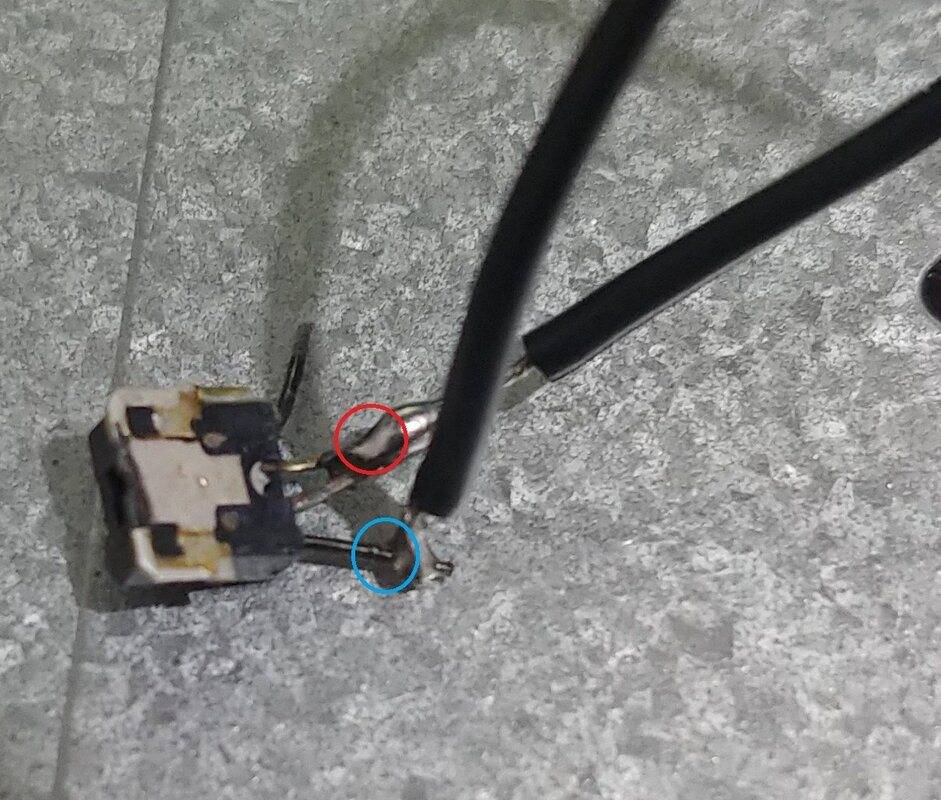
DVDRW laser diode

After connecting it to two 2A batteries (red with positive, and blue with negative), the light beam is diverging, and the brightness is even dimmer than another laser diode that I got from a presentation pen.
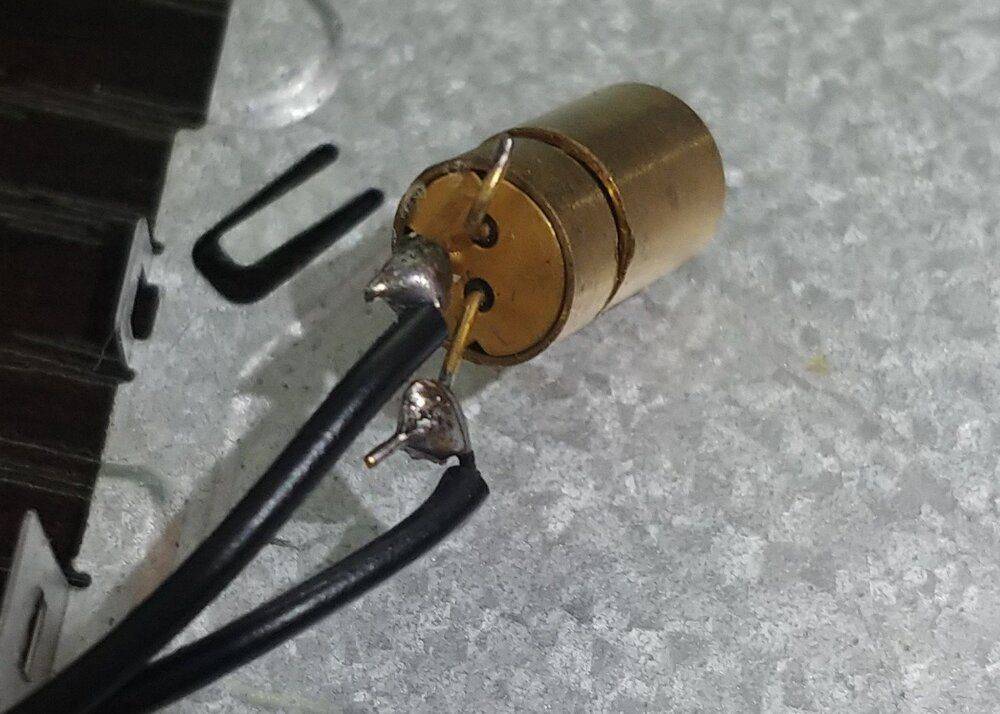
presentation pen


Also, the it became hot within a few seconds that I can even smell the smell of the solder melting. Is there something that I should modify in the circuit to make it work properly?
(Sorry if I am asking in the wrong place)
 
Last edited:
Engineering news on Phys.org
tPS said:
Also, the it became hot within a few seconds that I can even smell the smell of the solder melting. Is there something that I should modify in the circuit to make it work properly?
Maybe you need a series resistor to limit the laser diode current.
What wavelength light do you expect from that laser diode?
 
  • Like
Likes   Reactions: tPS
Baluncore said:
Maybe you need a series resistor to limit the laser diode current.
What wavelength light do you expect from that laser diode?
i think it is 660nm.
Current being too large would lower the "brightness" of the laser?
 
I expect the high current may have destroyed the laser diode as part of your learning exercise. But you may have been lucky. Light output is reduced as the temperature rises. When the diode cools it may recover.

Do not look into the beam. The diode may appear to be dim if seen from the side. Aim the laser diode at a white sheet of paper to scatter the light so you can see the colour without risk to your eyesight. An unknown laser diode may be an IR diode, invisible to you. Take great care.

You used two cells in series which could be between 2.4 and 3.3 V, depending on the chemistry of the battery. A red, 660 nm laser diode should have a forward voltage of about; 1240 / 660 nm = 1.87 V.

To limit current to say about 10 mA, with a 3.3 V supply, you will need a series resistor of about; ( 3.3 - 1.87 ) / 10 mA = 150 ohms. Anything near that will do for a quick test.
 
  • Like
Likes   Reactions: jim mcnamara, tPS and DaveE
I sympathize with the damage to your laser diode.
First of all, please note that you must handle the laser diode with care, because even the very low laser light power emitted from the laser diode may harm your eyes.

tPS said:
After connecting it to two 2A batteries (red with positive, and blue with negative), the light beam is diverging, and the brightness is even dimmer than another laser diode that I got from a presentation pen

If you remove the laser diode from the DVDRW drive, but do not together with a properly installed collimating lens, of course the laser light will become divergent.

tPS said:
Also, the it became hot within a few seconds that I can even smell the smell of the solder melting. Is there something that I should modify in the circuit to make it work properly?

There are two basic units inside the laser diode, namely LD and PD. LD stands for laser diode and PD stands for photodiode. In order to control the correct laser power output, the driver uses negative feedback topology to control the current of the LD based on the output of the PD.

Obviously, if the feedback control circuit is damaged or disturbed, for example, the original shielding structure is removed, the PD will be incorrectly affected by ambient light, the loss of the shielding structure (including the collimating lens) will also cause the reduction of internal reflections, which in turn reduces the power received by the PD from the LD, etc., then the LD current will not be controlled, and the components of the circuit may be heated and burned.

https://www.twovolt.com/2016/08/23/laser-diode-driver-using-transistors/
https://www.teamwavelength.com/laser-diode-driver-basics/
 
Last edited:
  • Informative
  • Like
Likes   Reactions: tPS and Rive
tPS said:
...the brightness is even dimmer than another laser diode that I got from a presentation pen.
That's normal: they are different type. An optical drive does not need that much power as a pointer, but it needs precision.
 
  • Like
Likes   Reactions: tPS and berkeman
Baluncore said:
Do not look into the beam. The diode may appear to be dim if seen from the side. Aim the laser diode at a white sheet of paper to scatter the light so you can see the colour without risk to your eyesight. An unknown laser diode may be an IR diode, invisible to you. Take great care.
I didnt look directly into the beam, I compare the brightness by aiming it onto the wall next to me, thanks for the concerning 😅😅

Baluncore said:
You used two cells in series which could be between 2.4 and 3.3 V, depending on the chemistry of the battery. A red, 660 nm laser diode should have a forward voltage of about; 1240 / 660 nm = 1.87 V.

To limit current to say about 10 mA, with a 3.3 V supply, you will need a series resistor of about; ( 3.3 - 1.87 ) / 10 mA = 150 ohms. Anything near that will do for a quick test.
I don't have any resistor on hand, but I would definitely go buy some a few days later! Thank you!
 
alan123hk said:
There are two basic units inside the laser diode, namely LD and PD. LD stands for laser diode and PD stands for photodiode. In order to control the correct laser power output, the driver uses negative feedback topology to control the current of the LD based on the output of the PD.

Obviously, if the feedback control circuit is damaged or disturbed, for example, the original shielding structure is removed, the PD will be incorrectly affected by ambient light, the loss of the shielding structure (including the collimating lens) will also cause the reduction of internal reflections, which in turn reduces the power received by the PD from the LD, etc., then the LD current will not be controlled, and the components of the circuit may be heated and burned.
So if I leave out the PD pin, the laser diode would attempt to work on it's maximum power and burn itself?
 
Rive said:
That's normal: they are different type. An optical drive does not need that much power as a pointer, but it needs precision.
it was a rewritable drive so i assumed the power of it would be higher than the laser pointer
 

Similar threads

Replies
10
Views
2K
Replies
23
Views
5K
  • · Replies 7 ·
Replies
7
Views
3K
  • · Replies 13 ·
Replies
13
Views
8K
  • · Replies 3 ·
Replies
3
Views
2K
  • · Replies 12 ·
Replies
12
Views
3K
Replies
3
Views
3K
  • · Replies 1 ·
Replies
1
Views
4K
  • · Replies 2 ·
Replies
2
Views
2K
  • · Replies 33 ·
2
Replies
33
Views
4K