Questions about batteries and magnets and EM induction

Click For Summary
SUMMARY

This discussion addresses the use of batteries and electromagnets in circuits, specifically focusing on voltage ratings and configurations. Users can connect batteries in series to increase voltage, with two AA batteries providing 3V. A single AA battery delivers a full 1.5V. When powering an electromagnet rated for 230-255V AC with lower DC voltages (2-10V), the magnetic field strength will decrease significantly. To measure induced EMF in a loop of wire, a voltmeter must be connected in parallel across a broken loop.

PREREQUISITES
  • Understanding of series and parallel circuits
  • Knowledge of battery voltage ratings (e.g., AA, AAA)
  • Familiarity with Ohm's Law and its application
  • Basic principles of electromagnetic induction
NEXT STEPS
  • Research the effects of series and parallel battery configurations on voltage output
  • Learn about the relationship between current and magnetic field strength in electromagnets
  • Investigate methods for measuring induced EMF in circuits
  • Explore the principles of electromagnetic induction and its applications in circuits
USEFUL FOR

Electronics enthusiasts, electrical engineers, and students studying electromagnetism and circuit design will benefit from this discussion.

albertrichardf
Messages
165
Reaction score
11
Hello,
I wanted to ask a few questions regarding magnets and batteries, and EM induction.
First off, could I use batteries to replace a low voltage dc power supply, like say 2 V or so by connecting the ends of the battery in series to a circuit? As an extension, could I connect two batteries in series to obtain double the voltage? Is it ok to use two batteries in series with different voltage ratings, like say, an AAA and an AA?

If I could, what would be the voltage I could obtain from one battery? As in, say I use one AA battery, which is rated as 1.5 V. Do I obtain a full 1.5 V with one battery, or is it 0.75 V?

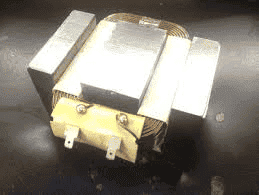
Another question is whether I could power an electromagnet with a voltage way lower than what is indicated. I have a 230 -255 rated ac-V magnet, which I got by halving and removing the upper half of a microwave transformer. I replaced the primary coil in it. It looks like this:
upload_2016-12-7_17-21-16.png


Could I power it with a voltage in the range of 2-10 V dc? What would be the effect on its magnetic field? Would it be strong enough to induce a current in the mA range?
Also, with such an electromagnet, what is the relationship between the current and the magnetic field strength?

Finally, suppose I use an electromagnet to induce a current in a loop of wire. How could I connect a voltmeter to measure the induced emf? In series with the circuit, or in parallel to the circuit?

Thanks for answering the questions. I know there are a lot.
 
Engineering news on Phys.org
Wow, lot's of questions. Let me try to answer some of them.

Albertrichardf said:
Hello,
I wanted to ask a few questions regarding magnets and batteries, and EM induction.
First off, could I use batteries to replace a low voltage dc power supply, like say 2 V or so by connecting the ends of the battery in series to a circuit? As an extension, could I connect two batteries in series to obtain double the voltage? Is it ok to use two batteries in series with different voltage ratings, like say, an AAA and an AA?

Yes, you can put two or more batteries in series to increase the voltage. Two AA batteries in series will give you 3V, three in series will give you 4.5V, etc. Note that AA and AAA batteries are both 1.5V. It's not a good idea to put different batteries like AA and AAA in series because they will discharge at different rates.

If I could, what would be the voltage I could obtain from one battery? As in, say I use one AA battery, which is rated as 1.5 V. Do I obtain a full 1.5 V with one battery, or is it 0.75 V?

You get the full 1.5V from a AA battery.

Another question is whether I could power an electromagnet with a voltage way lower than what is indicated. I have a 230 -255 rated ac-V magnet, which I got by halving and removing the upper half of a microwave transformer. I replaced the primary coil in it. It looks like this:

You could do this, but with a much lower voltage you will get a much lower current and hence a much lower magnetic field. Try using a multimeter to measure the resistance of the coil. Then you can calculate how much current will flow from Ohm's law.

Could I power it with a voltage in the range of 2-10 V dc? What would be the effect on its magnetic field? Would it be strong enough to induce a current in the mA range?[

Note that induction requires a changing magnetic field. A constant current and a constant magnetic field will not induce any current.

Also, with such an electromagnet, what is the relationship between the current and the magnetic field strength?

The magnetic field is proportional to the current times the number of turns, but to calculate the proportionality constant you need to know the details of the electromagnet.

Finally, suppose I use an electromagnet to induce a current in a loop of wire. How could I connect a voltmeter to measure the induced emf? In series with the circuit, or in parallel to the circuit?

You normally measure voltage by putting the meter in parallel with the circuit, and measure current by putting the meter in series with the circuit.
 
  • Like
Likes   Reactions: albertrichardf
Thanks for answering all the questions.
I plan on changing the area of the circuit in which I am inducing a current, while keeping the magnetic field constant. And I also plan on keeping the area constant and changing the magnetic field by using a rheostat to change the resistance of the circuit powering the magnet, and thus the current through it. In fact that is why I wanted to know whether the magnetic field was proportional to the current, so that I would know how it changed with the resistance of the circuit. I now know that the changes are themselves proportional to each other, and that was all I needed. I'm actually trying to compare the effects of changing the area of a circuit compared to changing the magnetic field strength.

I'll also try measuring the magnet's resistance using the multimeter.

About measuring the voltage, I'm still not sure I understand. I know that normally you connect the voltmeter in parallel across a component to measure the voltage difference, and that you could connect the meter in parallel to the power supply to measure the voltage of the whole circuit, but in this case, my circuit is just a closed loop of wire, powered through an induced voltage. Would I still be able to measure the voltage if I connected the voltmeter in parallel to that, even if it was connected parallel to any part of the circuit anywhere?
Thanks.
 
I see your question. You're right, in this case you want to break the loop and put the voltmeter across the broken loop to measure the induced voltage, like in the attached picture.
 

Attachments

Alright. Thank you for answering
 

Similar threads

  • · Replies 3 ·
Replies
3
Views
2K
  • · Replies 3 ·
Replies
3
Views
2K
  • · Replies 11 ·
Replies
11
Views
2K
Replies
10
Views
5K
  • · Replies 9 ·
Replies
9
Views
3K
  • · Replies 7 ·
Replies
7
Views
2K
  • · Replies 8 ·
Replies
8
Views
3K
  • · Replies 3 ·
Replies
3
Views
2K
  • · Replies 5 ·
Replies
5
Views
1K
  • · Replies 2 ·
Replies
2
Views
2K