SUMMARY
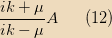
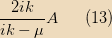
The discussion focuses on solving for coefficients B and D in a linear system derived from the finite step potential scattering problem. The equations presented are similar to a system of linear equations, such as x+y=4 and 2x-3y=0, which require simplification to express B and D in terms of A. The complexity of the constants involved adds a layer of difficulty to the solution process. Understanding this relationship is crucial for analyzing scattering phenomena in quantum mechanics.
PREREQUISITES
- Basic understanding of quantum mechanics and scattering theory
- Familiarity with linear algebra concepts, specifically solving systems of equations
- Knowledge of finite step potential models in quantum physics
- Proficiency in mathematical simplification techniques
NEXT STEPS
- Study the mathematical techniques for solving linear systems, particularly in quantum mechanics contexts
- Explore the concept of finite step potentials in greater detail
- Learn about the implications of scattering theory in quantum physics
- Review examples of coefficient determination in similar quantum mechanics problems
USEFUL FOR
Students and professionals in physics, particularly those specializing in quantum mechanics, as well as educators teaching scattering theory and linear algebra applications in physics.