KedarMhaswade
- 35
- 6
- TL;DR
- Is there a reliable way to control the speed of the DC motor used in this stroboscope model? Should different resistors be used?
As a part of our physics high-school self-study, we are making a stroboscope. We have a small 5-V DC motor that powers the strobe disk.
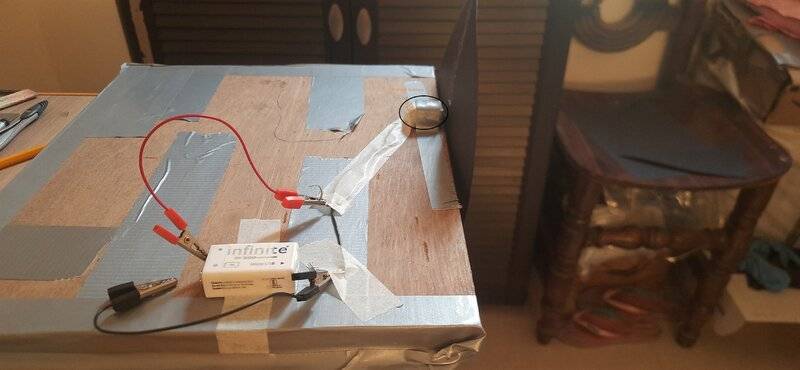
It works as expected, but, clearly, the motor makes the disk spin at a constant speed. Is there an easy, but effective and reliable way to control its speed? I don't mind joining some resistors in series if resistors can do the job (no variable resistor needed). If resistors is indeed the way to go (I don't think so), should I empirically decide the values of the resistors (or, should I employ Ohm's law)?
It works as expected, but, clearly, the motor makes the disk spin at a constant speed. Is there an easy, but effective and reliable way to control its speed? I don't mind joining some resistors in series if resistors can do the job (no variable resistor needed). If resistors is indeed the way to go (I don't think so), should I empirically decide the values of the resistors (or, should I employ Ohm's law)?
