The Slinky Drop Experiment Analysed

Join the discussion
Registration is free. Ask a follow-up in this thread, or start your own.
3 replies · 4K views
Staff Emeritus
Science Advisor
Homework Helper
Insights Author
Gold Member
2025 Award
Messages
22,832
Reaction score
14,876
2006-02-04_Metal_spiral.jpg
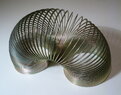
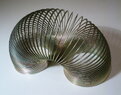
Figure 1: A slinky, the subject of the slinky drop experiment. Attribution: Roger McLassus. CC BY-SA
The slinky drop is a rather simple experiment. In its most basic form, it requires only a popular toy for children, a stable hand, and a keen eye. For a better view, using a modern smartphone to capture a video of the experiment also helps to capture the falling slinky. Apart from the commonly quoted result, Insight will discuss the evolution of the slinky shape during the drop using only high-school physics: mechanical equilibrium and the conservation of momentum.

What is The Slinky Drop Experiment?
The slinky drop experiment is exactly what it sounds like:

Support a slinky at one of its ends. Let the rest of it hang freely under...

Continue reading...
 

Attachments
  • 2006-02-04_Metal_spiral.jpg
    2006-02-04_Metal_spiral.jpg
    70.4 KB · Views: 149
  • 2006-02-04_Metal_spiral.jpg
    2006-02-04_Metal_spiral.jpg
    70.4 KB · Views: 76
  • 2006-02-04_Metal_spiral.jpg
    2006-02-04_Metal_spiral.jpg
    70.4 KB · Views: 92
Last edited by a moderator:
Reply
  • Like
Likes   Reactions: TSny, Dale and Greg Bernhardt
Physics news on Phys.org
Oh you beat me to it! It seems that you finally used my suggestion of using the displacement field! I have a similar solution that I might share later.
 
pines-demon said:
Oh you beat me to it! It seems that you finally used my suggestion of using the displacement field! I have a similar solution that I might share later.
No, the displacement field is still the dependent variable. The slinky fraction ##s## is the independent material variable. This is the way I did it from the beginning.

The only addition is a non-zero rest length of the slinky. Otherwise the analysis is the same as my post #5 of that thread, just a bit more polished.
 
Orodruin said:
The only addition is a non-zero rest length of the slinky.
I was talking about that.
Orodruin said:
Otherwise the analysis is the same as my post #5 of that thread, just a bit more polished.
Thanks for the clarification. Anyway, great article!
 
Reply
  • Like
Likes   Reactions: Greg Bernhardt