Tylercc
- 27
- 2
I doing an experiment that involves thermal penetration of copper. Please advise me where to post if I choose the wrong spot. This experiment is being done with what I have on hand and my ability to work the materials.
Materials
2.75 gal pot of water
6qt pressure cooker
100+lb of stripped copper wire that is .81''(2.05mm) in diameter
1 120 volt ac fan
specs
4.5 diameter
Airflow: 110 CFM
2600RPM
stove with 1250 watt burners
Ability to work materials
I can not recirculate the water
I can not melt the copper wire into a shape
I can tightly or loosely bundle the wire together
I can vary the amount heat introduced into the pressure cooker
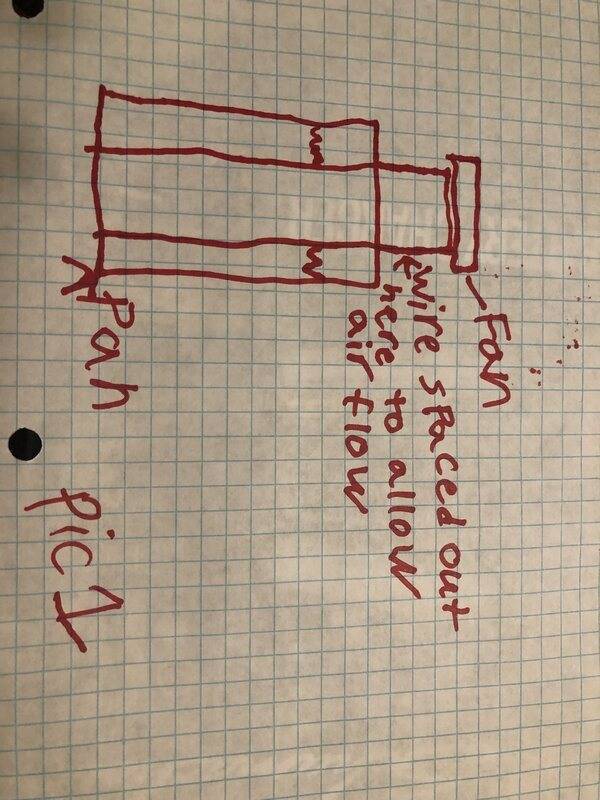
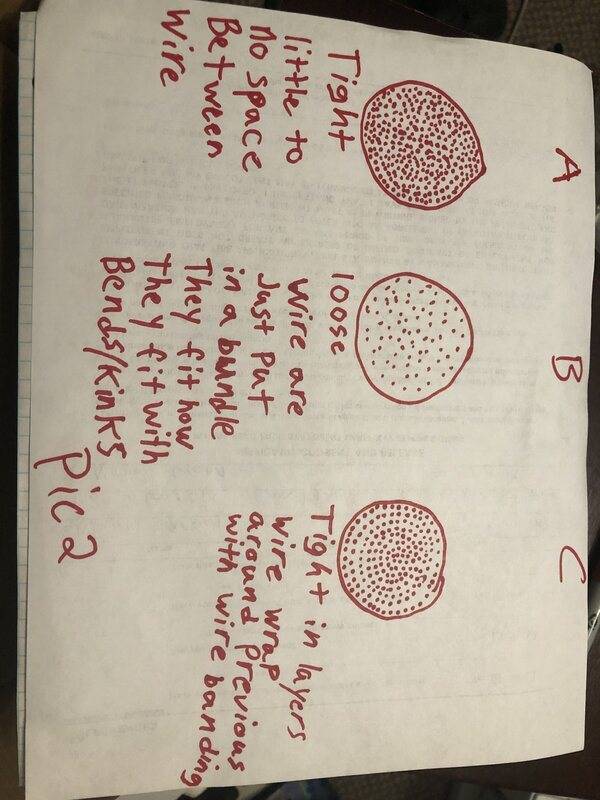
I have a pot of water(2.75gal) that is being heated by steam at a rate of 25 degrees every 15 minutes at "high". The water starts out at 73 degrees F. I would like to cool this water using a bundle of copper wire and a fan on top(pic 1). I am not concerned about how fast I cool the water, but I would like to see the water stay as cool as possible for as long as possible.(EX: 100 degrees F for two hours) So my question is regarding the bundle of wire, Should I make it as tight as possible, as loose as possible, or tight layers with space in-between the layers?(pic2) Also would there be any benefit to making the bundle bigger than the fan?
I have found these two websites but I honestly don't know how to use the equation or if the number in the second webpage is what I need.
https://www.sciencedirect.com/topics/engineering/thermal-penetration-depth
http://hyperphysics.phy-astr.gsu.edu/hbase/Tables/thrcn.html
thanks
Materials
2.75 gal pot of water
6qt pressure cooker
100+lb of stripped copper wire that is .81''(2.05mm) in diameter
1 120 volt ac fan
specs
4.5 diameter
Airflow: 110 CFM
2600RPM
stove with 1250 watt burners
Ability to work materials
I can not recirculate the water
I can not melt the copper wire into a shape
I can tightly or loosely bundle the wire together
I can vary the amount heat introduced into the pressure cooker
I have a pot of water(2.75gal) that is being heated by steam at a rate of 25 degrees every 15 minutes at "high". The water starts out at 73 degrees F. I would like to cool this water using a bundle of copper wire and a fan on top(pic 1). I am not concerned about how fast I cool the water, but I would like to see the water stay as cool as possible for as long as possible.(EX: 100 degrees F for two hours) So my question is regarding the bundle of wire, Should I make it as tight as possible, as loose as possible, or tight layers with space in-between the layers?(pic2) Also would there be any benefit to making the bundle bigger than the fan?
I have found these two websites but I honestly don't know how to use the equation or if the number in the second webpage is what I need.
https://www.sciencedirect.com/topics/engineering/thermal-penetration-depth
http://hyperphysics.phy-astr.gsu.edu/hbase/Tables/thrcn.html
thanks