alex282
- 23
- 1
Hi,
I have been researching how to protect my card collection from the unlikely event of a house fire, however there is not enough data for me to estimate whether my set up is adequate or not. If anyone could approximate anything here without knowing all the exact variables (r-values) that would be very helpful.
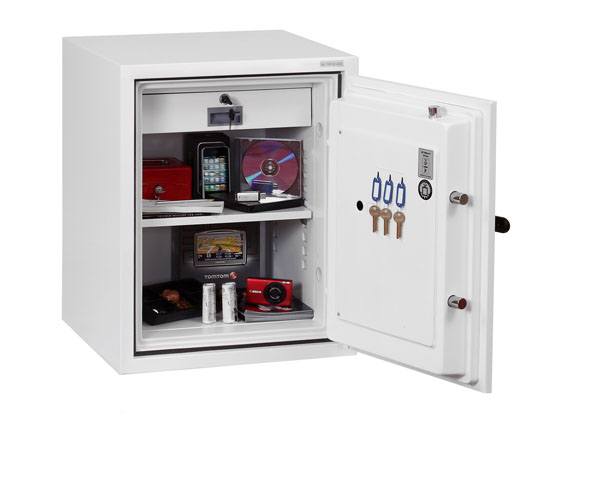
Most of my cards are sealed or graded (encased) in plastic slabs which unfortunately warp at temperatures of just 150-200F. The solution to this is of course to buy a properly rated data safe which maintains the internal temperature below 150F. The problem with this is that it is almost impossible for me to fit one of these up the narrow stairs into my apartment. There are also no bank vaults near me, and collectibles insurance seems to be frowned upon by most collectors due to the bad value. This leaves me looking for something which is better than nothing and could hold out until the fire department (luckily 2 minutes away) arrive.Firstly I have a fire resistant safe with an industry recognised rating which guarantees to maintain the internal temperature below 248F for up to 1 hour during a ~1700F house fire. It appears to be composed of steel filled with concrete with a total wall thickness of 50mm.
So my first question is, what do you think the internal safe temperature would be 5, 10, 15, 30 and 45 minutes after a house fire reaches it? Would you say that the internal temperature quickly reaches the rating of 248F and then maintains it for an hour or would you say that it slowly increases towards the 248F rating at 1 hour?
Secondly I also have the option of putting a fire resistant case inside the safe.
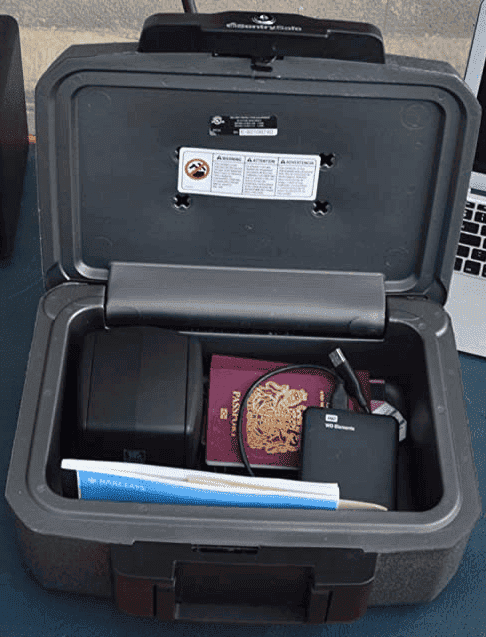
The first case has a fire rating which guarantees to keep the internal temperature below 350F for up to 30 minutes during a 1700F house fire. It is composed of a cement within plastic and has a wall thickness of around 40mm. I think that this case is a good option since that the case isn't going to be exposed to temperatures of over 248F for an hour with being inside the safe. The only problem with this one is that it takes up most of the space inside the safe and two will not fit in side-by-side.
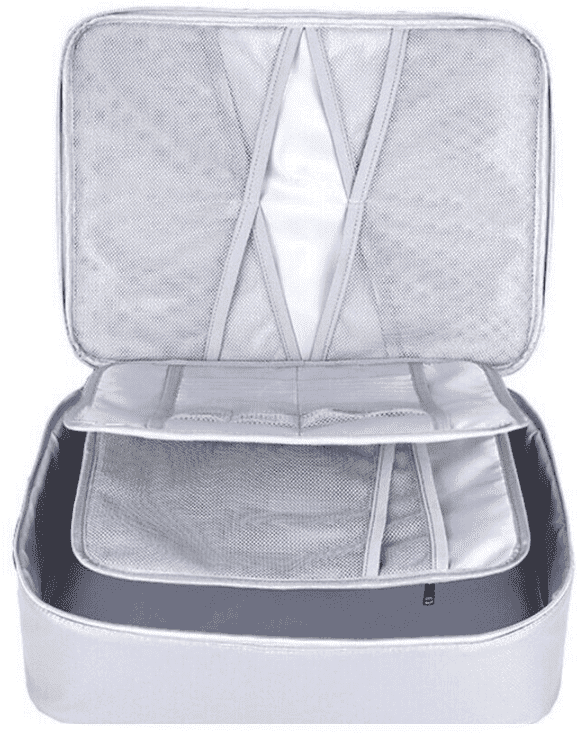
The second case is a cheaply made one with various layers of "fire resistant" materials. This one doesn't have an official rating but my thinking is that if the internal temperature is below 248F, then perhaps even this cheap insulated case could help to keep the temperature inside itself below the 150-200F range to buy some more time. Do you think that 5-10mm of silicone/aluminium/fibreglass would make much difference in keeping the cards below 150F whilst the internal safe temperature rises towards 248F?
The chance of a fire happening is extremely low. There are a lot of variables such as the starting point of a potential fire and how long it would take the fire department to arrive but ultimately it would be good to have some approximation such as the internal temperature would stay below xF for x minutes or that the cheap case would be completely useless.
Thanks for reading and any replies or suggestions
I have been researching how to protect my card collection from the unlikely event of a house fire, however there is not enough data for me to estimate whether my set up is adequate or not. If anyone could approximate anything here without knowing all the exact variables (r-values) that would be very helpful.
Most of my cards are sealed or graded (encased) in plastic slabs which unfortunately warp at temperatures of just 150-200F. The solution to this is of course to buy a properly rated data safe which maintains the internal temperature below 150F. The problem with this is that it is almost impossible for me to fit one of these up the narrow stairs into my apartment. There are also no bank vaults near me, and collectibles insurance seems to be frowned upon by most collectors due to the bad value. This leaves me looking for something which is better than nothing and could hold out until the fire department (luckily 2 minutes away) arrive.Firstly I have a fire resistant safe with an industry recognised rating which guarantees to maintain the internal temperature below 248F for up to 1 hour during a ~1700F house fire. It appears to be composed of steel filled with concrete with a total wall thickness of 50mm.
So my first question is, what do you think the internal safe temperature would be 5, 10, 15, 30 and 45 minutes after a house fire reaches it? Would you say that the internal temperature quickly reaches the rating of 248F and then maintains it for an hour or would you say that it slowly increases towards the 248F rating at 1 hour?
Secondly I also have the option of putting a fire resistant case inside the safe.
The first case has a fire rating which guarantees to keep the internal temperature below 350F for up to 30 minutes during a 1700F house fire. It is composed of a cement within plastic and has a wall thickness of around 40mm. I think that this case is a good option since that the case isn't going to be exposed to temperatures of over 248F for an hour with being inside the safe. The only problem with this one is that it takes up most of the space inside the safe and two will not fit in side-by-side.
The second case is a cheaply made one with various layers of "fire resistant" materials. This one doesn't have an official rating but my thinking is that if the internal temperature is below 248F, then perhaps even this cheap insulated case could help to keep the temperature inside itself below the 150-200F range to buy some more time. Do you think that 5-10mm of silicone/aluminium/fibreglass would make much difference in keeping the cards below 150F whilst the internal safe temperature rises towards 248F?
The chance of a fire happening is extremely low. There are a lot of variables such as the starting point of a potential fire and how long it would take the fire department to arrive but ultimately it would be good to have some approximation such as the internal temperature would stay below xF for x minutes or that the cheap case would be completely useless.
Thanks for reading and any replies or suggestions
Last edited: