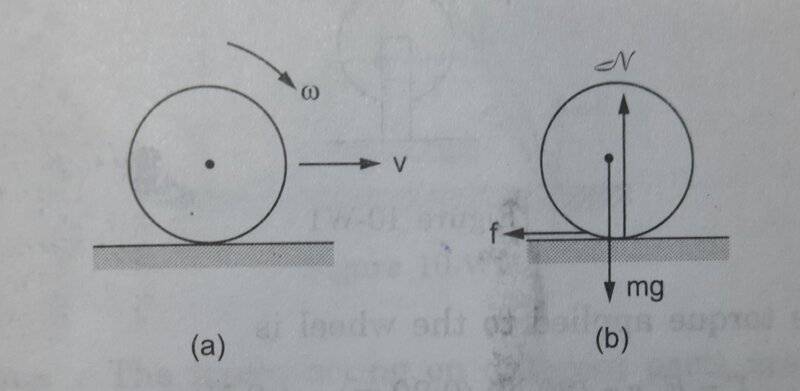
Rolling static friction can exist when there is no rotation or movement.
For example, the driving wheels of a locomotive, trying hard to start movement of heavy cars, but without slipping on the rails.
Not a very scientific approach, but I like explaining rolling static friction like being partially similar to the mechanical teeth meshing that happens in a rack and pinion mechanism.
At microscopic level, that is aproximately the interaction that happens among two rough surfaces, in addition to molecular attraction.
The deformation of the surfaces that the book explains, will contribute to the resistance to rolling, but I believe that it is not related to pure static friction.
There is not much at all of that deformation among the steel wheels and hard steel of the rails in my previous example, yet, friction makes the heavy cars move finally.