Homework Help Overview
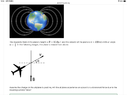
The discussion revolves around the application of the equation F = q v B sin(theta) in a physics context, specifically related to calculating the force on a charged particle in a magnetic field. Participants are troubleshooting a calculation involving charge, velocity, magnetic field strength, and the angle between vectors.
Discussion Character
- Exploratory, Assumption checking, Conceptual clarification
Approaches and Questions Raised
- Participants discuss the calculation of force using the given equation and question the correctness of the initial solution. There are inquiries about the angle theta and its relationship to other angles in the diagram. Some participants express confusion about the angle between the vectors involved.
Discussion Status
The discussion is ongoing with participants providing updates and clarifications. Some have offered insights into the angle theta, while others are exploring the implications of the vectors' orientations. There is no explicit consensus on the correct interpretation of the problem or the calculations involved.
Contextual Notes
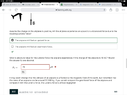
There are mentions of missing information in the original problem statement, including the specification of charge and the complete context of the question. Participants are also referencing additional topics, such as Kirchhoff's current law, indicating a broader scope of inquiry.