SUMMARY
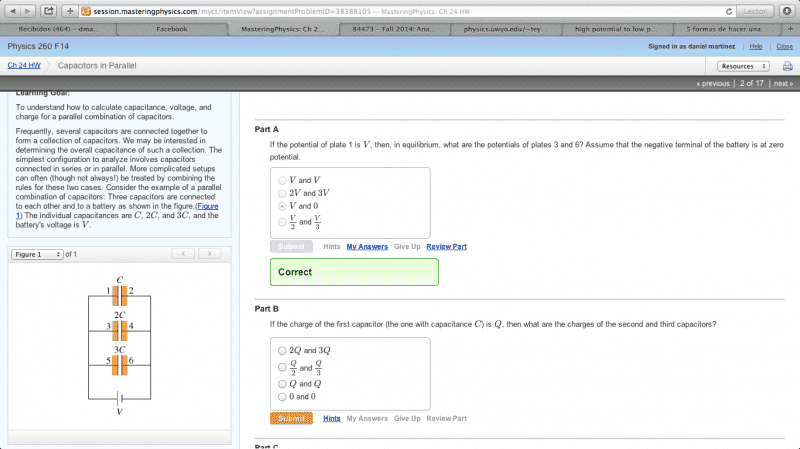
This discussion centers on the fundamental concepts of capacitors, specifically the relationship between electric potential and capacitor charging. When a capacitor is connected to a voltage source, it accumulates charge on one plate, creating a voltage difference, or electric potential, between its plates. Understanding this process is crucial for grasping how capacitors function in electrical circuits.
PREREQUISITES
- Basic knowledge of electrical circuits
- Understanding of voltage and current
- Familiarity with the concept of charge in physics
- Mathematical skills related to electrical formulas
NEXT STEPS
- Research the principles of capacitor charging and discharging
- Learn about the role of capacitors in AC and DC circuits
- Explore the mathematical equations governing capacitors, such as Q = CV
- Investigate different types of capacitors and their applications in electronics
USEFUL FOR
Students in electrical engineering, educators teaching physics concepts, and hobbyists interested in electronics who seek a deeper understanding of capacitor functionality.