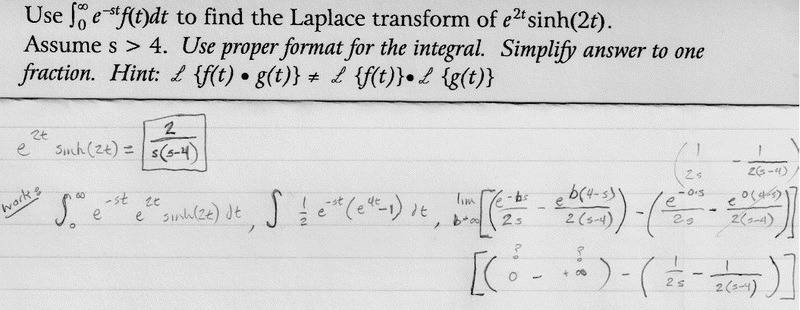
Jeff12341234 Messages 179 Reaction score 0 Thread starter Apr 13, 2013 #1 I'm not sure about the answers to parts of the limit step of the work. Can you explain what the answer to that step should be?
I'm not sure about the answers to parts of the limit step of the work. Can you explain what the answer to that step should be?
Dick Science Advisor Homework Helper Messages 26,254 Reaction score 623 Apr 13, 2013 #2 Jeff12341234 said: I'm not sure about the answers to parts of the limit step of the work. Can you explain what the answer to that step should be? Use that s>4. If that's so, then both of the exponents are a negative number times b, and so do go to 0 as b->infinity.
Jeff12341234 said: I'm not sure about the answers to parts of the limit step of the work. Can you explain what the answer to that step should be? Use that s>4. If that's so, then both of the exponents are a negative number times b, and so do go to 0 as b->infinity.