Use standard cell potentials to show that a catalyst can work

Click For Summary
SUMMARY

The discussion centers on the use of standard electrode potentials to demonstrate that MnO2 can function as a catalyst in the disproportionation of hydrogen peroxide (H2O2) to oxygen (O2) and water (H2O). The overall reaction potential for MnO2 is calculated at 0.81 Volts, while the reformation potential of the catalyst is 0.27 Volts. Participants clarify that the correct interpretation involves summing the potentials of the half-reactions, emphasizing that the positive values indicate catalytic activity. Misunderstandings regarding the calculations and the legitimacy of comparing full reaction potentials with half-reaction potentials are also addressed.

PREREQUISITES
  • Understanding of standard electrode potentials
  • Knowledge of redox reactions and half-reactions
  • Familiarity with the concept of disproportionation reactions
  • Basic proficiency in electrochemistry calculations
NEXT STEPS
  • Study the Nernst equation and its application to half-reactions
  • Research the standard electrode potentials for common redox pairs, including I2/I-
  • Explore detailed examples of disproportionation reactions in electrochemistry
  • Review the principles of calculating overall cell potentials from half-reaction potentials
USEFUL FOR

Chemistry students, educators, and professionals interested in electrochemistry, particularly those focusing on catalysis and redox reactions involving hydrogen peroxide.

resurgance2001
Messages
197
Reaction score
9
Homework Statement
Use standard electrode potentials to show that MnO2 can work as a catalyst to break down hydrogen peroxide.
Relevant Equations
Equation with higher potential goes forward. Reverse equation with lower potential and add the two together to get the overall reaction (cancelling spectator ions) and add potentials together to get the overall potential.
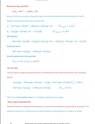
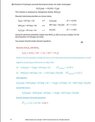
My solution in shown on the attached files. The overall reaction between Mn02 is 0.81 Volts

The overall reaction which shows the reformation of the MnO2 catalyst is .27 Volts. The first reaction is more positive which shows that the MnO2 can work as a catalyst.
 
Physics news on Phys.org
What attached files?
 
  • Like
Likes   Reactions: resurgance2001
resurgance2001 said:
Homework Statement:: Use standard electrode potentials to show that MnO2 can work as a catalyst to break down hydrogen peroxide.
Relevant Equations:: Equation with higher potential goes forward. Reverse equation with lower potential and add the two together to get the overall reaction (cancelling spectator ions) and add potentials together to get the overall potential.

My solution in shown on the attached files. The overall reaction between Mn02 is 0.81 Volts

The overall reaction which shows the reformation of the MnO2 catalyst is .27 Volts. The first reaction is more positive which shows that the MnO2 can work as a catalyst.
2D3255ED-81A0-4622-BE9D-E18F8D54B9AC.jpeg
C1CDC1E6-F1E8-406B-AA56-E6EE3EC70CC0.jpeg
338ED46C-992C-4D58-873D-2C6EA847F094.jpeg
D66FF06C-B4AC-463B-B0BA-7381A0686A15.jpeg

mjc123 said:
What attached files?
Sorry - thought I had. Thanks
 
Your comment on the last page is not quite right. Reaction 1 does not show the reaction which the question says is catalysed. That reaction is not simply the decomposition of H2O2 to O2, but the disproportionation to O2 and H2O, in which some of the O from H2O2 is oxidised and some reduced. (In reaction 1 it all goes to O2, and the O in H2O all comes from the MnO2 - see half-reactions 1 and 2.) The disproportionation is the combination of reactions 1 and 2. The electrode potentials show that MnO2 can oxidise H2O2 to O2, and Mn2+ can reduce H2O2 to H2O (regenerating the MnO2).
 
mjc123 said:
Your comment on the last page is not quite right. Reaction 1 does not show the reaction which the question says is catalysed. That reaction is not simply the decomposition of H2O2 to O2, but the disproportionation to O2 and H2O, in which some of the O from H2O2 is oxidised and some reduced. (In reaction 1 it all goes to O2, and the O in H2O all comes from the MnO2 - see half-reactions 1 and 2.) The disproportionation is the combination of reactions 1 and 2. The electrode potentials show that MnO2 can oxidise H2O2 to O2, and Mn2+ can reduce H2O2 to H2O (regenerating the MnO2).
Hi - thanks for your answer. I will be honest I still don’t quite get how the electrode potentials are showing this. The calculations I did on the first two pages are ok, is that correct. I stop don’t quite get how electrode potentials are actually showing this. I feel I need to see another similar question or see a model answer. I did have a model answer but it did not really make sense to me! You are saying that the reaction potentials she this because they both sum to positive values? Is that correct? I have searched for similar questions and even thought of trying to do the same thing using potassium iodide if I could find the standard electrode potential for that. Hmm 🤔 I feel confused.
 
E°(I2/I-) = +0.54 V. https://en.wikipedia.org/wiki/Standard_electrode_potential_(data_page)
This is an interesting one. The E°s show that under acidic conditions, I- can reduce H2O2, but I2 cannot oxidise it. So it does not cataslyse the disproportionation. If you add KI solution to an acidic solution of H2O2 you get a precipitate of I2. However, if you add a little KI to an alkaline solution of H2O2, you get disproportionation, with rapid exothermic evolution of O2. Why is this? Can you apply the Nernst equation to half-reactions 1 and 3 and see what the potentials would be at pH 14?
 
  • Like
Likes   Reactions: resurgance2001
I have also just received this answer from someone. Is this answer correct? Or is it way off the mark? It sounds reasonable to me but I am not experienced enough to be certain it is correct.
B682495C-D637-4F24-8C73-984BCB4BB2B1.jpeg
 
I'm afraid this is complete nonsense.
Where do they get 2.86 V? Are they adding the two electrode potentials and getting it wrong? You should subtract them.
They then go on to compare the cell (full reaction) potential with an electrode (half-reaction) potential, which is not legitimate. (Ask them to write out the equation for the reaction with Enet = 1.35 V.)
Looking at your thread title, you may have the same confusion.
 
mjc123 said:
I'm afraid this is complete nonsense.
Where do they get 2.86 V? Are they adding the two electrode potentials and getting it wrong? You should subtract them.
They then go on to compare the cell (full reaction) potential with an electrode (half-reaction) potential, which is not legitimate. (Ask them to write out the equation for the reaction with Enet = 1.35 V.)
Looking at your thread title, you may have the same confusion.
 
  • #10
mjc123 said:
I'm afraid this is complete nonsense.
Where do they get 2.86 V? Are they adding the two electrode potentials and getting it wrong? You should subtract them.
They then go on to compare the cell (full reaction) potential with an electrode (half-reaction) potential, which is not legitimate. (Ask them to write out the equation for the reaction with Enet = 1.35 V.)
Looking at your thread title, you may have the same confusion.

This is the answer I got originally from a really experienced A level chemistry teacher. This was the reason for my post because I don’t understand his answer. I am going to try writing out my own (revised) answer again. Unfortunately, I can’t find the original exam the question came from and so I can’t see the mark scheme and I can find no other similar questions in the textbook. I am not sure how you arrived at 1.35 Volts, so I need to look at that. I don’t see how there can be a ‘single’ overall potential because the three half equations can’t just be added. Looking at the first two equations the first one has to be reversed. Then looking at the second and third equation the second one has to be reversed. So you end up with two apparently independent ionic equations - although they are obvious not independent. There are no examples I can find that are similar to this.
 

Attachments

  • 6B5BC267-3841-401B-80AB-0442B9768E22.jpeg
    6B5BC267-3841-401B-80AB-0442B9768E22.jpeg
    21.8 KB · Views: 195
  • A0B991CA-5CE5-4F2A-81F1-940FD4B36B57.jpeg
    A0B991CA-5CE5-4F2A-81F1-940FD4B36B57.jpeg
    26.8 KB · Views: 198

Similar threads

  • · Replies 2 ·
Replies
2
Views
4K
  • · Replies 3 ·
Replies
3
Views
2K
Replies
5
Views
1K
  • · Replies 6 ·
Replies
6
Views
4K
  • · Replies 6 ·
Replies
6
Views
3K
  • · Replies 4 ·
Replies
4
Views
12K
Replies
4
Views
2K
  • · Replies 2 ·
Replies
2
Views
6K
  • · Replies 53 ·
2
Replies
53
Views
5K
  • · Replies 3 ·
Replies
3
Views
3K