What are you reading now? (STEM only)

  • Context: Other 
  • Thread starter Thread starter Demystifier
  • Start date Start date
  • Tags Tags
    Reading
Join the discussion
Ask a follow-up here, or get your own question answered by working scientists, mathematicians and engineers — people, not an autocomplete.
Real named experts · corrections over time · the nuance an AI answer skips
738 replies · 98K views
Hill said:
The first one is on p. 320, near the end of chapter 14.7. The second, p.385, the last paragraph of chapter 17.1.
I doubt that page numbers in the Kindle and printed versions correspond.
Thank you. I've checked and both of them are correctly printed in the book version. The second type of error appears due to the mathematical symbols he is using, which might not be supported on kindle.
 
on Phys.org
ateixeira said:
Thank you. I've checked and both of them are correctly printed in the book version. The second type of error appears due to the mathematical symbols he is using, which might not be supported on kindle.
Thank you for confirming. This is an unusually bad Kindle edition.
 
Reply
  • Like
Likes   Reactions: PhDeezNutz and ateixeira
ateixeira said:
A few books on my part:
  1. Vector Calculus by P. C. Matthews
  2. A Course of Modern Analysis by Whittaker, Watson and Moll
  3. Mathematical Methods for Physics and Engineering by Riley, Hobson and Bence
  4. Mathematical Methods for Physicists: a concise introduction by Tai L. Chow
  5. Classical Mechanics by Tai L. Chow
I am studying 8 hours per day to prepare for my upcoming PhD program and this is the first block of study...

ateixeira said:
What is the page of this part of the text and the first one that you provided. I have the first edition of the book (I have been away from physics for more than a decade so I don't know if they were any posterior editions and/or reprinting) so that I can check if these typos are there

I must commend you for returning to physics after 10 years. Good luck on your qualifiers, studies, and research.

I hope to do the same some day.
 
PhDeezNutz said:
I must commend you for returning to physics after 10 years. Good luck on your qualifiers, studies, and research.

I hope to do the same some day.
You know the passion of Physics never let me alone during those years. Fortunately I was able to get some financial stability and now I am returning to my life long dream. I hope that one day you can do the same.
 
Reply
  • Like
Likes   Reactions: haushofer and PhDeezNutz
ateixeira said:
A few books on my part:
  1. Vector Calculus by P. C. Matthews
  2. A Course of Modern Analysis by Whittaker, Watson and Moll
  3. Mathematical Methods for Physics and Engineering by Riley, Hobson and Bence
  4. Mathematical Methods for Physicists: a concise introduction by Tai L. Chow
  5. Classical Mechanics by Tai L. Chow
I am studying 8 hours per day to prepare for my upcoming PhD program and this is the first block of study...
I see you have a lot of mathematical methods so I'll recommend this youtube series as I enjoy the lecturer's approach to a lot of topics (although can be hard to hear):

Sadly, he has passed away. He used to have problem sets/solutions on his website but they recently removed access to it. Luckily you can still access them from the waybackmachine here: https://web.archive.org/web/20230711184103/https://inside.mines.edu/~aflourno/MathPhys/511.shtml

I also recommend his Physics X series as it's a good introduction to a lot of fun topics:

Good luck with your studies!
 
Reply
  • Like
Likes   Reactions: ateixeira
Rereading Gallian's Algebra book in combination with Artin (the chapter dealing with field extensions). May just go cover the sections related to Galois theory again.

Oh and also Simmons Topology, to prepare for Lee's books series on manifolds. It's been a while since I did Topology for its own sake. I think Munkrees would be better than Simmons in this regard, but I let a friend borrow my copy.
 
romsofia said:
I see you have a lot of mathematical methods so I'll recommend this youtube series as I enjoy the lecturer's approach to a lot of topics (although can be hard to hear):

Sadly, he has passed away. He used to have problem sets/solutions on his website but they recently removed access to it. Luckily you can still access them from the waybackmachine here: https://web.archive.org/web/20230711184103/https://inside.mines.edu/~aflourno/MathPhys/511.shtml

I also recommend his Physics X series as it's a good introduction to a lot of fun topics:

Good luck with your studies!

Thank you for sharing these materials. I will try to check them out after I am finished with the books.
I have a lot of math methods because after I started studying I found out that most of my difficulties are with the math portion of physics. The second block of study material will be more more physics based though.
 
Reply
  • Like
  • Informative
Likes   Reactions: Florian Geyer, romsofia and dextercioby
romsofia said:
Sadly, he has passed away.
I was watching his videos on the Higgs Mechanism and Electroweak symmetry breaking like 3 days ago. I did not know he passed away. That is sad indeed.
 
decisivedove said:
I was watching his videos on the Higgs Mechanism and Electroweak symmetry breaking like 3 days ago. I did not know he passed away. That is sad indeed.
I saw a couple of minutes in some of his videos after @romsofia shared that link and I must say that I really liked his style.
 
Welding Metallurgy, by Kou.
 
Reply
  • Like
Likes   Reactions: PhDeezNutz
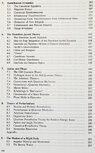
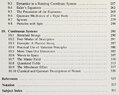
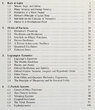
Classical Dynamics and its Quantum Analogues by Park

Here’s the toc
IMG_0069.jpegIMG_0068.jpegIMG_0067.jpeg
It’s written at the upperclassman level.
 
Let us know how you like that book, @Frabjous !

I took a number of classes from Prof Park back in the 1970s. A brilliant guy. His "pop sci" books are mostly slanted towards history of science, very well written and thorough.
 
Reply
  • Like
Likes   Reactions: Frabjous
gmax137 said:
Let us know how you like that book, @Frabjous !

I took a number of classes from Prof Park back in the 1970s. A brilliant guy. His "pop sci" books are mostly slanted towards history of science, very well written and thorough.
You’ve mentioned his Image of Eternity several times. I’ve ordered a copy.
 
gmax137 said:
Oops. If I start to tell that story again please let me know. Thanks 🙄
Your consistency is what made it attractive, so keep doing it.
 
Reply
  • Haha
  • Like
Likes   Reactions: gmax137 and PhDeezNutz
Ulrich Warnke "Gehirn-Magie - Der Zauber unserer Gefühlswelt". The author studied biology, physics, geography, and pedagogics, but mostly worked on biomedicin, biophysics, ... psychology and psychosomatics. He does try to describe how he interprets quantum physics and QFT. It is not overly wrong in the first two chapters, then gets "more wrong" in the third chapter when he tries to describe the weak force in the context of the biological relevance of chirality, and dives into gravitation, mass and spin. Then I skipped forward to the appendix in chapter 7, which was pure homeopathy, acupuncture, and esoterics and the reference section, which was much less esoterics, but more stuff related to what he actually worked on. (I currently read chapter 4, it doesn't seem to be as badly wrong as chapter 3, but already well on its way deep into esoterics.)

It is not pseudo-science, but it is not science or popular science either. It would say it is scientifically inspired speculation. I learned which physical questions are actually still unresolved from a biological perspective. Things like The Chiral Puzzle of Life, or the stuff that Stuart Hameroff and Roger Penrose worked on. Actually, the reason why I write this now is that I accidentally came across Stuart Hameroff defending himself in the comment section of Scott Aaronson's blog post “Can computers become conscious?”: My reply to Roger Penrose. The speculations themselves are obviously misguided, but the open questions they try to address are real.
 
Reply
  • Like
Likes   Reactions: pines-demon and Demystifier
Molecular Orbitals and Organic Chemical Reactions Reference Edition (Ian Fleming*)

Probably only going to use the first 100 pages or so. Great semi-quantitative treatment of MO theory for people who have a life.

*not the James Bond author.
 
Reply
  • Like
Likes   Reactions: Demystifier