What is the relationship between power and dissipated energy in cycling?

  • Thread starter Thread starter ZJacob
  • Start date Start date
  • Tags Tags
    Energy Power
Click For Summary

Homework Help Overview

The discussion revolves around the relationship between power and dissipated energy in the context of a cyclist navigating an inclined plane. The original poster presents a scenario involving calculations of dissipated energy due to friction and seeks clarification on the interpretation of energy values and the transition from discrete to differential forms.

Discussion Character

  • Exploratory, Assumption checking, Conceptual clarification

Approaches and Questions Raised

  • The original poster attempts to calculate the dissipated energy and power, questioning the sign of the energy value and the validity of transitioning from discrete energy changes to derivatives. Participants explore the implications of a stabilized velocity on energy dissipation and its graphical representation.

Discussion Status

Participants are engaged in clarifying the relationship between energy dissipation and its rate over time. There is an ongoing exploration of the implications of the cyclist's constant speed on the energy dissipation rate, with some guidance offered regarding the transition from ΔE to dE.

Contextual Notes

There are questions regarding the assumptions made in the calculations, particularly concerning the sign of the dissipated energy and the conditions under which the energy dissipation rate remains constant.

ZJacob
Messages
5
Reaction score
0
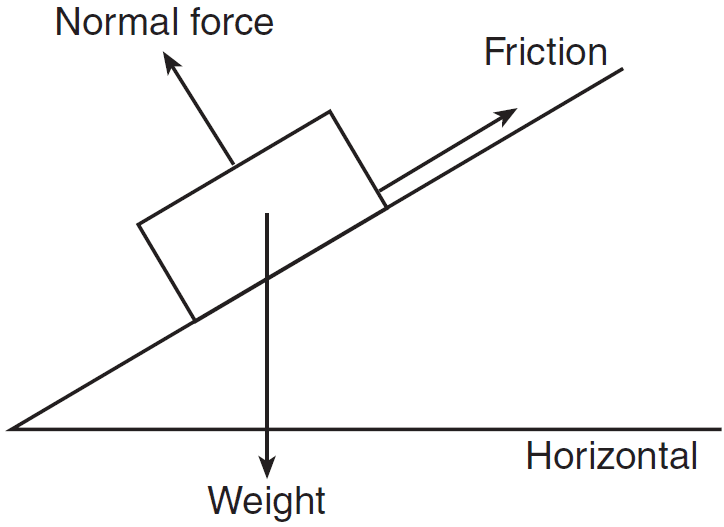
A cyclist is driving along an on an inclined plan with an angle of ## \alpha = 0,04 ##. His mass (including the bike and his stuff) is ## 75 Kg ##.

His speed at an altitude of ## 1200 m ## (1) is ## 50 Km/h ## and after some minutes, he pasts by an altitude of ## 950 m ## (2) with a speed of ## 62 Km/h ##

The image below is an illustration.
BoxInclude_June2003.png


1. What is the dissipated energy of friction?

After a certain point, the cyclist velocity stabilises at ## v = 45 Km/h ##.
2. What is the power of the dissipated energy of friction?

__________

1. The dissipated energy:

## \Delta E_{m} = E_{2} - E_{1} = m ( \frac{ v^{2}_{2} - v^{2}_{1} }{2} + g(z_{2} - z_{1}) ) = - 180 KJ ##

Should I say that the dissipated energy is ## E = - 180 KJ ## or ## E = 180 KJ ## ?

2. The dissipated power:

We know that: ## P = \frac{dE}{dt} ##

The above equation will become:

## \Delta E_{m} = E_{2} - E_{1} = mg(z_{2} - z_{1}) = mg sin (\alpha)(x_{2} - x_{1})##

Because ## v ## is constant.

For small value we take: ## sin \alpha = \alpha ##, thus: ## \Delta E_{m} = E_{2} - E_{1} = mg\alpha(x_{2} - x_{1})##

I don't see how to past to the derivative of ## E ## the dissipated energy. I mean, I need to have the expression of ## E ## so I can have its derivative.

* Am I allowed to past from ## \Delta E ## to ## dE ##?

* If yes. Dividing by ## dt ## is possible, too? so I can have the derivative?

Thank you for your help.
 
Physics news on Phys.org
Hi ZJacob!

I've moved your post to the homework forums. In the future, please make sure you post your homework questions in the appropriate homework forum and use the template provided when creating a post.
 
Anyone? :smile:
 
ZJacob said:
* Am I allowed to past from ## \Delta E## to ##dE## ?

Since the velocity has stabilized at 45 km/h, is the energy dissipated per unit of time changing? If you were to graph the energy dissipated over time, what would that look like? How is ##\frac{dE}{dt}## related to that graph?
 
Drakkith said:
Since the velocity has stabilized at 45 km/h, is the energy dissipated per unit of time changing? If you were to graph the energy dissipated over time, what would that look like? How is ##\frac{dE}{dt}## related to that graph?

* The energy dissipated per unit of time is not changing after the velocity has stabilized since: ## \Delta E_{m} = mg\alpha v ##.

* If I were to graph the energy dissipated, the graph would look like this:
identity.gif


* ## \frac{dE}{dt} ## is the slope.

Q: Could you please answer my first question about the sign of the dissipated energy? Thank you.
 
ZJacob said:
* ##\frac{dE}{dt}## is the slope.

So what's the slope of a straight line and how does that relate to ##\frac{ΔE}{Δt}##?

ZJacob said:
Q: Could you please answer my first question about the sign of the dissipated energy? Thank you.

I would if I could. :frown:
 
Drakkith said:
So what's the slope of a straight line and how does that relate to ##\frac{ΔE}{Δt}##?

I would if I could. :frown:

The slope of a straight line is: ## \frac{\Delta f}{\Delta x} ##. Also ##\frac{ΔE}{Δt}## represent the rate of change of the energy. Which can also be written as: ## \frac{dE}{dt} ##. So, I'm allowed to past from ## \Delta E_{m}## to ## dE_{m} ##. Correct?

Why? It would be wrong if I wrote: The energy dissipated is: ## E = - 180 KJ ## ? Thank you.
 
ZJacob said:
So, I'm allowed to past from ##\Delta E_{m}## to ##dE_{m}## . Correct?

As far as I know, yes.

ZJacob said:
Why? It would be wrong if I wrote: The energy dissipated is: ##E=−180KJ##?

I'm sorry but I don't know for certain.
 
Drakkith said:
As far as I know, yes.
I'm sorry but I don't know for certain.

Thank you.
 

Similar threads

  • · Replies 6 ·
Replies
6
Views
1K
  • · Replies 28 ·
Replies
28
Views
3K
  • · Replies 30 ·
2
Replies
30
Views
2K
Replies
9
Views
837
  • · Replies 13 ·
Replies
13
Views
3K
  • · Replies 3 ·
Replies
3
Views
2K
Replies
4
Views
3K
  • · Replies 12 ·
Replies
12
Views
3K
  • · Replies 8 ·
Replies
8
Views
2K
Replies
9
Views
2K