nabil25
- 6
- 0
Hi,
While studying the coaxial cable, i noticed that the magnetic field of the inner conductor can pass through the hollow conductor (can be calculated in the region 3). However, the boundary condition of the magnetic field at the surface (between dielectric and perfect conductor) of a perfect conductor is known as the tangential component of H (Ht = Js surface current density) and the normal component is Hn = 0. Inside the perfect conductor, we have Ht = 0 and Hn = 0.
So why do we superpose the magnetic field of the inner conductor and the hollow conductor when calculating the magnetic field in the region 3 ?
In this case we suppose that the current flowing in the inner conductor is i1 and in the hollow conductor is i2 (not like the coax,here i2 is not equal to -i1).
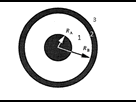
Thank you in advance.
While studying the coaxial cable, i noticed that the magnetic field of the inner conductor can pass through the hollow conductor (can be calculated in the region 3). However, the boundary condition of the magnetic field at the surface (between dielectric and perfect conductor) of a perfect conductor is known as the tangential component of H (Ht = Js surface current density) and the normal component is Hn = 0. Inside the perfect conductor, we have Ht = 0 and Hn = 0.
So why do we superpose the magnetic field of the inner conductor and the hollow conductor when calculating the magnetic field in the region 3 ?
In this case we suppose that the current flowing in the inner conductor is i1 and in the hollow conductor is i2 (not like the coax,here i2 is not equal to -i1).
Thank you in advance.