bombo
- 2
- 1
Hi
I need help understanding the frequency characteristics of operational amplifiers. I do not understand why the output of an Op-Amp behaves much differently when the frequency of the input is increased.
For example during the lab when the input to an inverting Op-Amp circuit was a sine wave.
At 1kHz it behaved as normal.
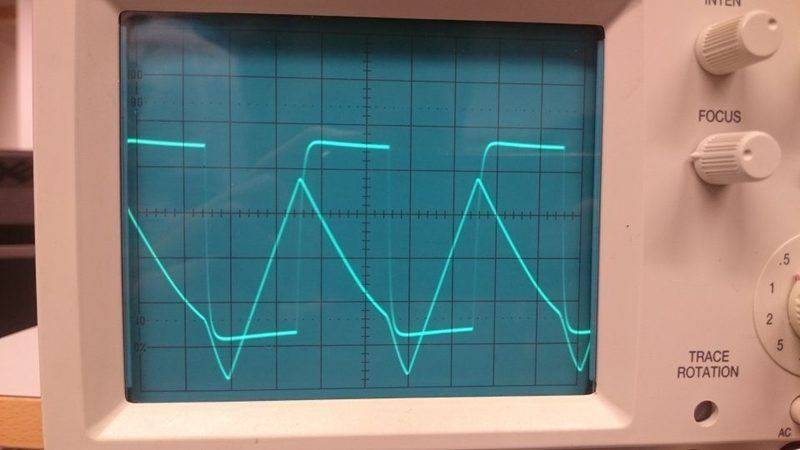
At 50kHz the output was not inverting anymore but triangular-like instead, as shown in the picture. Could anyone explain why the output behaves like this?
I need help understanding the frequency characteristics of operational amplifiers. I do not understand why the output of an Op-Amp behaves much differently when the frequency of the input is increased.
For example during the lab when the input to an inverting Op-Amp circuit was a sine wave.
At 1kHz it behaved as normal.
At 50kHz the output was not inverting anymore but triangular-like instead, as shown in the picture. Could anyone explain why the output behaves like this?