Discussion Overview
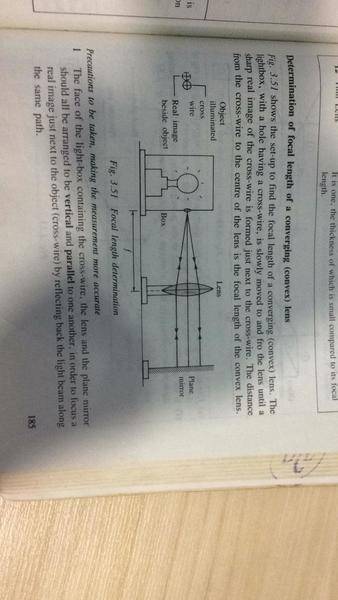
The discussion revolves around the formation of images by mirrors and lenses, specifically addressing why the image appears next to the object rather than directly overlapping it. The scope includes conceptual understanding and practical implications in optics.
Discussion Character
- Conceptual clarification, Technical explanation
Main Points Raised
- One participant questions why the image formed by a plane mirror does not overlap the object, despite light rays reflecting back along the same path.
- Another participant suggests that if the lens and mirror are parallel and the lens axis passes through the object's center, the image can be positioned slightly to the side for practical purposes.
- A participant expresses confusion about the practicality of having the image not overlap the object and seeks clarification on how the image is produced next to it.
- Further elaboration is provided on how rotating the mirror can cause the image to form to the side due to the angle at which light rays enter the lens.
- One participant expresses gratitude and indicates understanding of the explanation provided.
Areas of Agreement / Disagreement
Participants express differing levels of understanding regarding the image formation process, with some confusion remaining about the practical implications of image positioning. No consensus is reached on the conceptual clarity of the topic.
Contextual Notes
The discussion includes assumptions about the alignment of optical components and the effects of angle on image formation, which are not fully resolved.