Work energy theorem by variable force

Click For Summary

Discussion Overview

The discussion revolves around the work-energy theorem in the context of variable forces acting on a particle. Participants explore the implications of variable forces on the equations of motion, the derivation of the work-energy theorem, and the relationship between force, mass, and acceleration. The scope includes theoretical considerations and mathematical reasoning related to classical mechanics.

Discussion Character

  • Technical explanation
  • Conceptual clarification
  • Debate/contested
  • Mathematical reasoning

Main Points Raised

  • Some participants question how to express acceleration when dealing with variable forces, noting that traditional equations assume constant forces.
  • Others argue that the correct derivation of the work-energy theorem involves integrating along the trajectory of the particle, which requires knowledge of the equation of motion.
  • One participant emphasizes that the force can be constant in certain cases, such as gravitational force near Earth, but variable forces are more common in many scenarios.
  • Some participants clarify that the equations of motion, such as those derived from Newton's second law, are applicable only when forces are constant, while variable forces require different approaches.
  • There is a discussion about the relationship between force and potential energy, particularly in the context of spring forces and how they relate to the work-energy theorem.
  • One participant introduces the concept of potential energy and its relation to variable forces, suggesting that energy conservation can be derived from the work-energy theorem.

Areas of Agreement / Disagreement

Participants express multiple competing views regarding the treatment of variable forces and their implications for the equations of motion. The discussion remains unresolved, with differing opinions on how to apply the work-energy theorem in the context of variable forces.

Contextual Notes

Some participants highlight limitations in applying standard equations of motion when forces are not constant, indicating that assumptions about force uniformity can lead to incorrect conclusions. The discussion also touches on the need for careful integration when dealing with variable forces and potential energy.
rudransh verma
Gold Member
Messages
1,067
Reaction score
96
Its Good to be Back!
From Resnik, Fundamentals of physics
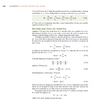
: Consider a particle of mass m, moving along an x-axis and acted on by a net force F(x) that is directed along that axis. The work done on the particle by this force as the particle moves from position ##x_i## to position ##x_f## is given by
##\int_{x_i}^{x_f} F(x) \, dx=\int_{x_i}^{x_f} ma \, dx##.
If ##F## is a variable force then how can we write ##ma##?
 

Attachments

  • sf.png
    sf.png
    48.3 KB · Views: 238
Physics news on Phys.org
The formula reads (after repairing the double-subscript problems)
$$\int_{x_i}^{x_f} F(x) \, dx=\int_{x_i}^{x_f} ma \, dx .$$
As you rightfully figured out yourself that simply doesn't make sense. As I wrote already some time ago, trying to clarify your questions concerning the work-energy theorem, the correct derivation of the work-energy theorem is an integration along the trajectory of the particle, i.e., along the solution of the equation of motion, which reads
$$m a=m\ddot{x} = F(x),$$
which is an ordinary differential equation, i.e., you look for a solution ##x(t)## of the equation, involving derivatives of this unknown function.

On the other hand, just from having the equation of motion you can derive some properties of this solution, even without explicitly knowing it. For the work-energy theorem, just multiply with ##v=\dot{x}## and integrate from ##t_i## to ##t_f##,
$$ \int_{t_i}^{t_f} m \mathrm{d} t \dot{x} \ddot{x} = \int_{t_i}^{t_f} \mathrm{d t} \frac{\mathrm{d}}{\mathrm{d} t} \left (\frac{m}{2} \dot{x}^2 \right) = \frac{m}{2} \dot{x}^2(t_f)-\frac{m}{2} \dot{x}^2(t_i) =\int_{t_i}^{t_f} \mathrm{d} t \dot{x}(t) F[x(t)]=W.$$
The integral is along the trajectory, i.e., in this very general case you cannot say much more than that the change of kinetic energy ##E_{\text{kin}}=m v^2/2## is the work done by the forces on the particle, ##W##, along its trajectory.
 
  • Like
Likes   Reactions: Hamiltonian and russ_watters
vanhees71 said:
., along the solution of the equation of motion, which reads
ma=mx¨=F(x),
which is
When I did questions on laws of motion the force was always constant. ##F_{net}=ma##. All those free body diagrams, the forces acted on the body were constant forces. I don't understand.
Your eqn of ##F(x)## is suggesting that force can never be constant.
 
Of course ##F## can be constant (e.g., the gravitational field close to Earth can be approximated as a constant force ##F=mg##), but usualy it's not. The most simple example is a particle fixed at a spring. There the force is proportional to the elongation of the spring relative to its equilibrium length, i.e., if ##x=0## is the equilibrium position of the particle, then ##F=-k x## with ##k=\text{const}## (Hooke's law, valid for not too large elongations of the spring).
 
vanhees71 said:
Of course ##F## can be constant (e.g., the gravitational field close to Earth can be approximated as a constant force ##F=mg##), but usualy it's not. The most simple example is a particle fixed at a spring. There the force is proportional to the elongation of the spring relative to its equilibrium length, i.e., if ##x=0## is the equilibrium position of the particle, then ##F=-k x## with ##k=\text{const}## (Hooke's law, valid for not too large elongations of the spring).
Ok! But ## ma=m\frac{d^2x}{dt^2}=F(x)## is not equation of motion. It’s the v=u+at, s=ut+1/2at^2, and v^2=u*2=2as.
 
No, if ##F## is not constant your solutions are not the solutions of the equation of motion. For my example of the force of a particle on a spring you get
$$m \ddot{x}=-k x.$$
It's easy to see that the general solution is
$$x(t)=A \cos(\omega t)+B \sin(\omega t) \quad \text{with} \quad \omega=\sqrt{\frac{k}{m}},$$
where ##A## and ##B## are integration constants, which you can fix with the initial conditions,
$$x(0)=x_0, \quad \dot{x}(0)=v_0,$$
which leads to
$$A=x_0, \quad B=\frac{v_0}{\omega}.$$
 
  • Like
Likes   Reactions: rudransh verma
vanhees71 said:
No, if F is not constant your solutions are not the solutions of the equation of motion. For my example of the force of a particle on a spring you get
What solution?
 
The solution of the equation of motion of course!
 
vanhees71 said:
The solution of the equation of motion of course!
You mean the values of s,t,a,v,u?
 
  • #10
rudransh verma said:
It’s the v=u+at, s=ut+1/2at^2, and v^2=u*2=2as.

These are true only if F is constant.
 
  • Like
Likes   Reactions: vanhees71
  • #11
It depends on, how you define your quantities.

If ##F=\text{const}## in my notation, where ##x## is the coordinate of the particle along the direction of consideration you have
$$m \ddot{x}=F; \Rightarrow \; \ddot{x}=\frac{F}{m}$$
This you simply integrate with the initial conditions ##x(0)=x_0## and ##\dot{x}(0)=v_0##:
$$\dot{x}(t)-\dot{x}(0)=\dot{x}(t)-v_0=\frac{F}{m} t \; \Rightarrow \; \dot{x}(t)=\frac{F}{m} t + v_0$$
and once more
$$x(t)-x(0)=x(t)-x_0=\frac{F}{2m} t^2 + v_0 t \; \Rightarrow \; x(t)=\frac{F}{2m} t^2 + v_0 t +x_0.$$
For other kinds of forces, which are not constant, these are obviously not the right solutions of the equations of motion.

I've given the next-most-simple example of a force law above ("harmonic motion").
 
  • #12
vanhees71 said:
For other kinds of forces, which are not constant, these are obviously not the right solutions of the equations of motion.
I thought suvat eqns are called eqn of motion but it seems like you are calling Newton’s second law as eqn of motion.
 
  • #13
Sometimes Newton's second law equations are called dynamical equations of motion, and x(t), y(t), z(t) are called kinematical equations of motion.
 
  • Informative
Likes   Reactions: rudransh verma
  • #14
rudransh verma said:
If ##F## is a variable force then how can we write ##ma##?
Because ##a## is also a variable. By definition:
$$F(x) = \frac{d(mv)}{dt}$$
Where ##m## is assumed to be constant such that:
$$F(x) = m\frac{dv}{dt} = ma$$
Therefore if ##F(x)## varies with distance, ##a## must also vary with distance since we already assumed ##m## doesn't. We can then conclude:
$$F(x) \propto a$$
And if ##F(x)## is constant, then ##a## is also constant.

Note that it is possible that your force is constant for a given distance, say from ##x_1## to ##x_2##, and then is different, but still constant, from ##x_2## to ##x_3##. Your equations of motion still stand, only with a different value for acceleration in both traveled paths.
 
  • Like
Likes   Reactions: nasu
  • #15
vanhees71 said:
For other kinds of forces, which are not constant, these are obviously not the right solutions of the equations of motion.
Ok! I think I got you. I have another question. ##\Delta U=-\int_{x_i}^{x_f} -kx \,dx## for elastic potential energy of spring. We know that when integrating we take dx such that F becomes constant so that we can use the formula of ##W=fd\cos\theta##. I don’t think ##-kx## is a constant for small element dx.
 
  • Like
Likes   Reactions: vanhees71
  • #16
$$\newcommand{\dd}{\mathrm{d}}$$
That's an important point, where the work-energy theorem becomes much more profound. That's the case of forces that have a potential. Indeed for the linear-froce law of a spring you can write
$$F(x)=-k x=-V'(x) \; \Rightarrow \; V(x)=-\frac{k}{2} x^2 + V_0,$$
where ##V_0## is an arbitrary constant, which you can as well set to 0, which I'll do for simplicity, i.e., from know on we use the potential
$$V(x)=\frac{k}{2} x^2$$
to describe the force as
$$F(x)=-V'(x).$$
Now the right-hand side of the work-energy theorem becomes
$$W=\int_{t_i}^{t_f} \dd t \dot{x}(t) F[x(t)]=-\int_{t_i}^{t_f} \mathrm{d} t \dot{x}(t) V'[x(t)] = -\int_{t_1}^{t_2} \dd t \frac{\dd}{\dd t} V[x(t)]=-\{V[x(t_f)]-V[x(t_i)] \}.$$
Now you have
$$E_{\text{kin}}(t_f)-E_{\text{kin}}(t_i)=-\{V[x(t_f)] - V[x(t_i)]\}.$$
This you can now write in the form
$$E_{\text{kin}}(t_f)+V[x(t_f)]=E_{\text{kin}}(t_i) + V[x(t_i)].$$
Since now ##t_i## and ##t_f## are completely arbitrary that simply tells you that the total energy, defined as
$$E=E_{\text{kin}} + V(x)$$
is a constant for all solutions of the equation of motion. That's the energy-conservation law and much more useful than the very general work-energy theorem, because here you get useful additional information about the solution without knowing this solution before, because we could calculate the work in terms of the potential without having the concrete solution.
 
  • #17
vanhees71 said:
Indeed for the linear-froce law of a spring you can write
So is -kx a constant force doing work for dx distance? Do we take a average value of x for dx distance making -kx a constant for dx distance?
 
  • #18
No it's what I wrote ##F=-k x##, where ##x## is the position of the particle counted from the equilibrium point of the spring, i.e., the force is proportional to the elongation of the spring relative to its equilibrium length and opposite to the direction (i.e., if you stretch or compress the spring it reacts such as to go back to its equilibrium position; for not too large stretching or compressing the force is proportional to the deviation of the length of the spring from its equilibrium length, which is Hooke's Law).
 
  • Like
Likes   Reactions: rudransh verma
  • #19
rudransh verma said:
So is -kx a constant force doing work for dx distance? Do we take a average value of x for dx distance making -kx a constant for dx distance?
In calculus, dx distance is zero, so there is only one value and it is exact.
 
  • #20
russ_watters said:
In calculus, dx distance is zero, so there is only one value and it is exact.
As you're no doubt aware - but to clarify for the OP - this description isn't correct. You partition the integration interval into a finite number of regions and choose a value ##x_i^*## of ##x## anywhere within the ##i^{\mathrm{th}}## region (e.g. the left, the centre, the right,...). When the limit is taken it turns out that the sum doesn't care where you chose ##x_i^*## in that region.
 
  • Like
  • Informative
Likes   Reactions: nasu and rudransh verma
  • #21
vanhees71 said:
No it's what I wrote F=−kx, where x is the position of the particle counted from the equilibrium point of the spring,
Ok! So that’s how the force is constant for dx distance and we can apply the definition of work.
 
  • #22
There is no ##\mathrm{d} x## distance in the formula for the force. I gave a complete calculation of the work-energy theorem in terms of the potential of the force above in #16. There the corresponding integrals occur!
 
  • #23
vanhees71 said:
There is no dx distance in the formula for the force. I
No I mean dx is small length in the formula of dW when finding the change in potential energy of gravitation and spring.
 
  • Like
Likes   Reactions: vanhees71

Similar threads

  • · Replies 31 ·
2
Replies
31
Views
4K
  • · Replies 77 ·
3
Replies
77
Views
6K
  • · Replies 8 ·
Replies
8
Views
2K
  • · Replies 54 ·
2
Replies
54
Views
6K
  • · Replies 24 ·
Replies
24
Views
3K
  • · Replies 8 ·
Replies
8
Views
2K
  • · Replies 4 ·
Replies
4
Views
3K
  • · Replies 9 ·
Replies
9
Views
2K
  • · Replies 1 ·
Replies
1
Views
2K
  • · Replies 16 ·
Replies
16
Views
3K