2018-10-18 Significant storms around Sydney, Australia

  • Thread starter Thread starter davenn
  • Start date Start date
  • Tags Tags
    Australia storms
Click For Summary
SUMMARY

On October 17th and 18th, 2018, Sydney experienced severe thunderstorms characterized by intense lightning, heavy rainfall, and surface flooding. The discussion highlights the role of Convective Available Potential Energy (CAPE) and the Lifted Index (LI) in predicting severe weather, with CAPE values exceeding 2000 J/kg indicating explosive storm potential. Participants noted that while the last three years had been below average for storm activity in the Sydney basin, recent events have reignited interest among storm chasers. The conversation also touched on the implications of climate change on weather patterns in Australia.

PREREQUISITES
  • Understanding of meteorological concepts such as CAPE (Convective Available Potential Energy)
  • Familiarity with the Lifted Index (LI) and its significance in weather forecasting
  • Basic knowledge of atmospheric stability and its impact on storm development
  • Awareness of climate change effects on weather patterns
NEXT STEPS
  • Research advanced meteorological forecasting techniques using CAPE and LI
  • Explore the relationship between climate change and extreme weather events in Australia
  • Study the methodologies for calculating CAPE and LI in real-time weather analysis
  • Investigate the historical weather patterns in the Sydney basin for comparative analysis
USEFUL FOR

Meteorologists, storm chasers, climate scientists, and anyone interested in severe weather prediction and its relationship with climate change.

davenn
Science Advisor
Gold Member
Messages
9,715
Reaction score
11,761
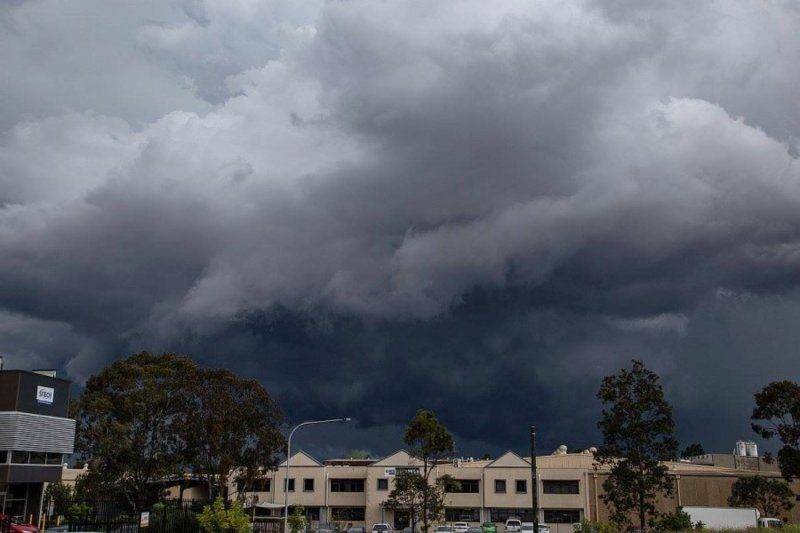
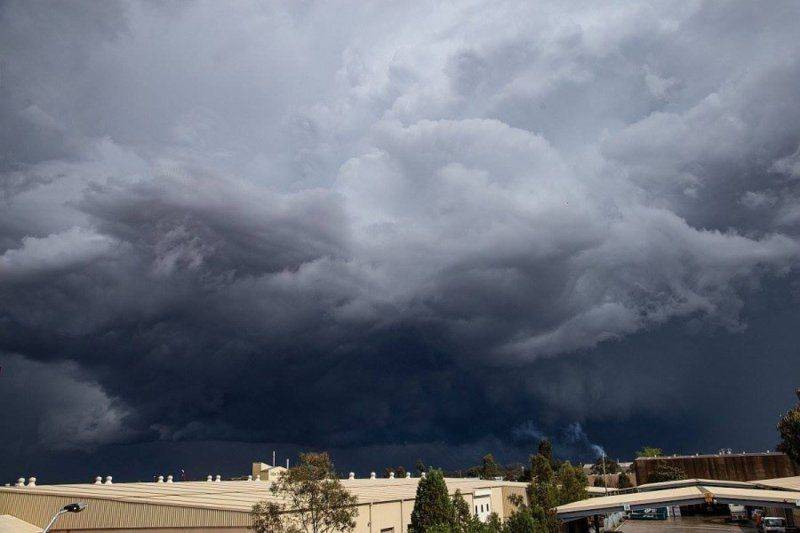
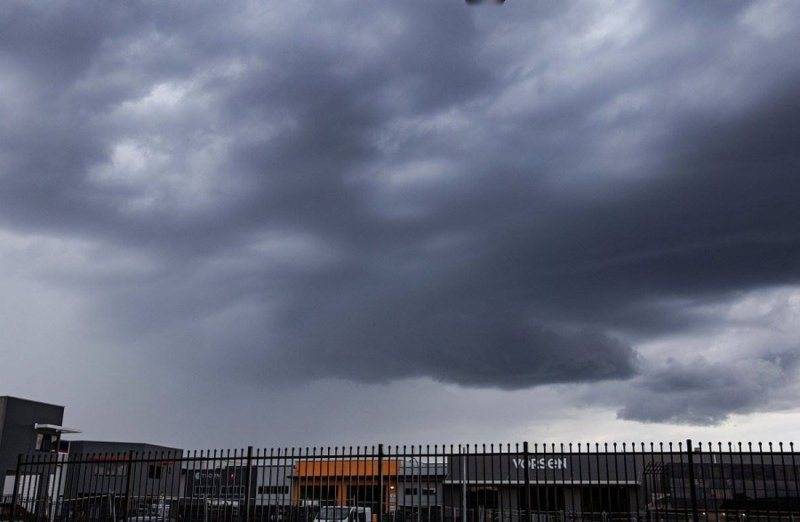
the last couple of days, 17th and 18th Oct have produced some severe thunderstorms in the Sydney basin and surrounding region.
Here's several photos I did from yesterday's activity from my work place in western Sydney ( out towards Penrith)

Intense lightning, heavy rain and surface flooding and some hail

Those second two pic's really show the storm at its menacing worst.

181018 storm1.jpg

181018 storm2a.jpg

181018 storm2b.jpg

Dave
 

Attachments

  • 181018 storm1.jpg
    181018 storm1.jpg
    34.6 KB · Views: 725
  • 181018 storm2a.jpg
    181018 storm2a.jpg
    42.1 KB · Views: 719
  • 181018 storm2b.jpg
    181018 storm2b.jpg
    39 KB · Views: 800
  • Like
Likes   Reactions: BillTre
Earth sciences news on Phys.org
Wowie. Is this typical, or have you been seeing increases the last few years like North America?
 
  • Like
Likes   Reactions: davenn
Reasonably typical, the last ~ 3 years have been below par for the greater Sydney basin area. most of the best activity has been mainly to the north of us, towards the tropics.
so finally seeing some respectable stuff again … bad for the residents ( me included) and insurance
companies, but great for us storm chasers ( me included).
Tomorrow, Saturday 20th is looking pretty good from the predictions and we are supposed to be
having a local chasers get-together tomorrow nite at home … beer, pizza and lots of good chase
stories and videos :smile:tomorrow's settings …….

The first one is the CAPE

upload_2018-10-19_19-58-14.png
  1. Convective available potential energy - Wikipedia
    https://en.wikipedia.org/wiki/Convective_available_potential_energy
    168159a3.png
    f9bbbf72.png

    Overview
    In meteorology, convective available potential energy (CAPE), is the amount of energy a parcel of air would have if lifted a certain distance vertically through the atmosphere. CAPE is effectively the positive buoyancy of an air parcel and is an indicator of atmospheric instability, which makes it very valuable in predicting severe weather. It is a form of fluid instability found in thermally stratified atmospheres in which a colder fluid overlies a warmer one. An air mass will rise if it is less dense than the surrounding air (its buoyant force is greater than its weight). This can create vertically developed clouds due to the rising m…
Anything over 1000 J/kg is good. In those deepest red areas it's over 2000 J/kg. Whilst 2000+ is very good that things really get explosive
and severe lightning storms can be expected.

The next thing we look at is the LI, Lifted Index...…

upload_2018-10-19_20-21-12.png
Lifted index
From Wikipedia, the free encyclopedia

Computer generated Lifted Index field from April 6th, 2009, at 1 pm EDT. Unstable areas are in yellow (slightly) and red (highly) while the stable zone is in blue.
The lifted index (LI) is the temperature difference between the environment Te(p) and an air parcel lifted adiabatically Tp(p) at a given pressure height in the troposphere (lowest layer where most weather occurs) of the atmosphere, usually 500 hPa (mb). The temperature is measured in Celsius. When the value is positive, the atmosphere (at the respective height) is stable and when the value is negative, the atmosphere is unstable.

Determining LI[edit]
LI can be computed using computer algorithms but can also be determined graphically. To do this, generally, the parcel is lifted from the portion of the planetary boundary layer (PBL) that lies below the morning inversion. The air here should be about 60 to 65% RH, which is then lifted along the dry adiabat (see also adiabatic process) to the lifting condensation level (LCL), which is the intersection of that curve with the average mixing ratio in the boundary layer. Once the LCL is found, the parcel is lifted along the moist adiabat to 500 mb. It is then that one finds LI = Te(p) - Tp(p).

LI is generally scaled as follows:

  • LI 6 or Greater, Very Stable Conditions
  • LI Between 1 and 6 : Stable Conditions, Thunderstorms Not Likely
  • LI Between 0 and -2 : Slightly Unstable, Thunderstorms Possible, With Lifting Mechanism (i.e., cold front, daytime heating, ...)
  • LI Between -2 and -6 : Unstable, Thunderstorms Likely, Some Severe With Lifting Mechanism
  • LI Less Than -6: Very Unstable, Severe Thunderstorms Likely With Lifting Mechanism
Significance to thunderstorms[edit]
The lifted index can be used in thunderstorm forecasting, however, convective available potential energy (CAPE) is considered by most as a superior measurement of instability and is preferred by many meteorologists for convection forecasting.[1] However, LI is easier and faster to determine without using a computer, as determining CAPE requires integration from one level to another.
Note this comment and then look at that chart above

LI Less Than -6: Very Unstable, Severe Thunderstorms Likely With Lifting Mechanism

The LI's in the centre of those purple regions are predicted to get down to -7 to -8 …. VERY unstable
That makes us storm chasers get excited and let out a WooHoo ! haha.
berkeman said:
... or have you been seeing increases the last few years like North America?

They ( the professional met office people) keep telling us mere mortals that, with the global warming, we should be expecting more intense weather patterns …
more droughts, and possibly less storms but those that do occur to be more intense.

Wellllllll…… haha …. Australia has always been a place of extremes and the weather/climate is no exception. So far we are not really seeing any of the "out there" extremes that they have been predicting … so who knows ??cheers
Dave
 

Attachments

  • upload_2018-10-19_19-58-14.png
    upload_2018-10-19_19-58-14.png
    31.1 KB · Views: 609
  • upload_2018-10-19_20-21-12.png
    upload_2018-10-19_20-21-12.png
    26.5 KB · Views: 651
  • 168159a3.png
    168159a3.png
    146 bytes · Views: 576
  • f9bbbf72.png
    f9bbbf72.png
    158 bytes · Views: 541
  • Like
Likes   Reactions: berkeman

Similar threads

  • · Replies 1 ·
Replies
1
Views
3K
  • · Replies 1 ·
Replies
1
Views
3K
  • · Replies 39 ·
2
Replies
39
Views
9K