Look up "Kirchoff's voltage law"...google it.
For random example, If you have one voltage source of say 100 volts and just one resistor, then and only then does the entire 100 volts goes across that one resistor.
If you have same voltage source and say 2 resistors of equal value, then 50 volts will go across each of them...adding up to 100 volts.
If you have same voltage source and have 2 resistors of different value say, 10 ohms and 20 ohms, then the voltage will divide across the resitors with a ratio.
100 volts X (10/(10+20))...so you will get 33.33 volts across the 10 ohm...and 66.66 across the 20 ohm.
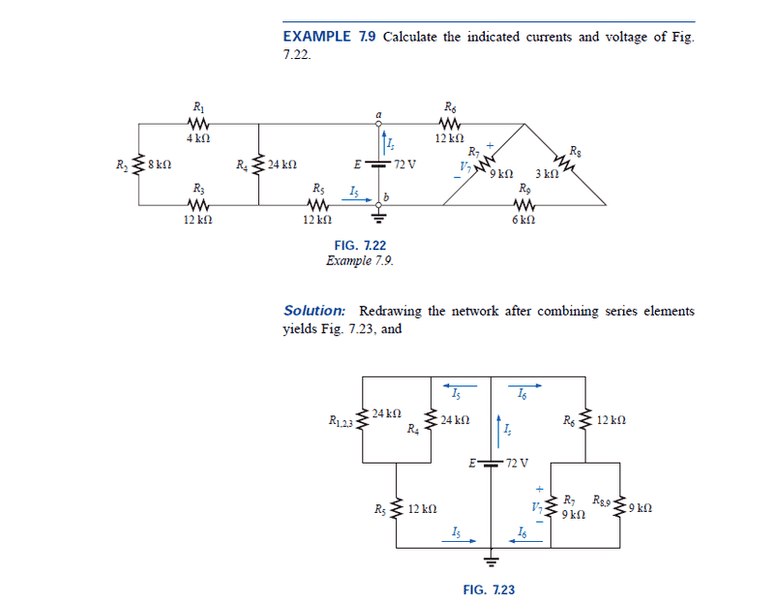
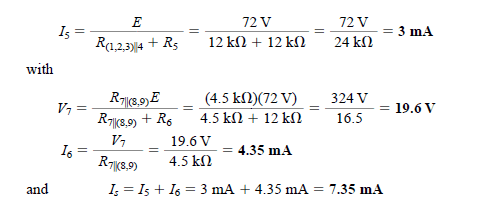
To work the problem above, you simply combine the two 9 ohms in parallel and you get 4.5 ohms.
Then use voltage divider above...
72 X (4.5/(4.5+12) = 19.6 volts across that branch or 4.36 ma using V=IR which agrees with answer above.
Now that you know the 19.6 across that branch, spread the resistors out back to there originial shape...two 9 ohm resistors.
Using ohms law again, you can now check the currents again. The two branches should add up to the 4.36 ma.
19.6/ 9 ohms = 2.18 ma a piece...yes, checks out according to Kirchoffs Current law (also look up in google)