About Using transistor BJT as a switch

Click For Summary
SUMMARY

The discussion centers on using Bipolar Junction Transistors (BJTs) as switches, specifically addressing the configurations of base-emitter (B-E) and base-collector (B-C) voltages. Participants confirm that both V_B > V_E and V_B > V_C can activate the transistor in saturation mode, allowing current flow and lighting an LED. However, using the B-C configuration is not recommended as it leads to reverse operation, resulting in lower performance and potential damage. The Q2SC1815 transistor is mentioned, highlighting its breakdown voltage of 15V, which supports saturation mode operation.

PREREQUISITES
  • Understanding of Bipolar Junction Transistor (BJT) operation
  • Knowledge of saturation and cutoff modes in transistor circuits
  • Familiarity with transistor biasing techniques
  • Basic electronics principles, including voltage and current relationships
NEXT STEPS
  • Study the characteristics of NPN and PNP transistors in switching applications
  • Learn about transistor biasing methods and their impact on performance
  • Explore the implications of reverse operation in BJTs and its effects on circuit design
  • Investigate the specifications and applications of the Q2SC1815 transistor
USEFUL FOR

Electronics students, hobbyists, and engineers interested in transistor applications, particularly in switching circuits and biasing techniques.

ajack
Messages
6
Reaction score
0
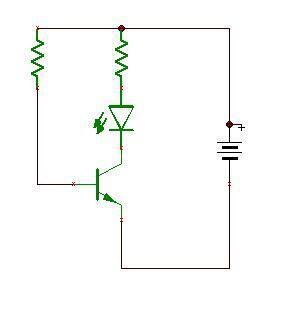
In order to use BJT as a switch, it's very popular to do as the picture.
A Switch.JPG

In the picture, V_B > V_E, so there's a current flow I_BE control the I_CE. In the other way, V_B > V_E generates the current I_CE, and the lamp will light on. But, I change the connection a little:
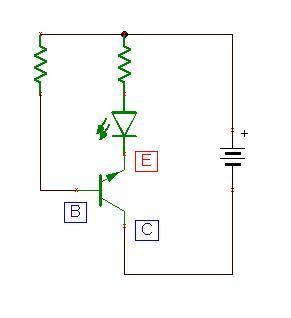
B Switch.JPG

I'll let the V_B > V_C, it means, i change the position of C and E in that picture. And I found out that the lamp still light on. That means V_B > V_C also generates the current I_CE to make the light on. But in theory, only V_B > V_E make the light on
My questions are:
1. in saturated mode, there's no difference between C and E, you could use V_B > V_E or V_B > V_C and the lamp still light on, is it right?
2. Which way is better?
 
Engineering news on Phys.org
When biasing a transistor circuit, the base and the collector are usually connected to the same battery terminal. For an npn transistor (as with your first diagram), the base and the collector should have a positive voltage, and for a pnp transistor the base and the collector should have a negative voltage.

You will see that the many methods of biasing a transistor follows what I stated above.

WHen used in a switching circuit and the switch is open, the transistor is said to be cutoff. If the switch is closed, this means that electrons flows from the emitter through to the base of the transistor. The base current will enable a much larger electron flow from emitter to collector, thus lighting and LED for example. In this state of maximum circuit current, the transistor is said to be saturated.
 
I'll let the V_B > V_C, it means, i change the position of C and E in that picture. And I found out that the lamp still light on. That means V_B > V_C also generates the current I_CE to make the light on. But in theory, only V_B > V_E make the light on
If the LED is lighting in the 2nd diagram, it's probably because you are putting the B-E juntion of the NPN transistor into reverse Zener breakdown, and that current is then flowing B-C. Depending on the current flowing, reverse Zener breakdown of a B-E junction on a BJT may not be destructive.

The second diagram is not the way you connect an NPN transistor -- not unless you want to reverse Zener the B-E junction on purpose (there are some times when you might want to do that -- advanced quiz question... When?).

For the second diagram, you should use a PNP transistor and pull the base down through a resistor as Ranger has said.
 
When using transistor NPN in switch mode as 2nd diagram, I use the 6V source, and I use Q2SC1815. But the Q2SC1815's breakdown Volt of B-E Junction is 15V. That means the transistor still work in staturation mode. After doing as 2nd diagram, although what Ranger said is right, but I wonder the reason people follow that way is habit, or there's another reason?
 
Well if it's not Zener breakdown of the B-E junction, then you are using the NPN transistor in reverse mode, where the beta is much lower than in forward mode. Don't use a transistor upside-down like that -- it's a mistake.
 
berkeman said:
Well if it's not Zener breakdown of the B-E junction, then you are using the NPN transistor in reverse mode, where the beta is much lower than in forward mode. Don't use a transistor upside-down like that -- it's a mistake.
Yes, that's right. But the matters are switching the light on. In switching mode (saturation mode), the current I_C is constant (I_C doesn't increase although you increase I_B). We only care about how to light the LED on because we use the transistor as a switch in this case. So, in this case, I wonder how the LED still light on :(
 
It is working because the NPN transistor is somewhat symmetric, with diode structures in both the B-E and B-C directions. *BUT* the transistor silicon structure of the transistor is optimized for forward operation, not reverse operation. If you did some tests of beta and frequency response, you would find that the forward (regular) mode of operation is much better than the reverse mode. That is why the C and E are labelled on the dang part. So you don't get the part put in backwards and get less performance than the datasheet specs. Your LED drive circuit is not very challenging for the transistor, so it is able to work even when installed incorrectly. If you draw a transistor like that on a test, however, you will get the problem wrong. And if you draw a transistor like that in an interview, you will not get the job. Do you understand that part?
 
Yeah, thank for your advice. And now I understand why my teacher is really angry when I do as the 2nd diagram :P. Anyway, thank you very much!
 
ajack said:
When using transistor NPN in switch mode as 2nd diagram, I use the 6V source, and I use Q2SC1815. But the Q2SC1815's breakdown Volt of B-E Junction is 15V. That means the transistor still work in staturation mode. After doing as 2nd diagram, although what Ranger said is right, but I wonder the reason people follow that way is habit, or there's another reason?
Using the collector as the emitter is not habit! While it is not the normal arrangement, it is not unknown. There are drawbacks, including the need to pump in a lot more base current (for the same load) because Beta is so much lower. From memory, you can get a slightly better performance as a switch in one or two parameters. I think for small collector currents, using the transistor inverted results in lower ON voltage. Or maybe a lower small signal resistance, I just forget exactly.

But certainly, as you have been told, it should not be used for normal logic switching. In any case, OP is probably in middle management by now, and no longer interested in design detail. :)
 

Similar threads

  • · Replies 11 ·
Replies
11
Views
10K
  • · Replies 19 ·
Replies
19
Views
2K
Replies
5
Views
6K
  • · Replies 5 ·
Replies
5
Views
4K
  • · Replies 10 ·
Replies
10
Views
3K
Replies
68
Views
7K
  • · Replies 5 ·
Replies
5
Views
3K
Replies
19
Views
7K
  • · Replies 49 ·
2
Replies
49
Views
4K
  • · Replies 5 ·
Replies
5
Views
4K