Apparently broken circuits in a resin cast stator

Click For Summary

Discussion Overview

The discussion revolves around a problem encountered while building a three-phase delta wired alternator, specifically regarding a stator that was cast in fiberglass resin. Participants explore potential reasons for the lack of electrical response from the terminals after the casting process, including testing methods and possible damage to the wiring.

Discussion Character

  • Exploratory
  • Technical explanation
  • Debate/contested

Main Points Raised

  • One participant reports that after casting the stator, no pairs of terminals registered a closed circuit, despite previous tests indicating connectivity.
  • Another participant suggests that the heat generated during the curing of the fiberglass resin could have caused damage to the wiring.
  • Some participants propose energizing the coils to check for a magnetic field as a diagnostic step.
  • There is a suggestion to clean the leadout wires to ensure no resin coating is affecting conductivity.
  • A participant expresses doubt that the casting process generated enough heat to melt solder or damage the wiring significantly.
  • Another participant raises the possibility that heating and cooling strains could have caused subtle breaks in the wiring, despite no visible damage being apparent.
  • One participant proposes a high voltage low ampere test to identify any small breaks in the wire that may not be visible.

Areas of Agreement / Disagreement

Participants express differing views on the cause of the issue, with some attributing it to potential heat damage and others to mechanical strains during the curing process. No consensus is reached regarding the exact cause of the lack of electrical response.

Contextual Notes

There are unresolved questions regarding the specific temperatures reached during the resin curing process and the potential effects on the copper wiring and solder connections. The discussion also highlights the uncertainty surrounding the integrity of the connections at the terminals.

desquee
Messages
18
Reaction score
1
I've been building a 3 phase delta wired alternator. I recently cast the stator in fiberglass resin, and now i get no response from the terminals. Before casting, I used the multimeter's resistance setting to test the connections between each pair of the three terminals, and all registered a closed circuit. After casting the stator, no pair of terminals registered a closed circuit (I tried two different multimeters).

Since the stator is wired in a delta configuration, each pair of terminals are connected to each other independently of the other one. There are no visible breaks in the wires (the resin is partly transparent), and I can't think of how the casting process could have broken the circuit in at least three different places.

The wiring of the stator (simplified):
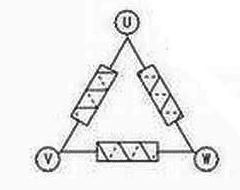
upload_2015-8-10_11-49-22.png


A picture of the stator after casting:
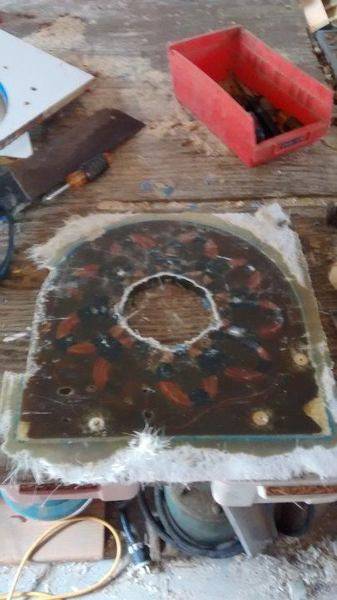
upload_2015-8-10_11-56-30.jpeg
Does anyone have any ideas as to what might have gone wrong, or other tests I could do?
 
Engineering news on Phys.org
Rag bag of answers :

Fibre glass resin when setting in thick sections can get very hot - may have done some damage

Energise the coils and see if you get any magnetic field .

Clean the leadout out wires - very easy to get a near invisible coating of resin on them .

Test your meters .
 
  • Like
Likes   Reactions: desquee
Thanks for the suggestions.
My meter's test out fine on other circuits.
I checked the terminals (they're cast together with the wires), and they conduct across themselves fine, so there's no resin on them.
I tried connecting pairs of terminals to a battery and a load, but there was no connection. The rotor setup isn't quite complete yet, but soon I'll activating the alternator (at low speed) to see if it can power a lamp, and if I can get any measurable voltage at the terminals.

As for the heat, Do you know what sort of damage it could have done? The solder melts at 187 degrees celsius. I'm not sure about the copper wires themselves. But I felt the wooden mold while the resin was curing inside it; it felt warm, but if it had passed 187 degrees it would, if nothing else, have burned my fingers.
 
I doubt whether your relatively small casting got hot enough to actually melt anything .

Most likely it was heating and cooling strains that pulled something apart in the wiring .

Odd though that all three phases are dead .
 
Yes, it's very odd. The heating and cooling strains would have had to pull at least 3 specific things apart in the wiring. And since I can still see the wires through the semi-transparent resin, it would have to pull it apart in a subtle enough way so as not to be visibly obvious.
 
desquee said:
I've been building a 3 phase delta wired alternator. I recently cast the stator in fiberglass resin, and now i get no response from the terminals. Before casting, I used the multimeter's resistance setting to test the connections between each pair of the three terminals, and all registered a closed circuit. After casting the stator, no pair of terminals registered a closed circuit (I tried two different multimeters).

Since the stator is wired in a delta configuration, each pair of terminals are connected to each other independently of the other one. There are no visible breaks in the wires (the resin is partly transparent), and I can't think of how the casting process could have broken the circuit in at least three different places.

The wiring of the stator (simplified):

View attachment 87132

A picture of the stator after casting:

View attachment 87133Does anyone have any ideas as to what might have gone wrong, or other tests I could do?
I suspect the connection at the three terminals, they are on the perimeter and would have cooled first and put enough stress on the connection to pop the wire and the break would not be visible to the naked eye, this would explain why all three terminals are affected. One test we ran on stators to test for open circuits is to apply a high voltage low ampere power to terminals, if there is a small break in the wire the high volts will jump the break. If there is a tool repair shop nearby they will have the tool to do this test.
 

Similar threads

  • · Replies 4 ·
Replies
4
Views
3K
Replies
2
Views
3K
  • · Replies 18 ·
Replies
18
Views
3K
  • · Replies 8 ·
Replies
8
Views
2K
  • · Replies 36 ·
2
Replies
36
Views
7K
  • · Replies 2 ·
Replies
2
Views
2K
  • · Replies 14 ·
Replies
14
Views
6K
Replies
4
Views
2K
  • · Replies 1 ·
Replies
1
Views
2K
Replies
24
Views
3K