Beauty of old electrical and measuring things, etc.
- Thread starter dlgoff
- Start date
-
- Tags
- Beauty Electrical Measuring
Join the discussion
Registration is free. Ask a follow-up in this thread, or start your own.
706 replies · 138K views
Engineering news on Phys.org

Science Advisor
Gold Member
- 4,458
- 3,266
I've done a little updating of my vacuum deposition system. I needed a better vacuum in order to get cleaner depositions, so I added a rotary vacuum pump. I was also having a gauge tube problem because of a ground loop, so I earthed the piping and gauge controllers to a outside Earth grounding rod. Now I'm getting really low and stable pressure readings. Here are pictures of the system showing the new pump, ground wiring, and vacuum gauge readings.
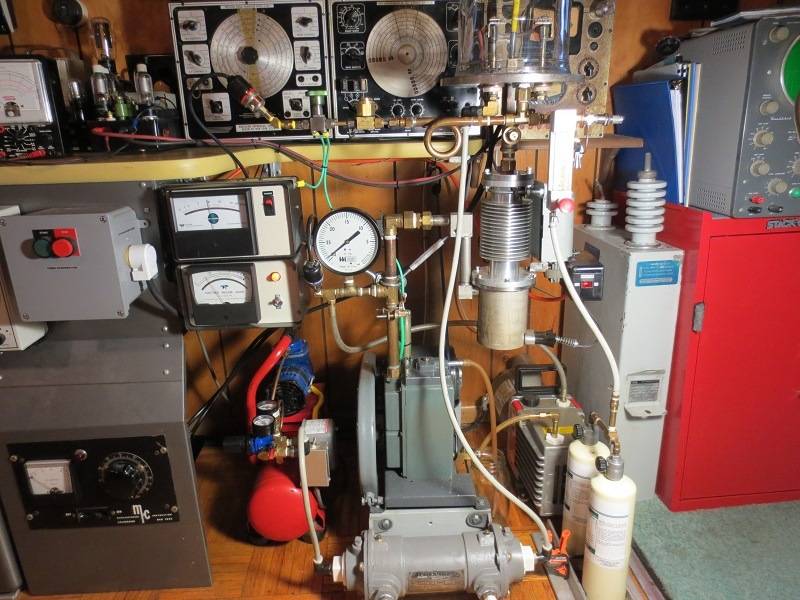
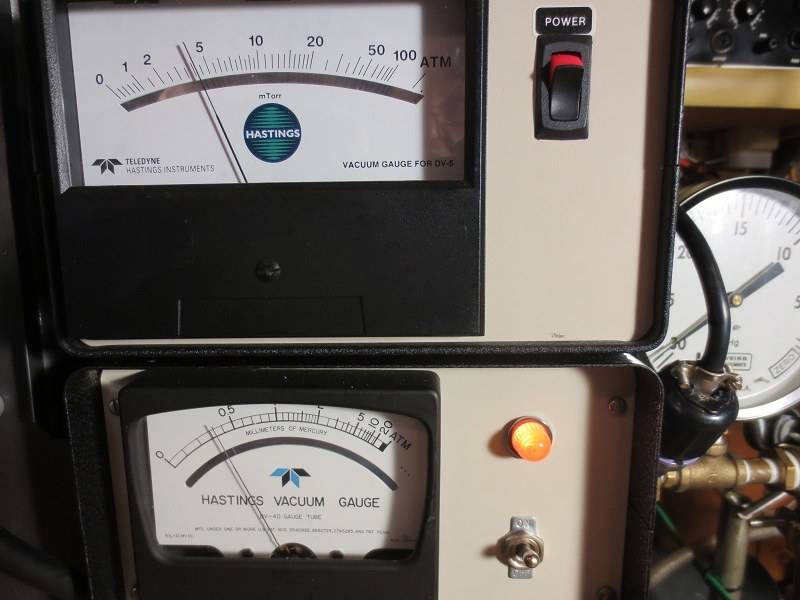
I use the mechanical gauge (0 to 30 in Hg) as a reference for when to power up the foreline gauge (20 to 0 mm Hg) which serves as a reference for when to power up the vacuum chamber gauge (100 to 0 mTorr). Now I'm getting really nice Aluminum on glass slide depositions.
I use the mechanical gauge (0 to 30 in Hg) as a reference for when to power up the foreline gauge (20 to 0 mm Hg) which serves as a reference for when to power up the vacuum chamber gauge (100 to 0 mTorr). Now I'm getting really nice Aluminum on glass slide depositions.
Science Advisor
Gold Member
- 4,458
- 3,266
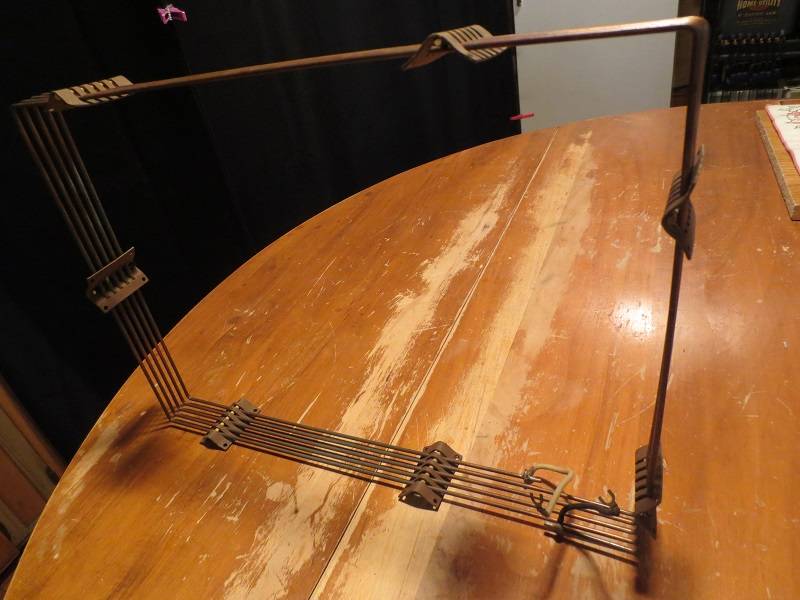
Here's a beauty you don't see every day. This rectangular loop antenna came out of a old tube type table top radio. It measures 14" X 10 1/2". I was a youngster when I took this out of a non repairable radio. I can't remember who made it.
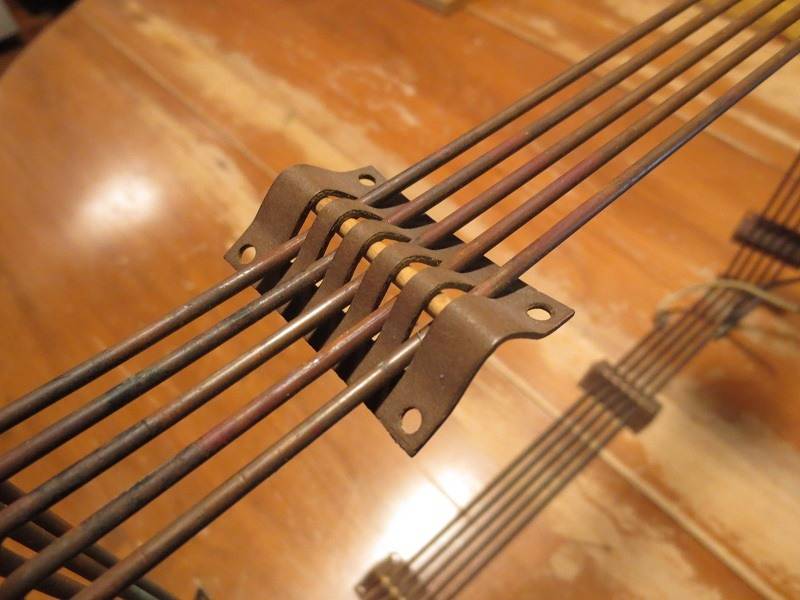
The loops have spacers that lock into place with little wooden dowels. Three of these dowels were missing and I replaced with heat-shrink covered paper Q-tip shafts.
Here's a spacer with dowel.
Here how it was terminated with the lead-in wires.
edit: corrected typo
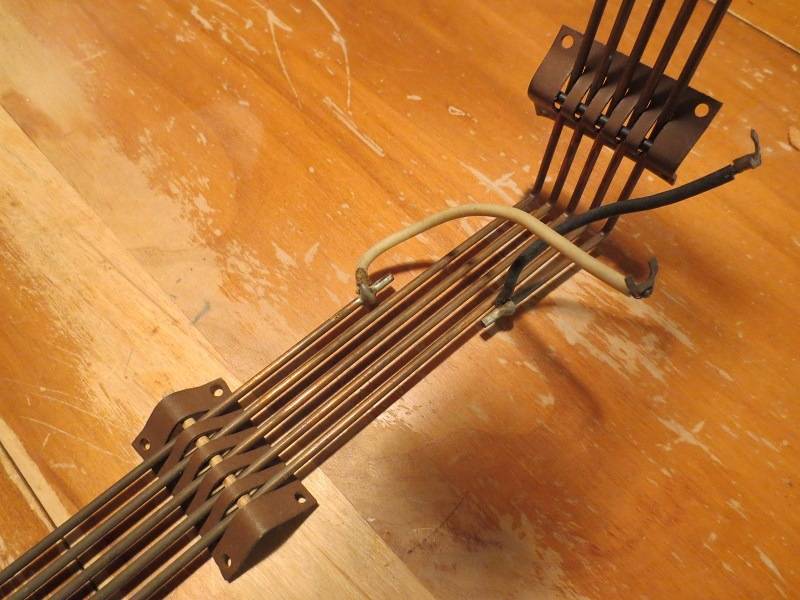
Any old times here ever seen one of these in a radio?
The loops have spacers that lock into place with little wooden dowels. Three of these dowels were missing and I replaced with heat-shrink covered paper Q-tip shafts.
Here's a spacer with dowel.
Here how it was terminated with the lead-in wires.
edit: corrected typo
Any old times here ever seen one of these in a radio?
Last edited:
Science Advisor
Gold Member
- 4,458
- 3,266
I'm glad you asked that. I never looked into what the metal parts were made of. I had always thought the loops were made of a hard copper alloy. I just now used a magnet on the brackets. They're nonmagnetic and appear to be brass but on closer examination and testing with an ohm meter, they have infinite resistance and turn out to be made of "pressed paper" (and looks like the same find of paper used for the tubes you would find old radio coils wrapped on). Whereas the loops are really magnetic, so more than likely they're copper plated steel. The resistance of loops from end to end (measured on lead-ins) is 0.1 ohm. I searched the internet and only found one antenna that was similar. It was an http://www.ebay.com/itm/RADIO-LOOP-ANTENNA-Vintage-/112511382955?hash=item1a323375ab:gjim hardy said:Of what material are those slotted brackets made ?
 IUAAOSwIaFZKcHu and one can Buy it Now for US $99.00. Here's the picture of it.
Science Advisor
Homework Helper
Dearly Missed
- 9,864
- 4,896
dlgoff said:Whereas the loops are really magnetic, so more than likely they're copper plated steel.
I wondered. The brackets do look like steel but that would short the turns ?
I guess the loops needn't be solid copper just a thick plating - at RF skin effect keeps current on the surface ?
Science Advisor
Gold Member
- 4,458
- 3,266
... making it more like a single loop antenna.jim hardy said:... but that would short the turns ?
... thick enough depending a little on the RF's frequency.jim hardy said:... just a thick plating - at RF skin effect keeps current on the surface ?
from https://en.wikipedia.org/wiki/Skin_effect
Joseph M. Zias
- 89
- 30
How about Sensitive Research. They made some absolutely beautiful instruments in wood cases. I remember some of their true rms meters.
Ever hear of a "ballistic galvanometer". It was used to measure charge. Then there were those "leeds and Northrup" potentiometers to measure
temperatures with a thermocouple.
Oh, so many. Well, you have got me to thinking, now if you could just convince my wife that we should have a museum.
Ever hear of a "ballistic galvanometer". It was used to measure charge. Then there were those "leeds and Northrup" potentiometers to measure
temperatures with a thermocouple.
Oh, so many. Well, you have got me to thinking, now if you could just convince my wife that we should have a museum.
Science Advisor
Gold Member
- 4,458
- 3,266
Nice stuff indeed. Radiomuseum.org tell about some items made by the Sensitive Research Instrument Co. Here's are some images from their site.Joseph M. Zias said:How about Sensitive Research. They made some absolutely beautiful instruments in wood cases. I remember some of their true rms meters.
Oh yea. They weren't made by Sensitive Research Instrument Co., but I used them in my University's physics labs. Very accurate way to measure charge.Ever hear of a "ballistic galvanometer". It was used to measure charge.
Yes you should have a museum. Show your wife this thread and tell her it's for the good of people's education and you want to be a part of that. It's been a learning experience for me and maybe for the both of you too....you have got me to thinking, now if you could just convince my wife that we should have a museum.
BTW: Welcome to Physics Forums. Hope you'll stay here and post some good stuff.
Science Advisor
Gold Member
- 4,458
- 3,266
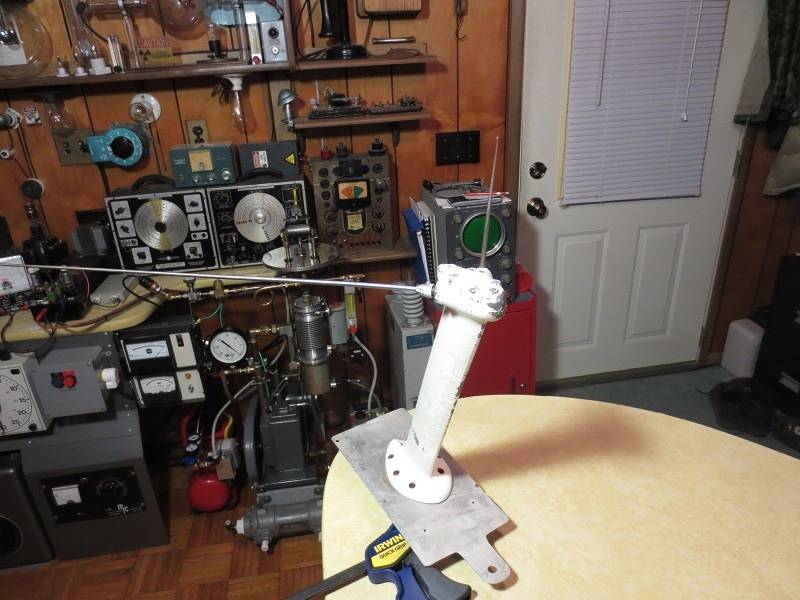
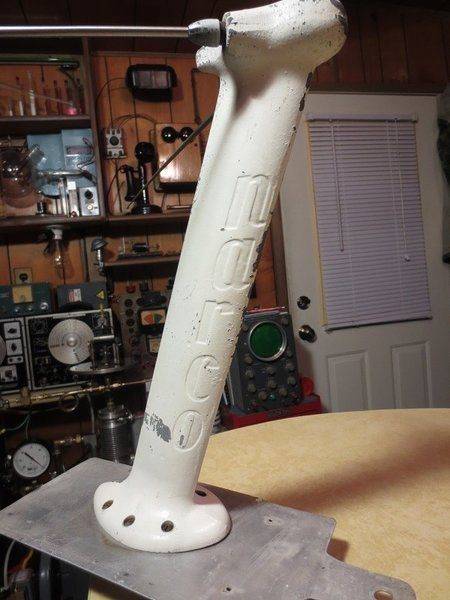
Back on post #94 I showed an antenna that I built for the Narco Superhomer Nav receiver that's shown working in post # 98. Well now, I've found the actual Narco antenna for this radio. It's condition is a little rough but it should clean up okay. I'll post a couple pictures of it now and later some restored pictures. Then I'll replace the one I built with it and do some testing.
Science Advisor
Gold Member
- 4,458
- 3,266
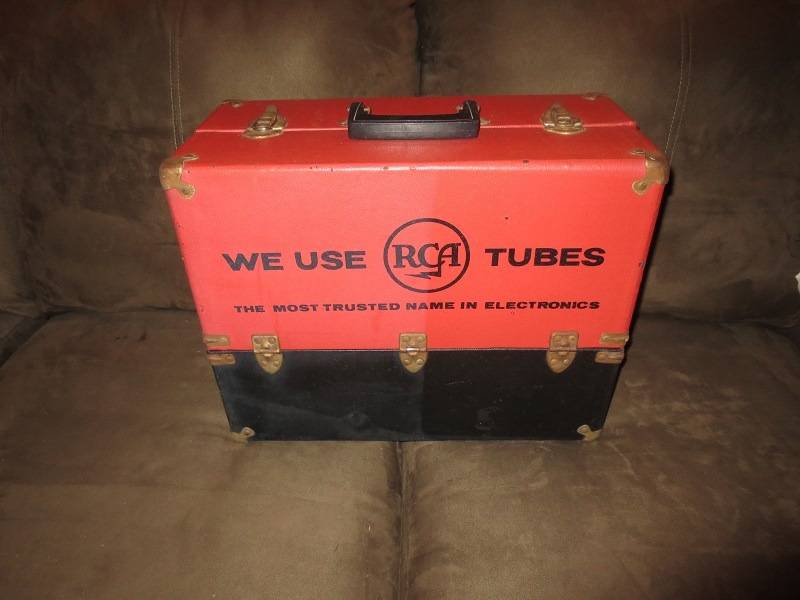
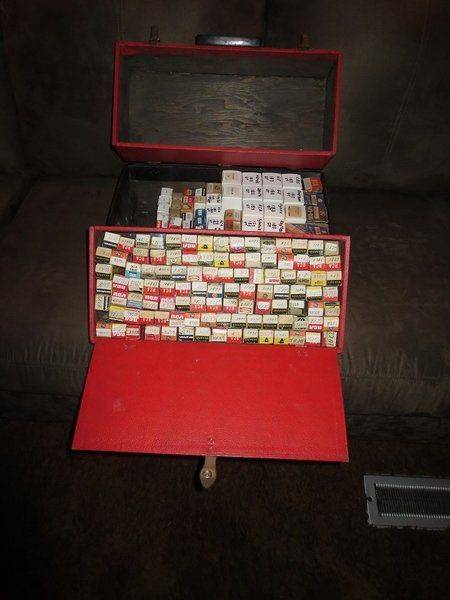
I have a lot of electron vacuum tubes in several cardboard boxes that I've been wanting to organize. So I bought some generic sleeved tube boxes and this old tube caddy. Part of one side is a little faded. It looks like part of the caddy had been exposed to light for a long time while the the other part was shaded.
OmCheeto
Gold Member
- 2,536
- 3,664
Speaking of tubes, have you watched Star Trek's "The City on the Edge of Forever" recently?dlgoff said:I have a lot of electron vacuum tubes...]
I watched it last night, for the first time in many years.
Tubes galore!
Of course, I immediately thought of you, as the year was 1930, and I was curious if they had such tubes back then.
And Spock and Kirk were working for 15¢/hour for 10 hours/day, and rent was $2/week, which netted them $19/week.
I suppose I could just google what prices for tubes were back then, but I figure you might have the prices and dates stamped on some of your boxes.
Science Advisor
Gold Member
- 4,943
- 1,575
I wonder what those tubes are filament wise. I would bet 12 volts. Notice there are 10 of them. Anyone see where I am going with this?
-
I guess they wouldn't need to be powered but for some reason I seem to recall thinking that they were in fact 'lit up'.
-
I guess they wouldn't need to be powered but for some reason I seem to recall thinking that they were in fact 'lit up'.
Science Advisor
Homework Helper
Dearly Missed
- 9,864
- 4,896
Averagesupernova said:I wonder what those tubes are filament wise.
1930's? Indeed they resemble the #30 triodes in my antique radio from that era.
https://www.tubedepot.com/products/30-triode-st-shape
Before rural electrification when so many radios were battery powered lots of tubes had 1 to 2 volt filaments .
Junkshop nearby has a bushel basket of such tubes, I've resisted the temptation so far... but i probably ought to get all his 30's for my radio.
Science Advisor
Gold Member
- 4,943
- 1,575
I have a 6 volt radio with 6 one volt filament tubes. I believe it is an Admiral. It needs an output transformer. I walk by it every day many times as it is in my hallway but it never occurred to me to post it in this thread. I'll have to get a pic.
Science Advisor
Gold Member
- 4,943
- 1,575
Yep Hammond is the one I would go to.
Science Advisor
Gold Member
- 4,458
- 3,266
I didn't see the episode last night but remember it. But yea. Up on post #139 I showed this cool find that was introduced in 1926.OmCheeto said:Speaking of tubes, have you watched Star Trek's "The City on the Edge of Forever" recently?
I watched it last night, for the first time in many years. ...
... Of course, I immediately thought of you, as the year was 1930, and I was curious if they had such tubes back then. ...
It didn't have a filament as it's a gas tube that uses He. It still rectifies just fine with 120 Vac supplied to it.
Science Advisor
Gold Member
- 4,458
- 3,266
I should get out more. I went over to the Mechanical Engineering forum to look for that similar thread but couldn't find it. However I did reply in a thread. If you should find that old machinery thread, please post a link for it here.jim hardy said:Is there a similar thread in Mechanical Engineering for old machinery enthusiasts ?
Science Advisor
Gold Member
- 4,458
- 3,266
Post a pic here and I'll look through my old goodies.Averagesupernova said:I have a 6 volt radio with 6 one volt filament tubes. I believe it is an Admiral. It needs an output transformer. I walk by it every day many times as it is in my hallway but it never occurred to me to post it in this thread. I'll have to get a pic.
jim hardy said:Hammond still makes vintage audio transformers.
You can get Hammond transformers from https://www.tubesandmore.com/. Here's their https://www.tubesandmore.com/products/transformers_chokes section.Averagesupernova said:Yep Hammond is the one I would go to.
Science Advisor
Gold Member
- 4,458
- 3,266
You should get them.jim hardy said:Junkshop nearby has a bushel basket of such tubes, I've resisted the temptation so far... but i probably ought to get all his 30's for my radio.
I'm going to have to come see this "junkshop" and your "$0.30/lb junkyard".

Science Advisor
Gold Member
- 4,458
- 3,266
These aren't beautiful old electrical devices but are beautiful in how they educate about devices.
The one on the left might interest @berkeman; a guide for taking the FCC element 4 exam for the Radiotelephone 1st Class Operator's License (Copyright 1958). The one of the right I got when I was 16 years old when Bell Telephone Laboratories, Inc. came to my town's summer fair; this guide was included in a Speech Synthesis kit (Copyright 1963).


The one on the left might interest @berkeman; a guide for taking the FCC element 4 exam for the Radiotelephone 1st Class Operator's License (Copyright 1958). The one of the right I got when I was 16 years old when Bell Telephone Laboratories, Inc. came to my town's summer fair; this guide was included in a Speech Synthesis kit (Copyright 1963).
Attachments


Science Advisor
Gold Member
- 4,943
- 1,575

Science Advisor
Gold Member
- 4,943
- 1,575
Here are some pix of the radio that I had promised. From the looks of the cabinet, I need to dust. Haha. I am missing knobs, but I can make those. When I first acquired this radio I had to clean up the points in the vibrator. Those points are made of some of the hardest metal I have ever come across. I believe it had several bad tubes but I was able to find some. No bad capacitors which surprised me. The old timer I got the tubes from told me that there were certain brands of caps that just don't fail. Lucky for me, this set is full of them.
Attachments


Science Advisor
Gold Member
- 4,943
- 1,575

Science Advisor
Gold Member
- 4,943
- 1,575
Attachments
