Calculating the Impact Force of a Free-Falling Body: Validating the Procedure

  • Context: Graduate 
  • Thread starter Thread starter Tankoyu
  • Start date Start date
  • Tags Tags
    Body Force
Click For Summary

Discussion Overview

The discussion revolves around calculating the impact force of a free-falling body from a height of 2000 km, considering air resistance. Participants explore the appropriate methods and formulas for determining the force at impact, as well as the concepts of momentum and energy transfer during the impact process.

Discussion Character

  • Technical explanation
  • Conceptual clarification
  • Debate/contested

Main Points Raised

  • One participant presents a detailed calculation for the impact force, including parameters such as area, density, and terminal velocity.
  • Several participants critique the use of significant digits in the calculations, suggesting that the precision implied is unrealistic given the uncertainties in the input values.
  • There is confusion regarding the definition of "amount of force" and the appropriate context for using various formulas, with some participants emphasizing the need to understand the underlying physics rather than just applying formulas.
  • Participants clarify that objects do not "carry" force but possess momentum and kinetic energy, and they discuss the distinction between these concepts.
  • One participant expresses a desire to compute the damage caused by the impact, linking it to the force exerted at the time of impact, but acknowledges the complexity of defining "damage" in a physical context.
  • Another participant notes that the force of impact cannot be determined without knowing the stopping distance and the nature of the surface impacted.

Areas of Agreement / Disagreement

Participants generally agree on the need for clarity in defining terms and understanding the physics involved, but there is no consensus on the correct approach to calculating the impact force or the implications of the results. The discussion remains unresolved regarding the appropriate method to quantify the impact and its consequences.

Contextual Notes

Limitations include the lack of clarity on the stopping distance during impact, the dependence on the specific context of the impact (e.g., surface type), and the unresolved nature of how to quantify damage in a meaningful way.

Tankoyu
Messages
6
Reaction score
1
I am trying to find out the amount of force that a free-falling body will have, as it hits the ground from a distance of 2000 km from Earth's surface.(Considering air resistance)

What I know about the body:

Area of the body=20199.04 mtr²
Density of body=985 Kg/m³
Thickness of body= 75 mtr.

After scaling the area 10 times,(since the actual body is 10 times larger)

Area of the scaled body=2019904 mtr²

Volume of body: area*thickness

Therefore, volume=2019904*75=151492800 mtr³

Mass= volume*density
Mass= 151492800*985
= 149220408000 kg

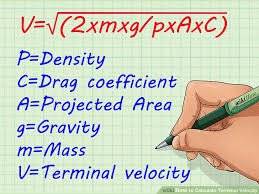
Terminal velocity of body:
download.jpeg


Density of air=1.225 kg/m³
Drag coefficient of the body, C =1.98

Using the formula for terminal velocity,

Vt=773 mtr/sec (~ 2.25 Mach)

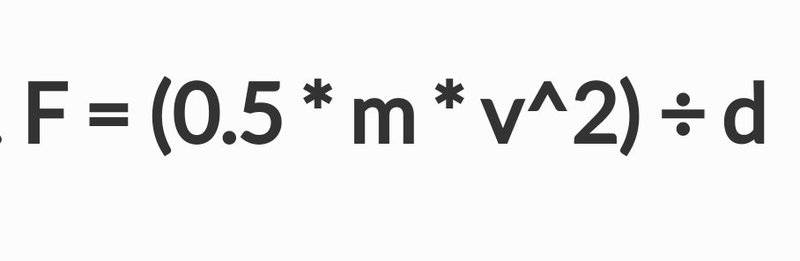
Force of impact,
Screenshot_20180417-113307~2.jpg


'V' is taken as the value of terminal velocity (Vt)

Using the above formula, I have found the force,

F= 1,463,766,251,524.9 kgf

Or = 14,354,643,310,487 N

Can anyone help me validate this value??

Have I used the proper procedure to achieve the force value?
 

Attachments

  • download.jpeg
    download.jpeg
    12.6 KB · Views: 816
  • Screenshot_20180417-113307~2.jpg
    Screenshot_20180417-113307~2.jpg
    9.3 KB · Views: 779
Last edited:
Physics news on Phys.org
First of all, you are using way too many significant digits. Your final result contains 14(!) significant digits, which would indicate that you know all input values with a relative accuracy of the size of a proton compared to a meter.

Second, it is not clear what you consider ”amount of force” to be, or that you understand what should go into your formula. Can you describe in words what all parts of the formula describe? If not, then you are likely just stabbing in the dark, which is never a good approach to have. It is better to understand what goes into the expressions and what they are saying.
 
  • Like
Likes   Reactions: sophiecentaur
Orodruin said:
First of all, you are using way too many significant digits. Your final result contains 14(!) significant digits, which would indicate that you know all input values with a relative accuracy of the size of a proton compared to a meter.

Second, it is not clear what you consider ”amount of force” to be, or that you understand what should go into your formula. Can you describe in words what all parts of the formula describe? If not, then you are likely just stabbing in the dark, which is never a good approach to have. It is better to understand what goes into the expressions and what they are saying.
By amount of force, I mean: how much of force does the free falling body carry before it strikes the surface of Earth.

And all those formulae are taken from internet so I'm not sure if they are applied in the right context[emoji28]

And what do you suggest I do about the value, assuming it is correct?
 
Tankoyu said:
By amount of force, I mean: how much of force does the free falling body carry before it strikes the surface of Earth.
It is still not clear what you mean by "much of force does the free body carry". What force on what object are you trying to compute? A force is a transfer of momentum per time from one system to another.

Tankoyu said:
And all those formulae are taken from internet so I'm not sure if they are applied in the right context[emoji28]
I strongly suggest against just taking formulae without understanding the appropriate context. It will tell you nothing. In order to get something out of the exercise you need to understand what you are doing.

Tankoyu said:
And what do you suggest I do about the value, assuming it is correct?
Regardless of whether it is correct or not, which is impossible to say without knowing what you have done or what you want to compute, you should always give your final results with an appropriate number of significant digits. In order to do this, round the result to the closest number that has the correct number of significant digits.
 
  • Like
Likes   Reactions: sophiecentaur
To add to @Orodruin's answer: bodies do not have forces, they have momentum.
 
  • Like
Likes   Reactions: sophiecentaur
Objects don't "carry" a force. They have forces applied to them or they apply force on other objects.

What they do "carry" is kinetic energy.

You can calculate an average force that they apply on the ground if you know the kinetic energy and "stopping distance". However this method isn't really applicable to something impacting the ground from space because it has more in common with an explosion than an impact.
 
Orodruin said:
It is still not clear what you mean by "much of force does the free body carry". What force on what object are you trying to compute? A force is a transfer of momentum per time from one system to another.

I have not been using the correct terms, I regret that. Thank you for answering me,

What I want to compute is, as the free falling body hits the surface of Earth & comes to a rest- how much of the momentum does the object impart to earth? How can I find out the amount of energy transferred in terms of Force?
 
Tankoyu said:
how much of the momentum does the object impart to earth? How can I find out the amount of energy transferred in terms of Force?
Momentum, energy and force are different quantities. Which are you interested in?
 
A.T. said:
Momentum, energy and force are different quantities. Which are you interested in?
Force
 
  • #10
Ok, so which force? To specify a force you need: A system that the force acts upon, a system that the force acts from, additional assumptions about when you want to compute that force.
 
  • #11
Orodruin said:
Ok, so which force? To specify a force you need: A system that the force acts upon, a system that the force acts from, additional assumptions about when you want to compute that force.
I'm not sure, I understand what you asked...
 
  • #12
Tankoyu said:
Force of impact,
screenshot_20180417-113307-2-jpg.jpg
This formula is 'not incorrect' (note the double negative) but you need to think what it actually refers to. The d in the equation refers to the distance, under a constant force, over which the work done is equal to the Kinetic Energy of the object on impact and the object is brought to rest. So, unless you know the distance traveled by the object as it is brought to a halt in the concrete / soft mud / water / crash mat and unless you can be sure the force is the same throughout the impact, the value F can't be known.
This is why you have already been told in this thread that the most meaningful quantities are Momentum or Kinetic Energy. They are properties of your falling object and don't depend on what it lands on. Momentum and KE are alternative ways of looking at 'that thing' a moving object posses.
 

Attachments

  • screenshot_20180417-113307-2-jpg.jpg
    screenshot_20180417-113307-2-jpg.jpg
    9.3 KB · Views: 668
  • Like
Likes   Reactions: CWatters and Tankoyu
  • #13
Tankoyu said:
I'm not sure, I understand what you asked...
In that case I am not sure if you have the prerequisite knowledge to ask the question you want to ask. The appropriate thing to suggest would then be an introductory course in classical mechanics.
 
  • #14
Orodruin said:
In that case I am not sure if you have the prerequisite knowledge to ask the question you want to ask. The appropriate thing to suggest would then be an introductory course in classical mechanics.
I just wanted to know the damage caused by the free falling object in some unit of measurement. I thought that the FORCE EXERTED at the time of impact would be the proper way to realize the damage.

It looks like I have wasted your time, Sorry...
 
  • #15
Tankoyu said:
I just wanted to know the damage caused by the free falling object in some unit of measurement.
The damage produced in units of dollars or Euros depends critically on whether the object lands in the middle of a hay field or in the middle of a china shop and may not scale linearly with impact energy.
 
  • #16
Tankoyu said:
I just wanted to know the damage caused by the free falling object in some unit of measurement. I thought that the FORCE EXERTED at the time of impact would be the proper way to realize the damage.

It looks like I have wasted your time, Sorry...
This is actually a much more difficult question to address than the force at the impact, in particular (as has been mentioned already) because you need to somehow define a measure of "damage caused" and that will generally depend on a lot of things other than basic physics considerations. Apart from liability issues, this is also a big reason that we do not entertain threads on things such as car crash reconstruction.
 
  • #17
Tankoyu said:
I just wanted to know the damage caused by the free falling object in some unit of measurement. I thought that the FORCE EXERTED at the time of impact would be the proper way to realize the damage.

It looks like I have wasted your time, Sorry...

Not at all.

Forces can be applied for a short or long time so force isn't really a good measure of the amount of the damage caused.

I think in your case energy is a much better measure of the likely damage caused, for example you can compare the energy of the object with an explosive like TNT. Using your calculated values...

Mass = 150,000,000,000 kg
Velocity = 773 mtr/sec

The kinetic energy would be...
0.5 * 150*109 * 7732 = 45 * 1015 Joules

The energy in 1kg of TNT is about 4*106 Joules

So your impact would be a bit like setting off...

45*1015/4*106 = 11*109Kg of TNT

According to Wikipedia this is about 100 times the energy released during the extinction event that killed the dinosaurs 66 million years ago...

https://en.wikipedia.org/wiki/TNT_equivalent

I think that gives a reasonable impression of the damaged caused.
 
  • Like
Likes   Reactions: Tankoyu
  • #18
PS. I used your data for the velocity but such a large and fast object your method of calculating the terminal velocity probably isn't really valid.
 
  • Like
Likes   Reactions: sophiecentaur and Tankoyu
  • #19
Tankoyu said:
I just wanted to know the damage caused
Damage (forgetting the $$$s involved) relates largely to the Energy of the impact and that is Mv2/2 (as you have written). For high speed objects this is particularly true and examples are the craters formed by the explosion resulting from the impact on a planet or moon by very fast meteorites.
Do you have a particular situation that you wanted to analyse?
 

Similar threads

  • · Replies 12 ·
Replies
12
Views
3K
  • · Replies 7 ·
Replies
7
Views
3K
  • · Replies 13 ·
Replies
13
Views
4K
  • · Replies 6 ·
Replies
6
Views
2K
  • · Replies 1 ·
Replies
1
Views
2K
  • · Replies 3 ·
Replies
3
Views
2K
Replies
3
Views
3K
  • · Replies 3 ·
Replies
3
Views
20K
  • · Replies 3 ·
Replies
3
Views
2K
  • · Replies 26 ·
Replies
26
Views
3K