Discussion Overview
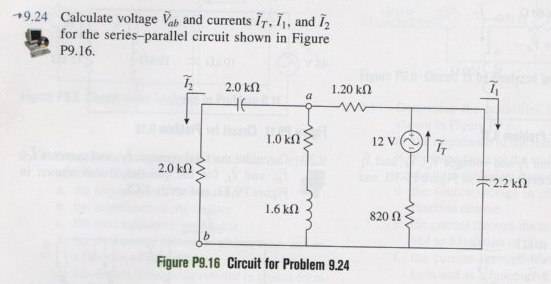
The discussion revolves around the simplification of a circuit, specifically whether the participant's approach to circuit simplification is correct. It includes aspects of circuit analysis, impedance, and the application of the Voltage Divider Rule.
Discussion Character
- Technical explanation
- Debate/contested
- Mathematical reasoning
Main Points Raised
- Jordan presents a simplified circuit and asks for validation of their approach.
- One participant agrees with Jordan's simplification but questions the use of ohms for all components.
- Another participant explains that the book's use of ohms is intended to help understand impedance in a simplified manner.
- Jordan inquires about calculating voltage (Vb) using the Voltage Divider Rule and proposes a formula involving total impedance.
- A participant confirms Jordan's approach to calculating Vb but corrects the notation regarding parentheses in the formula.
- Another participant challenges the notion of simplification, stating that merely rearranging components does not constitute proper simplification and emphasizes the need to calculate combined impedances and currents.
Areas of Agreement / Disagreement
There is no consensus on the correctness of the simplification method. While some participants validate Jordan's approach, others contest the understanding of what constitutes proper simplification.
Contextual Notes
Participants express varying interpretations of circuit simplification, with some focusing on rearrangement versus actual impedance calculations. There is also a mention of the book's pedagogical approach, which may influence understanding.
Who May Find This Useful
Individuals interested in circuit analysis, impedance calculations, and the application of the Voltage Divider Rule may find this discussion relevant.