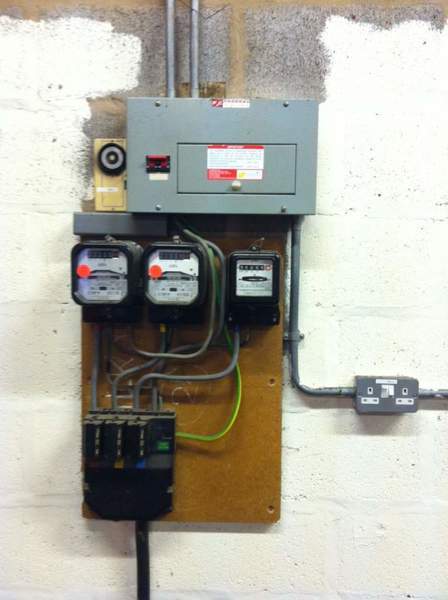
duracell27 said:
Hi Studiot,
I have been given http://www.edgetechnology.co.uk/gasgen/RES18.htm"
and i want it to work within my unit. I don't operate heavy machinery in my unit (basic carpentry). would be good to know IF this system will fit my current setup - but from the research online - the generator will only work with single phase, so would be good to know IF and how my current setup can be converted to a single phase.
You will need a transfer switch to be installed. Cheaper models let you throw the switch manually. More expensive models can operate automatically.
If you are getting three phase power, that could be for one or more of at least a couple reasons. One is that some equipment, typically large heaters, cookers, ovens, or hobs, needs 415 volts, which it would get by connecting between two of the phases. The other is that some equipment, typically motors, needs three phase power. Your single phase 240 volt generator will not operate such equipment. And in some cases, connecting them could cause problems (blown fuses, tripped breaker, short circuits, damaged generator, fire, explosions, death). To get around such issues, you would need to (have an electrician) re-arrange some circuits so only the single phase circuits get single phase power.
How much capacity does this generator have? Or are you planning to buy one with sufficient capacity? If you have not chosen one, yet, maybe the smart step would be to get a three phase model.
Do you need to supply emergency power to the entire building? Or is it good enough to just supply power to a few things that need to keep running?
You really should have the properly licensed electrician survey your situation and make a recommendation.