EMF and internal resistance laboratory work

Click For Summary
SUMMARY

The laboratory work focused on determining the electromotive force (emf) and internal resistance of a battery using a voltmeter and ammeter. The measured values were Uap = 2V, Iap = 1.5A, and Eap = 4V, leading to a calculated internal resistance of rap = 1.33 ohms. The participant expressed confusion regarding the hypothesis and conclusion, seeking to relate their findings to Ohm's Law. The discussion clarified that Δ represents error, and emphasized the importance of understanding measurement accuracy for reliable results.

PREREQUISITES
  • Understanding of Ohm's Law and its applications
  • Familiarity with laboratory equipment: voltmeter and ammeter
  • Knowledge of error analysis in measurements
  • Basic concepts of electromotive force (emf) and internal resistance
NEXT STEPS
  • Research the relationship between internal resistance and battery performance
  • Learn about error propagation in measurements
  • Study the principles of circuit analysis involving ideal voltage sources
  • Explore advanced techniques for measuring internal resistance in batteries
USEFUL FOR

Students and educators in physics, particularly those involved in laboratory experiments related to electrical circuits and battery performance analysis.

isorounded
1. The problem statement
I did a laboratory work in which I had to find power and internal resistance. I used an ordinary battery so it's closed circuit. I did all tasks except writing a hypothesis and conclusion I can't really think of it. I don't know what to write since I just measure using voltmeter and ammeter and then calculate Electric power and internal resistance. Can someone suggest anything pls?
Homework Equations


C2_AF40_B9_E1_E0_4_CA0_B9_EB_87_D9_F6_BA7_B21.jpg

img_0865-jpg.jpg
img_0864-jpg.jpg
99_F93698_0_EF6_4_FD4_BFD7_DF53_AE1369_DA.jpg


E - [/B]emf, electromotive force r - internal resistance ap - calculated
U - voltage I - current

The Attempt at a Solution


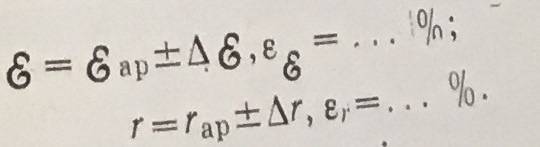
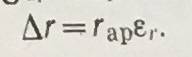
Well from ammeter and voltmeter I got that Uap= 2V, Iap= 1,5 A and Eap= 4V. Then I calculated rap (rap=1,33 ohms). I found delta u(△u=+-0,25) , delta I (△I=+-0,03) and I know that electromotive force error is almost same as voltage error because power supply's resistance is usually low so R≥r and △E = △u = +-0.25 V. I found Er what led me to finding △r. △r = rap+Er = 1,33 * 0.27= 0.3591 ohms. Now I am bit confused we the results I got E = 4 +- 0.25 V and r = 1.33 +- 0,3591 ohms, please let me know if I did it wrong. Now the main thing I struggle with is writing hypothesis and conclusion. I was thinking to relate given formulas with ohm's law and formula but not sure if it's good. So can someone help me to write hypothesis and conclusion or atleast give me some ideas. Thank you.
 
Physics news on Phys.org
Hi iso,

isorounded said:
I used an ordinary battery
isorounded said:
because power supply's resistance is usually low
So when did you use the one and when the other ?
I can follow your 1.33 Ohm calculation, but after that I am lost in your story. What do the ##\Delta## stand for ?
You write that you did all tasks (which is good), but I have hard time guessing what all these tasks were.
 
  • Like
Likes   Reactions: isorounded
First of all, thank you for a response. You probably would have guessed that english is not my native language so that might be a part of the reason why you don't understand me :D And that my laboratory work is described in my native language, it doesn't make it easier, but I will try to explain as much as I can. I have used one power supply which was battery. Here is a picture of circuit
CF5_E8_B35_FC88_4272_9591_61_D0_F2726537.jpg


Now Δ stands for "error" if that makes sense.

Also I will try to translate laboratory tasks step by step and it's really simple so I hope you will understand atleast this one :D

Firsly what did I use for this work: battery, voltmeter, ammeter, toggle, connecting wires.

1. Measure electromotive force of power supply(a battery's in my case).

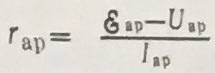
2. Mark ammeter's and voltmeter's results when a toggle is on. Calculate rap(there is a formula above). Calculate power supply's resistance and electromotive force absolute and relative error.

3. Write down r and electromotive force results:
99_f93698_0_ef6_4_fd4_bfd7_df53_ae1369_da-jpg.jpg


And I'm pretty sure that I did all calculations right but I just can't think of hyphotesis and conclusion.
 
Last edited by a moderator:
Also was thinking to relate with ohm's law because r=E-U/I is derived from E=U+Ir
 
OK, so under 1. you have measured a voltage of 4 V ?
Then, under 2, you press the switch and measure 2 V and 1.5 A ?

And the hypothesis is that the battery can be represented by a circuit consisting of an ideal voltage source in series with an internal resistance. And the calculated internal resistance that would then follow is (4 V - 2 V ) / 1.5 A = 1.33 ##\Omega## according to
img_0864-jpg-jpg.jpg
.
So I don't understand the subscripts ap on the righthand side: I should think they stand for 'measured' (as under points 1 and 2), not for 'calculated' ; can you explain ?

Then:
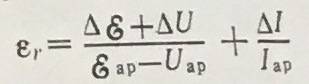
I have the faint suspicion that ##\varepsilon_r## in
img_0865-jpg-jpg.jpg
stands for the relative error in the calculated internal resistance of 1.33 ##\Omega##. For your purposes that relative error (or inaccuracy, if you want) is the sum of the relative errors in the numerator and in the denominator. To estimate a value, you need the accuracy of the voltmeter and the accuracy of the current meter. Do you have those ? Are they provided on the instruments or given by teacher ?
 

Similar threads

  • · Replies 4 ·
Replies
4
Views
1K
  • · Replies 8 ·
Replies
8
Views
3K
  • · Replies 13 ·
Replies
13
Views
4K
  • · Replies 7 ·
Replies
7
Views
2K
  • · Replies 2 ·
Replies
2
Views
2K
  • · Replies 6 ·
Replies
6
Views
2K
  • · Replies 14 ·
Replies
14
Views
3K
  • · Replies 11 ·
Replies
11
Views
2K
  • · Replies 10 ·
Replies
10
Views
3K
  • · Replies 2 ·
Replies
2
Views
2K