Heat as Electromagnetic and Molecular Kinetics

Click For Summary
SUMMARY

The discussion centers on the emission of heat in the forms of ultraviolet (UV), infrared (IR), and visible light, particularly in relation to an induction furnace capable of operating at frequencies around 700 THz. It establishes that all three types of heat can be emitted when the temperature exceeds absolute zero (0K). The conversation also explores the relationship between the frequency of light emitted and its color, emphasizing that the illumination is influenced by molecular and electron dynamics.

PREREQUISITES
  • Understanding of electromagnetic spectrum, specifically UV, IR, and visible light.
  • Knowledge of induction heating principles and furnace operation.
  • Familiarity with molecular and electron dynamics in relation to light emission.
  • Basic concepts of thermodynamics and heat transfer mechanisms.
NEXT STEPS
  • Research the electromagnetic spectrum and the properties of UV, IR, and visible light.
  • Study the principles of induction heating and its applications in various industries.
  • Explore the relationship between frequency and color in light emission.
  • Investigate molecular dynamics simulations to understand electron behavior in heat emission.
USEFUL FOR

Physicists, engineers, and researchers interested in thermodynamics, heat transfer, and the behavior of materials under electromagnetic radiation.

Ronie Bayron
Messages
146
Reaction score
23
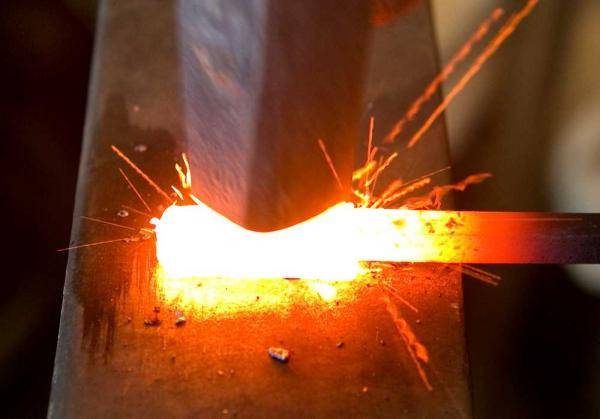
Consider the image below
13103896.jpg

Does it emit all 3 types of heat in the form of UV, IR and light?
At what threshold does light start to appear and what colors should it illuminate?
Hypothetically, say I have an induction furnace and is capable of setting frequencies to about 700THz, will it be able to illuminate a colored(violet) light at that frequency?
So, what limits its color? Does the illumination depends on molecular or electron dynamic response? I'd be delighted to see response from the forum. Thank you.
 
Physics news on Phys.org
Ronie Bayron said:
all 3 types of heat in the form of UV, IR and light
T > 0K is "all" types of heat; at first I read this as "all transport mechanisms" but your phrasing is a bit ambiguous.
 

Similar threads

  • · Replies 1 ·
Replies
1
Views
3K
  • · Replies 11 ·
Replies
11
Views
4K
  • · Replies 1 ·
Replies
1
Views
2K
  • · Replies 20 ·
Replies
20
Views
12K
  • · Replies 1 ·
Replies
1
Views
2K
  • · Replies 8 ·
Replies
8
Views
3K
  • · Replies 56 ·
2
Replies
56
Views
11K
Replies
2
Views
2K
  • · Replies 7 ·
Replies
7
Views
5K
  • · Replies 0 ·
Replies
0
Views
881