yyttr2
- 46
- 0
I am doing physics homework and I came upon a problem that I had forgotten how to do, and i do not believe my answer is correct. I have tried to Google this but failed, can you please tell me if i have done this correct?
the question:
"4. Give the horizontal and vertical components of:
a.70m/s West
b. 42m North"
At first I was wondering how do i solve the horizontal and vertical components of a single variable? So i combined them and hoped they were the same problem.
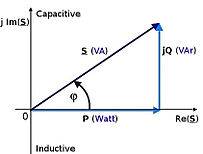
were the 42m is at the right and 70m/s is the base.
I then found the unknown angle showed in the picture (ignore all the symbols up there)
\phi=arctan\frac{42}{70}
\phi=80.54\circ
and I found the length of the hypotenuses.
hy=\sqrt{(l1)^2+(l2)^2}
hy=\sqrt{(42)^2+(70)^2}
hy=\sqrt{6664}
hy=81.6
I then graphed the hypotenuse on a Cartesian Coordinate graph were x= east -x= west
y=north and -y=south
and drew my line 81m at 80.54\circ east of north
and then found my vertical component.
\frac{sin\phi}{1}=\frac{op}{hy}
op(1)=sin\phihy
op=sin80.54\circ81
op=79.898
vertical component= 79.898
and next my horizontal component.
hy=\sqrt{(l1)^2+(l2)^2}
hy^{2}=l1^{2}+l2^{2}
hy^{2}-Vc^{2}=Hc^{2}
81^{2}-79.898^{2}=Hc^{2}
Hc=\sqrt{81^2-79.898^2}
Hc=13.4
If i have done this wrong please explain to me how, If i have done them right please explain to me which units I should use for the Hc and Vc and why.
the question:
"4. Give the horizontal and vertical components of:
a.70m/s West
b. 42m North"
At first I was wondering how do i solve the horizontal and vertical components of a single variable? So i combined them and hoped they were the same problem.
were the 42m is at the right and 70m/s is the base.
I then found the unknown angle showed in the picture (ignore all the symbols up there)
\phi=arctan\frac{42}{70}
\phi=80.54\circ
and I found the length of the hypotenuses.
hy=\sqrt{(l1)^2+(l2)^2}
hy=\sqrt{(42)^2+(70)^2}
hy=\sqrt{6664}
hy=81.6
I then graphed the hypotenuse on a Cartesian Coordinate graph were x= east -x= west
y=north and -y=south
and drew my line 81m at 80.54\circ east of north
and then found my vertical component.
\frac{sin\phi}{1}=\frac{op}{hy}
op(1)=sin\phihy
op=sin80.54\circ81
op=79.898
vertical component= 79.898
and next my horizontal component.
hy=\sqrt{(l1)^2+(l2)^2}
hy^{2}=l1^{2}+l2^{2}
hy^{2}-Vc^{2}=Hc^{2}
81^{2}-79.898^{2}=Hc^{2}
Hc=\sqrt{81^2-79.898^2}
Hc=13.4
If i have done this wrong please explain to me how, If i have done them right please explain to me which units I should use for the Hc and Vc and why.
 It makes perfect sense