Discussion Overview
The discussion revolves around the design and construction of a DC generator, focusing on coil winding techniques, magnet orientation, and the implications of using a motor to drive the generator. Participants explore various aspects of generator functionality, including wire gauge, voltage output, and the relationship between rotor speed and electrical output.
Discussion Character
- Exploratory
- Technical explanation
- Debate/contested
- Experimental/applied
Main Points Raised
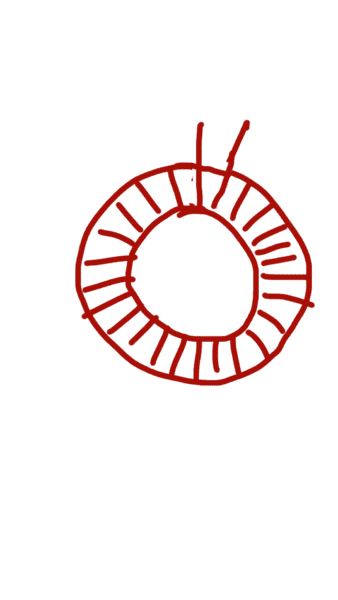
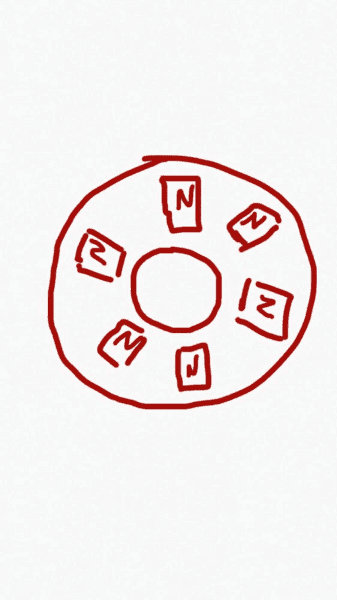
- The original poster (OP) seeks advice on whether their design of a donut-shaped coil with fixed magnets will work and whether to use one continuous coil or multiple coils.
- Some participants suggest that rotating magnets would require an alternator setup, while rotating coils with fixed magnets would necessitate a commutator for rectification.
- There is a discussion about the need for alternating magnetic poles to create changing flux, which is essential for voltage generation.
- Concerns are raised about the OP's understanding of coil winding orientation and its impact on magnetic flux and voltage output.
- The OP expresses a desire to maximize power output for a grid tie inverter and inquires about the appropriate wire gauge to prevent overheating.
- Some participants question the feasibility of the OP's plan to use a motor-generator setup, suggesting it may lead to energy losses and requiring more solar panels than anticipated.
- There are mentions of safety concerns regarding connecting a homemade generator to the power grid without proper interfaces.
- The OP expresses uncertainty about whether their generator design can produce electricity and seeks validation for their approach.
Areas of Agreement / Disagreement
Participants do not reach a consensus on the effectiveness of the OP's design or the best approach to constructing the generator. Multiple competing views regarding the necessity of reversing magnets, coil winding techniques, and the implications of using a motor-generator setup remain unresolved.
Contextual Notes
Participants highlight limitations in the OP's understanding of generator design, including the need for proper safety measures when connecting to the grid and the potential for energy loss in the proposed motor-generator configuration.
Who May Find This Useful
Individuals interested in DIY generator construction, renewable energy applications, and those exploring the principles of electromagnetism and electrical engineering may find this discussion relevant.