Image formation in concave mirror

Click For Summary
SUMMARY

The discussion centers on the formation of real and virtual images in concave mirrors, specifically using a spoon as an example. Participants confirm that real images can be seen without a screen, as the light rays converge and reach the eye, forming an image on the retina. The conversation also clarifies that virtual images appear erect and cannot be captured on a screen, while real images can be observed directly. Key points include the distinction between the image seen in a spoon and that in a plane mirror, emphasizing the nature of light reflection and image formation.

PREREQUISITES
  • Understanding of concave mirrors and their properties
  • Knowledge of real vs. virtual images in optics
  • Familiarity with light reflection principles
  • Basic anatomy of the human eye and image formation on the retina
NEXT STEPS
  • Research the principles of light reflection in concave mirrors
  • Explore the differences between real and virtual images in optics
  • Learn about the anatomy of the eye and how it perceives images
  • Investigate practical experiments to visualize image formation using mirrors
USEFUL FOR

Students of physics, educators teaching optics, and anyone interested in understanding the principles of image formation in concave mirrors.
Puneeth423
Messages
51
Reaction score
0
Can we see a real image with our naked eye without using a screen to capture image?
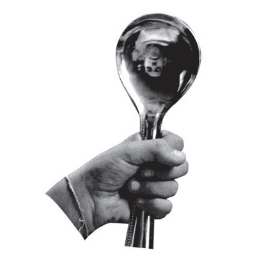
Also, we all know that virtual image formation in a concave mirror will be always erect. Check out the image below.
attachment.php?attachmentid=54985&stc=1&d=1359090614.png

Spoon here acts as a concave mirror and the image is inverted. Why is it virtual then?
 

Attachments

  • Capture.PNG
    Capture.PNG
    7.9 KB · Views: 2,358
Science news on Phys.org
Puneeth423 said:
Can we see a real image with our naked eye without using a screen to capture image?

Yes, we can :smile:

Puneeth423 said:
Also, we all know that virtual image formation in a concave mirror will be always erect. Check out the image below.
attachment.php?attachmentid=54985&stc=1&d=1359090614.png

Spoon here acts as a concave mirror and the image is inverted. Why is it virtual then?

How do you know it is virtual?

ehild
 
ehild said:
Yes, we can :smile:


How do you know it is virtual?

ehild

The image appears to be inside spoon.
 
It looks inside, but not behind. Try to use a torch and a small piece of tracing paper to catch the image.

ehild
 
Last edited:
ehild said:
It looks inside, but not behind. Try to use a torch and a small piece of tracing paper to catch the image.

ehild

Whats the difference if it appears behind or it is seen inside the mirror?
We can catch the real image on a paper. But my question is about the image which we are seeing inside the mirror?
 
The image in the spoon is real. It looks not inside the mirror but inside the spoon. ( If you have soup with that spoon, the soup is inside, not behind. So is with the image. )
Get closer to the spoon. The image gets closer and closer to you, at the end you see the image at your nose. :)

The image you see in a plane mirror looks behind the mirror (you can say inside the world behind the mirror.) The mirror is just a thin layer of aluminium on a glass sheet, you can not see a picture inside it. That image seen in a plane mirror is virtual and erect. You can not catch it with a screen.

ehild
 
ehild said:
The image in the spoon is real. It looks not inside the mirror but inside the spoon. ( If you have soup with that spoon, the soup is inside, not behind. So is with the image. )
Get closer to the spoon. The image gets closer and closer to you, at the end you see the image at your nose. :)

The image you see in a plane mirror looks behind the mirror (you can say inside the world behind the mirror.) The mirror is just a thin layer of aluminium on a glass sheet, you can not see a picture inside it. That image seen in a plane mirror is virtual and erect. You can not catch it with a screen.

ehild

Ok. You are telling that the image which i see is image of the real image which forms or the diverging rays which after forming a real image enters my eyes and form an image of the inverted real image?
 
Yes. The rays reflected from the mirror meet and form the real image, but go further and reach your eye. The lenses of your eyes form real images on the retina. You observe those images and you see them at the place from where the diverging beams originated.

ehild
 
ehild said:
Yes. The rays reflected from the mirror meet and form the real image, but go further and reach your eye. The lenses of your eyes form real images on the retina. You observe those images and you see them at the place from where the diverging beams originated.

ehild

We can see this image only if the real image is formed in front of us. What happens if the rays enter our eyes before they form the real image?(for ex: If you place yourself between focal point and radius of curvature of the mirror, your eye will receive the rays before they form the real image. What will happen here?)
 
Last edited:
  • #10
In case the image would form behind the eye, it is negative object distance, a virtual object. The image must form on the retina to be seen, so the eye must be placed at a specific point. The image on the retina is real, but the object is virtual, image distance/ object distance is negative, the image is erect.

If you place your eye before the real image from the mirror or lens and you see a clear image, it is erect. That is why you see normally when wearing glasses.

ehild,
 
  • #11
Mirror is an opaque object.
 
  • #12
nitish3112 said:
Mirror is an opaque object.
Who said mirror is transparent?Normally,mirror consist of a glass and a layer of aluminium(opaque).
 
  • #13
Mirror is an opaque object.When the light pass through the mirror, it just gets reflected. Thus image is very clear in the mirror alone.
 
  • #14
We will definitely get a clear image ,
Nitish
 
  • #15
nitish3112 said:
Mirror is an opaque object.When the light pass through the mirror, it just gets reflected. Thus image is very clear in the mirror alone.
What do you mean?Normal mirrors consist of a glass layer(Transparent) and an Aluminium layer(Opaque).

And if you are considering the Aluminium layer alone,light doesn't pass through it,but gets reflected.Light doesn't pass through things in order to get reflected,it touches the boundary of it.
 
  • #16
ehild said:
The image in the spoon is real. It looks not inside the mirror but inside the spoon. ( If you have soup with that spoon, the soup is inside, not behind. So is with the image. )
Get closer to the spoon. The image gets closer and closer to you, at the end you see the image at your nose. :) ehild
How is this image seen? We haven't put any screen in front of the mirror to obtain this image. Then how are we watching this image?
 
  • #17
Harnoor Singh Sandhu said:
How is this image seen? We haven't put any screen in front of the mirror to obtain this image. Then how are we watching this image?
Why do you think you need a screen to see a real image?
 
  • #18
Also: how exactly do we see a virtual image, without the help of a screen?
 
  • #19
jtbell said:
Also: how exactly do we see a virtual image, without the help of a screen?
You're just being naughty here, I suspect. :wink:
 

Similar threads

  • · Replies 11 ·
Replies
11
Views
3K
  • · Replies 172 ·
6
Replies
172
Views
21K
  • · Replies 4 ·
Replies
4
Views
2K
  • · Replies 2 ·
Replies
2
Views
8K
  • · Replies 17 ·
Replies
17
Views
8K
  • · Replies 6 ·
Replies
6
Views
4K
  • · Replies 18 ·
Replies
18
Views
6K
  • · Replies 17 ·
Replies
17
Views
3K
  • · Replies 1 ·
Replies
1
Views
3K
  • · Replies 4 ·
Replies
4
Views
2K