Induced voltage in a coil in a three phase permanent magnet axial flux generator

Click For Summary
SUMMARY

The discussion focuses on the calculation of induced voltage in a three-phase permanent magnet axial flux generator, emphasizing the application of Faraday's law. The voltage is determined by the number of turns in the coil and the change in magnetic flux, which is defined in terms of Webers (Φ) rather than flux density (B). The area of interest is the portion of the coil that encircles the magnetic flux, not the total coil area. Understanding the distinction between flux and flux density is crucial for accurate calculations.

PREREQUISITES
  • Understanding of Faraday's law of electromagnetic induction
  • Familiarity with magnetic flux (Webers) and flux density (Teslas)
  • Basic knowledge of coil design and generator operation
  • Ability to apply calculus in electromagnetic contexts
NEXT STEPS
  • Study the differential form of Faraday's law for dynamic systems
  • Learn about the calculation of magnetic flux in coil designs
  • Explore the principles of alternating current (AC) generation in coils
  • Review textbooks on electrical machines for in-depth understanding
USEFUL FOR

Electrical engineers, students in electromagnetism, and professionals designing or analyzing generators will benefit from this discussion.

Frederik
Messages
6
Reaction score
2
I am currently designing a three phase permanent magnet axial flux generator, but have a question regarding the voltage induced in the copper coils. Faraday's law defines this voltage as the number of turns in the coil, times the change in flux (external magnetic field times area of coil) over the change in time. As i tried to illustrate in this sketch:
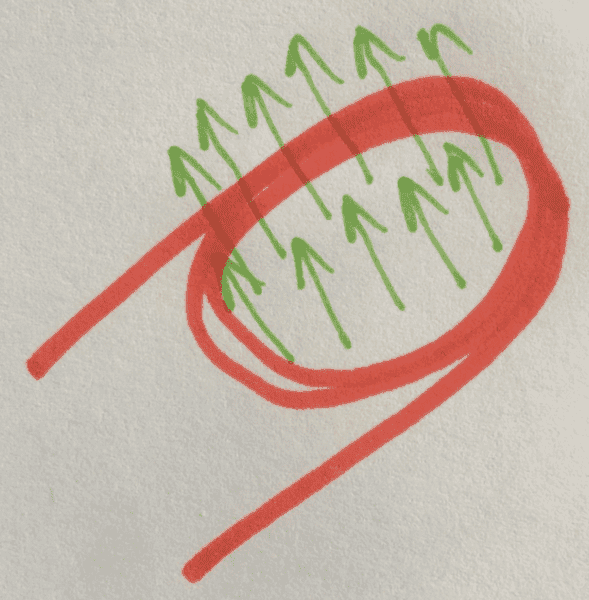
upload_2018-3-14_11-26-56.png


However in my generator (and to my knowledge, in most others), the interaction between the coils and the flux is a bit different. I am not sure how to define the area in my case, as the source of flux is not passing through the entire coil, but instead parallel to it. The sketch below describes the basic principle of my generator:
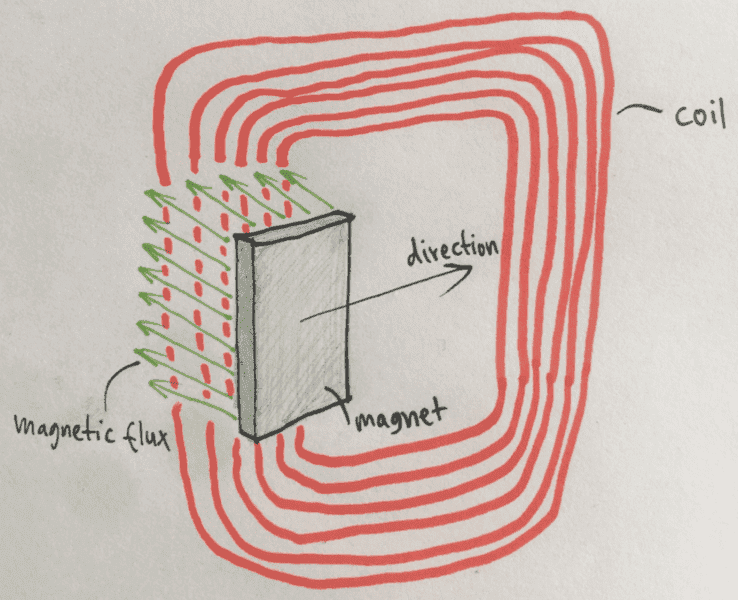
upload_2018-3-14_11-28-29.png


I just assumed that the area is that of the coil section affected by the magnet, instead of the total coil area, as shown here:
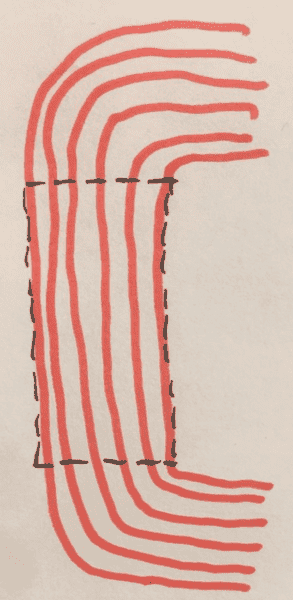
upload_2018-3-14_11-41-2.png


My question is, if the above assumption is correct?

Any help is greatly appreciated
 

Attachments

  • upload_2018-3-14_11-26-56.png
    upload_2018-3-14_11-26-56.png
    111.7 KB · Views: 1,369
  • upload_2018-3-14_11-28-29.png
    upload_2018-3-14_11-28-29.png
    113.7 KB · Views: 1,798
  • upload_2018-3-14_11-41-2.png
    upload_2018-3-14_11-41-2.png
    45.8 KB · Views: 1,151
Engineering news on Phys.org
The general form of the Faraday's law has a differential form - which in turn means you usually need calculus to find the voltage. The non-differential version that you refer to is a very specific case, quite easy to apply when it works, but outside of its applicability it fails miserably (as you have just realized).
 
  • Like
Likes   Reactions: jim mcnamara, anorlunda and Frederik
Any text on machines covers this in detail. Learning the details of generator operation is too much for posting here.

Claude
EE
PhD student
 
What counts is the amount of flux encircled by the coil. That's why your statement above says
Frederik said:
number of turns in the coil, times the change in flux
Note it says flux not flux density.

Flux is measured in Webers.

Frederik said:
(external magnetic field times area of coil)
That infers you are thinking of the magnetic field in terms of flux density , which is Teslas and usually represented by uppercase B,
instead of flux which is Webers usually represented by Greek letter "phi" Φ.
A Tesla is one Weber per square meter.
That's why you multiply by area, to change from Teslas that are present both inside and outside your coil to Webers that are encircled by it.

Think in Webers and your conundrum should disappear.

Frederik said:
I just assumed that the area is that of the coil section affected by the magnet, instead of the total coil area, as shown here:
Nope. It's however many Webers the coil encircles. In your second picture with magnet smaller than coil you'll very soon encircle all the Webers, as in your first picture.

Being aware of that distinction should help you digest whatever textbook you consult.
B is not Φ so pay close attention to which symbol is in the author's formula.

old jim
 
  • Like
Likes   Reactions: cabraham
How would you calculate the alternating current induced in the coils?
 

Similar threads

Replies
12
Views
3K
  • · Replies 6 ·
Replies
6
Views
1K
Replies
10
Views
2K
  • · Replies 3 ·
Replies
3
Views
2K
Replies
5
Views
4K
Replies
24
Views
5K
  • · Replies 8 ·
Replies
8
Views
5K
  • · Replies 2 ·
Replies
2
Views
2K
  • · Replies 5 ·
Replies
5
Views
2K
Replies
7
Views
5K