SUMMARY
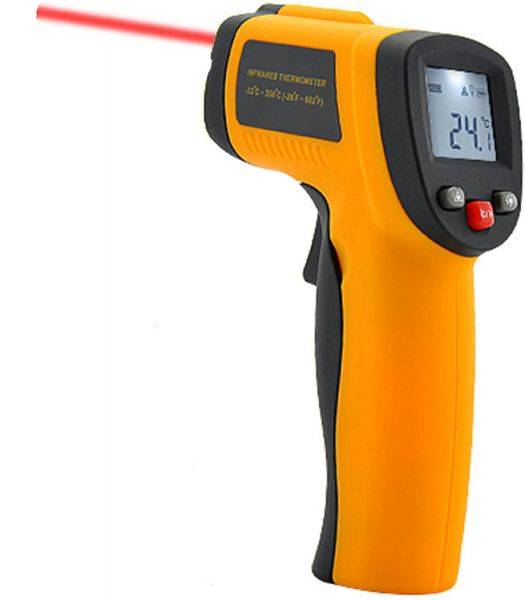
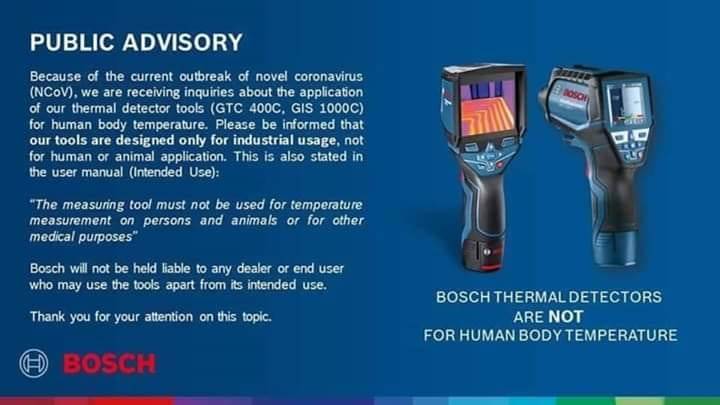
The discussion clarifies the fundamental differences between infrared thermometers and thermal imagers. Infrared thermometers are specifically calibrated to measure human body temperature, while thermal imagers detect thermal radiation without precise calibration for temperature measurement. The accuracy of thermal imagers can vary significantly, often within a range of 2-3 degrees Celsius, making them unsuitable for medical applications. Additionally, the emissivity of objects affects temperature readings, with infrared thermometers designed to account for human skin emissivity, unlike industrial thermal imagers.
PREREQUISITES
- Understanding of infrared thermometers and their calibration methods.
- Knowledge of thermal imaging technology and its applications.
- Familiarity with the concept of emissivity and its impact on temperature measurements.
- Basic principles of blackbody radiation and electromagnetic wave emission.
NEXT STEPS
- Research the calibration techniques used in infrared thermometers for accurate body temperature measurement.
- Study the principles of thermal imaging technology, focusing on microbolometers and pixel temperature detection.
- Explore the effects of emissivity on temperature readings in various materials and conditions.
- Investigate the differences between Surface mode and Body mode in infrared thermometers and their algorithms.
USEFUL FOR
This discussion is beneficial for healthcare professionals, engineers in thermal imaging technology, and anyone involved in temperature measurement and monitoring, particularly in medical and industrial settings.