Is it possible to have water levels at different heights without a pump?

  • Context: Undergrad 
  • Thread starter Thread starter StefanBoon
  • Start date Start date
  • Tags Tags
    Levels Pump Water
Click For Summary
SUMMARY

The discussion confirms that it is not feasible to maintain different water levels in two tubes without a pump due to the principles of fluid dynamics. Specifically, the pressures exerted by air and water must be balanced; otherwise, the water level will either rise or fall. The concept of an 'Air Lock' is introduced, explaining that trapped air can support water columns in certain configurations, but this does not allow for stable height differences without additional mechanisms. A practical note emphasizes the need for narrow tubes and a free-moving piston to achieve any semblance of stability in water levels.

PREREQUISITES
  • Understanding of fluid dynamics principles
  • Knowledge of pressure balance in liquids
  • Familiarity with the concept of an 'Air Lock'
  • Basic principles of siphoning and tube configurations
NEXT STEPS
  • Research fluid dynamics and pressure balance in liquids
  • Explore the mechanics of 'Air Locks' in plumbing systems
  • Study the design and function of free-moving pistons in fluid systems
  • Investigate the effects of tube diameter on fluid pressure and flow
USEFUL FOR

Engineers, physicists, and anyone interested in fluid mechanics or plumbing systems will benefit from this discussion, particularly those exploring the dynamics of water levels in varying tube configurations.

StefanBoon
Messages
2
Reaction score
0
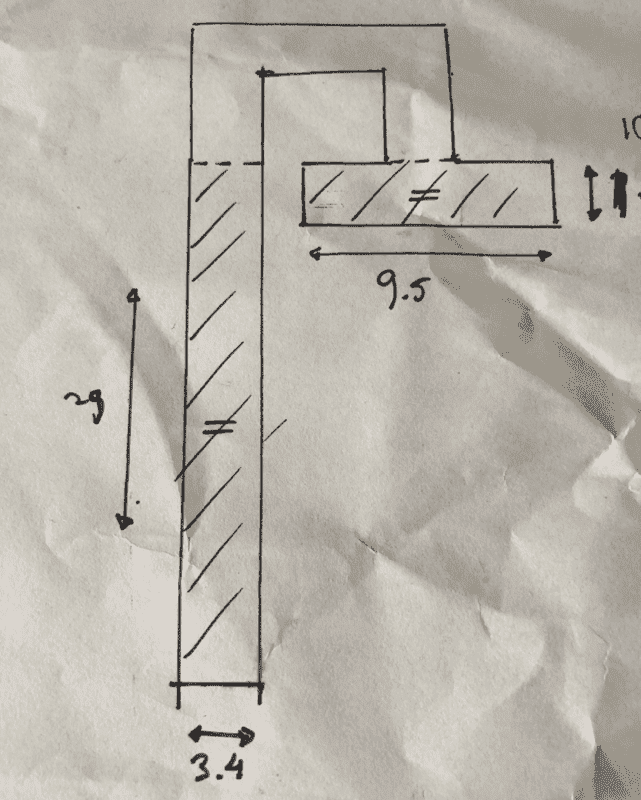
I wonder if air can remain trapped under a structure that has a deep and a shallow tube. I have already tested with a prototype whether increasing volume in the shallower tube works. Air bubbles came out on the short side, so this doesn't work. Is there any way to realize this concept.
1598878371913.png
1598877526956.png
 
Last edited:
Physics news on Phys.org
The quick answer to your question is no, but it is worth spending some time thinking about why.

Think about the forces acting on the water right at the surface: if the downwards pressure from the air above is not exactly balanced by the upwards pressure from the water immediately underneath, the level will either fall (air pressure is greater) or rise (water pressure is greater). What can you say about the air and water pressures above the two tubes?
 
  • Like
Likes   Reactions: StefanBoon
Nugatory said:
The quick answer to your question is no, but it is worth spending some time thinking about why.

Think about the forces acting on the water right at the surface: if the downwards pressure from the air above is not exactly balanced by the upwards pressure from the water immediately underneath, the level will either fall (air pressure is greater) or rise (water pressure is greater). What can you say about the air and water pressures above the two tubes?
Thank you, very much appreciated. What do you mean with the last sentence 'What can you say about the air and water pressures above the two tubes?'

Do you mean that it can work if the pressures of the air above is the same as de water at the surface of the short tube?
 
Last edited:
StefanBoon said:
I wonder if air can remain trapped under a structure that has a deep and a shallow tube.
First of all I have to point out a very basic fact that it is not the diameter of the pipe that affects pressure - just the height of the vertical column.

I'm not sure if the image is the exact layout where what you describe happens (or doesn't happen) It sounds as if you are describing what's known as an 'Air Lock'. In a situation where there is air in an inverted U, the 'bubble' of air can be longer than the differences in the two water levels. The section of trapped air floats and supports the water columns so you don't get a simple siphon effect. (Plumbers come across this problem all the time where there are long horizontal runs of pipe in low pressure systems.

Practical Note: your drawing shows a flat horizontal surface at the bottom of the upper section. This is not stable and one side or the other will fall after a very short time. You would need a free moving piston to keep that water surface flat and level. You need narrow tubes to make this work.
 
  • Like
Likes   Reactions: StefanBoon and Lnewqban

Similar threads

  • · Replies 17 ·
Replies
17
Views
5K
Replies
1
Views
917
  • · Replies 8 ·
Replies
8
Views
2K
  • · Replies 8 ·
Replies
8
Views
1K
  • · Replies 2 ·
Replies
2
Views
2K
Replies
6
Views
2K
  • · Replies 15 ·
Replies
15
Views
4K
  • · Replies 4 ·
Replies
4
Views
2K
Replies
50
Views
7K
Replies
1
Views
2K