Launching a Ball with Precision: A Projectile Motion Project

Click For Summary

Discussion Overview

The discussion revolves around the challenges and considerations involved in launching a small ball using projectile motion principles, specifically through the use of rail guns and coil guns. Participants explore various methods, safety concerns, and the feasibility of scaling down these technologies for a classroom project.

Discussion Character

  • Exploratory
  • Technical explanation
  • Debate/contested
  • Homework-related

Main Points Raised

  • One participant expresses interest in using a rail gun for a projectile motion project but questions how to achieve the necessary current levels, noting that 100 amps is insufficient for effective operation.
  • Another participant argues that a serious rail gun would require currents on the order of 10^6 amps, suggesting that discharging large capacitor banks or using pulsed alternators are potential methods to achieve such currents.
  • Some participants mention the importance of safety and the complexity involved in building rail guns, with one suggesting that coil guns might be a safer alternative, despite being less interesting.
  • There is a discussion about the scaling of rail guns, with one participant questioning whether it is possible to scale down the technology for a simple demonstration of projectile motion.
  • Another participant emphasizes that even scaled-down versions would still require dangerous amounts of current to be effective, making them unsuitable for classroom settings.
  • One participant introduces the concept of using an actuator as a simpler and safer method to launch the ball, describing its operation and potential applications.
  • Concerns are raised about the complexity and safety of coil guns, with a participant noting that they still require significant current and switching circuitry.
  • There is a mention of supercapacitors in relation to rail guns, although the current status of their use is unclear to one participant.
  • A participant warns that discussing rail guns may be inappropriate due to safety concerns.

Areas of Agreement / Disagreement

Participants generally agree on the safety concerns associated with rail guns and the challenges of achieving the necessary current levels. However, there are competing views on the feasibility of scaling down rail guns and the complexity of coil guns, with no consensus on the best approach for the project.

Contextual Notes

Participants acknowledge the limitations of using high currents in classroom settings and the potential dangers associated with rail guns and coil guns. There are unresolved questions regarding the practicality of scaling down these technologies for educational purposes.

CoolGod
Messages
8
Reaction score
0
I'm currently working on a project for projectile motion and my teacher wants to see us launch a round ball about marble(maybe smaller) sized into a ring clamp on a retort stand somewhere around the room. She suggest we all use "gravity" (a simple ramp that let's a ball slide down and shoot up) but I'm looking for something cooler and potentially more precise.
I read up on rail gun and don't know how to start it.
I know the fundamental principles behind it and how it works but
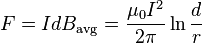
accord to the formula i found on wikipedia http://en.wikipedia.org/wiki/Railgun#Railgun_design
0d3c3f055811f0f59b8f6bd75fa74254.png

I'm not even close to getting 1 Newton. In order to do that I need like 100+ amps. I'm wondering how do people get 100 amp through the conductors. I know it has to do with capacitors and I've messed around with microelectronics before (arduino, small scale pic projects). Can someone fill me in on how to generate such force. I'm not looking for 10 N, 1 N is probably all I need.
 
Engineering news on Phys.org
How do people get 100 amps through the conductors? For a serious rail gun, 100 amps is far too low. You need to be talking of values on the order of 10^6 amps for a really effective rail gun (which means that this is not suitable for your class room project).

There are a couple of ways to get these seriously large currents. The obvious way is to discharge a very large capacitor bank simultaneously. For this we are talking about many farads (that's right, integer farads) of capacitance. This has been done in a number of places and it works. It is extremely expensive to put together such large cap banks, and they do wear out with time, but they do work and they are relatively simple in concept.

The more interesting way is what is called the pulsed alternator. As the name implies, this is an alternator, an AC machine, which is brought up to speed with but with no magnetic field in the the machine. It has a rather massive rotor for a large moment of inertia and the ability to store a lot of kinetic energy. The armature windings (on the stator) consist of only a very few turns (4 to 8 turns total) so as to be very low inductance. With the machine spinning, the field current is energized (from an on-board battery or capacitor) to magnetize the field. This generates potential in the armature windings as the rotor turns. When the external circuits are closed, allowing current to flow out of the machine, each phase in sequence dumps magnetic energy out of the armature circuit. These current flows are passed through a set of diodes to rectify and switch them, so that they are utilized one by one, to combine into one time varying DC current of several mega-amps out of the machine. As the discharge is happening, the rotor rpm is dropping because kinetic energy is being converted directly into electrical output. Typically the speed drop is about 15% of max rotor speed by the end of discharge.

One of the leading research centers for this sort of equipment is the Center for Electro-Mechanics, (CEM), The University of Texas at Austin. They have done some absolutely amazing work with such machines and with rail guns.
 
there's lots of documented builds online, so now's a good time to work on your google-fu

i had like a 200 word write up, but then decided not to include it, since it doesn't cover any safety concerns. as you learn more about the things I'm listing, you'll also learn the safety concerns involved with each one.

capacitor banks
high quality rails
aerodynamically efficient projectile
optional coolant

good luck!
 
thank you for your comment oldEngr63. I was still wondering about scaling issues. Building rail guns with 10^6 amps is a bit overkill for this simple project. My idea is kind of hobby/fascination based. I know these railguns can be scaled up into much more powerful weapons but what about scaling down. Scaling it down to show simple projectile motion and such. Is it possible?
 
You still need dangerous amounts of current in order to generate enough force to move anything of interest. Thus they do not scale down very well. With only 10^5 amps they fire things like 1 cm cubes of lucite (which is not much mass at all). Of course they do get them up to some pretty high velocities, but the point is, it takes more current that you can safely deal with in a class room setting to move anything.
 
lol. Thank you for your explanations. Safety is still very important to us. Would coil guns be much safer to build? Although less interested in coil guns, it's still a linear motor of sort.
Also just for fun, are supercapacitors used in railguns?>
 
Probably the most reliable method would be the "actuator'.

If you have a piece of iron partly inside a coil, and the coil is activated, the iron will be pulled to the centre of the coil.

This is the loud "clunk" noise you have probably heard from washing machines.

This movement is rapid and applies good force to anything connected to it. It is usually spring loaded so that the iron rod returns to the start position when power is removed.
It can be used to control liquid flow, to move levers, operate an electrical switch or anything else that needs a lot of force controlled by an electric current.

So, in this case, you would have a setup like that but attach an extra rod to hit the ball with. This should be non magnetic and possibly aluminum or plastic.
 
Coil guns do not require as much current, but they are still complex and require a lot of switching circuitry. They are not easy to build and operate.

I know that there has been an interest in super CAPs for rail guns, but I don't know where that stands now. I have been away from all of that for about 8 years now, and the technology marches own without us.

The actuator recommendation is a very good one, and I suggest you follow up on it. That is a very simple electromagnetic machine, but you can learn a lot from building one.
 
Sorry, rail guns are a bit dangerous to be discussed here on the PF.
 

Similar threads

  • · Replies 38 ·
2
Replies
38
Views
6K
  • · Replies 16 ·
Replies
16
Views
2K
  • · Replies 10 ·
Replies
10
Views
4K
  • · Replies 1 ·
Replies
1
Views
2K
  • · Replies 3 ·
Replies
3
Views
2K
  • · Replies 4 ·
Replies
4
Views
2K
  • · Replies 13 ·
Replies
13
Views
3K
  • · Replies 21 ·
Replies
21
Views
3K
  • · Replies 7 ·
Replies
7
Views
2K
  • · Replies 4 ·
Replies
4
Views
2K