Modelling of tranformer and MV cable for harmonic studies

Click For Summary

Discussion Overview

The discussion revolves around the modeling of a dyn5 630 kVA transformer and a 20 kV NA2XS(F)2Y cable for harmonic analysis in a research project. Participants seek specific parameters such as leakage reactance, resistance of copper losses for the transformer, and sequence components (resistance, reactance, susceptance) for the cable.

Discussion Character

  • Exploratory
  • Technical explanation
  • Debate/contested
  • Mathematical reasoning

Main Points Raised

  • One participant requests specific parameters for modeling a transformer and cable for harmonic analysis.
  • Several participants suggest that the required data can typically be found in the datasheets provided by manufacturers.
  • Another participant notes that the data should be specific to the transformer and cable in question, emphasizing the need for manufacturer-specific information.
  • A participant mentions that they have contacted the manufacturer but have not received a response, and they are encouraged to seek information from forums and other manufacturers.
  • Discussion includes the modeling approach using DigSilent PowerFactory software, where geometric data for the cable is used to generate impedance and admittance matrices.
  • Participants discuss the significance of frequency-dependent parameters such as leakage inductance and copper losses for transformer modeling.
  • There is a query about the meaning of "relative transformer resistance" and its implications for modeling.
  • Mathematical calculations related to resistance at different temperatures and the skin effect are presented, along with references to literature for further insights.

Areas of Agreement / Disagreement

Participants generally agree that manufacturer datasheets are essential for obtaining the required parameters. However, there is no consensus on how to proceed in the absence of this data, and multiple approaches to modeling the transformer and cable are discussed without resolution.

Contextual Notes

Participants express uncertainty regarding the frequency characteristics of the transformer and the implications of various modeling approaches. There are references to specific calculations and assumptions that may not be universally applicable.

Who May Find This Useful

Researchers and engineers involved in electrical engineering, particularly those focused on harmonic analysis, transformer modeling, and cable design.

waqasakbar323
Messages
5
Reaction score
1
TL;DR
For my research project, modelling is needed for dyn5 630 kVA transformer and 20 kV cable NA2XS(F)2Y to do harmonic analysis. For that i need leakage reactance, and resistance of copper losses for transformer. And following parameters for 20 kV cable are also needed.

Positive, negative and zero sequence of resistance, reactance and susceptance.

Can anyone help in it?
For my research project, modelling is needed for dyn5 630 kVA transformer and 20 kV cable NA2XS(F)2Y to do harmonic analysis. For that i need leakage reactance, and resistance of copper losses for transformer. And following parameters for 20 kV cable are also needed.

Positive, negative and zero sequence of resistance, reactance and susceptance.

Can anyone help in it?
 
Engineering news on Phys.org
Welcome to PF. :smile:

It seems like all of that information would be in the datasheets for the transformer and cable. What have you found so far in your searching? Who is a typical manufacturer of such transformers and cables?
 
berkeman said:
It seems like all of that information would be in the datasheets
@berkeman is correct. You don't want data for any transformer, any cable. You want it for a specific transformer and cable. For that, you need data from the manufacturer, not from Internet forums.
 
  • Like
Likes   Reactions: DaveE and berkeman
berkeman said:
Welcome to PF. :smile:

It seems like all of that information would be in the datasheets for the transformer and cable. What have you found so far in your searching? Who is a typical manufacturer of such transformers and cables?
Thanks for your reply. I contacted the manufacturer but its been more than a week, didnt hear from them. My supervisor in university said you can ask on forums and can approach other manufacturers also. Actually this data was to be provided by my research institute where i am working as they have their own lab which has external 20 kV grid connection at one end followed by 20 kV MV cable, 630 kVA transformer and then PV park. My first step is to model the lab components. Because my project goal is to model for harmonic studies. So frequency response analysis should be performed by my institute in lab and the required data would have been used for modelling and simulation. But issue is, my institute did not perform frequency analysis. Now i am instructed to find a way to model MV cable and transformer in any way. I found somewhere that frequency scan for each component will help me to find
 
For oil filled type and dry type transformer see attached some catalogues
OIL FILLED TRANSFORMER CATALOGUE.jpg
 

Attachments

  • Informative
Likes   Reactions: DaveE and berkeman
For the cable this file will be more specific
 

Attachments

Babadag said:
For oil filled type and dry type transformer see attached some catalogues
That's interesting. What do they mean by measuring Impedance in %? Does that represent the Leagage Inductance divided by the Magnetizing Inductance maybe? ##\frac{L_k}{L_m}##

1651680709074.png
 
In fact, this is the short -circuit impedance related to the nominal impedance.
The rated impedance it is Zrat=Vrat^2/Srat and Zsc=R+jX |Zsc|=sqrt(R^2+X^2) uk%=|Zsc|/Zrat*100
 
  • Informative
Likes   Reactions: berkeman
Actually, uk=Zsc*Irat it is the measured short-circuit voltage, indeed.
In short-circuit case the secondary impedance is very low so you may neglect the main magnetic flux impedance [considered infinite].
R it is the equivalent resistance [it depends on which side is considered the applied voltage Vrat] for instance if Vrat it is primary voltage, then k=Vp/Vs and then R=Rp+Rs*k^2 at conductor rated temperature.
X=leakage magnetic flux reactance=Xp+k^2*Xs
 
  • #10
Babadag said:
In short-circuit case the secondary impedance is very low so you may neglect the main magnetic flux impedance [considered infinite].
Considered infinite , because for a shorted secondary the primary cannot achieve flux saturation in the core as the flux increases secondary current increases and therefore primary current increasing doesn't lead to an increased core flux at some point but instead at ever increasing secondary current?
And then whatever gives out first, either the primary supply or the secondary melts and becomes open circuit I assume.
 
  • #11
Babadag said:
For oil filled type and dry type transformer see attached some cataloguesView attachment 300994View attachment 300994
Thanks for your reply.
I am using DigSilent PowerFactory software for modelling and simulation. I would like to explain more that which approach i am using.
For MV cable:
PowerFactory suggest to model cables based on geometric data for harmonic analysis. I will be inserting all geometric data, conducting, insulating layers information and cable arrangement (trefoil or flat space). In result, PowerFactory will generate impedance and admittance matrix which can be used to validate resistance, reactance and susceptance from data sheet. I think Cable modelling is pretty clear now. All i wanted was manufacturer parameters which you sent. Thanks for that. If anything is missing according to you, you can give your feedback.
For transformer:
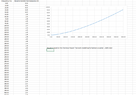
Do you have idea how transformer is modeled for simulation for harmonic studies? What i found is, series leakage inductance and copper losses are mainly frequency dependent. So to model it, one can get these parameters from manufacturer. It should be in tabulated form as sample shown.But unfortunately, the manufacturer of transformer in our lab has not performed frequency analysis on this transformer. Now my supervisor says, to get these leakage inductance and copper losses based on frequency from any other source (literature, simulation software developers, open forums or any other manufacturers). That is why i am using this forum. But the parameters you mentioned does not seem like a frequency scale characteristics of transformer. What is your comments? Maybe our discussion can give my work a favourable direction. Thanks
 

Attachments

  • Sample-FREQUENCY SCALE CHARACTERISTICS OF TRANSFORMER.PNG
    Sample-FREQUENCY SCALE CHARACTERISTICS OF TRANSFORMER.PNG
    20.9 KB · Views: 157
  • #12
About the table and diagram attached:
I don't know what is "relative transformer resistance r(f)". In my opinion it could be the resistance of 75oC with respect to 105oC[ class A insulation].
However, for 630 kVA 0.4kV transformer X/R=5 and current density j=1.3 A/mm^2 copper conductor Irat=630/sqrt(3)/0.4 then Irat/j=700 mm^2 secondary copper conductor. Then 1m at 20oC copper conductor will be:
R[20oC,1m]=1/58/700=2.463E-05 ohm/m
R(105oC)=(234.5+105)/(234.5+20)*2.463E-05=3.286E-05
R(75oC)=0.911*R(105oC)=3E-05
If the conductor temperature remains 75oC then following IEC 60287-1-1 for skin effect we get approximately the table results.
For instance, for 100Hz xs=sqrt(8*pi()*100/3E-05/10^7)=2.894 ; ys=xs^4/(192+0.8*xs^4)=0.2828
r=(1+0.2828)*0.91=1.169
No proximity effect is taken into consideration.
If we shall follow the dr.Ray Ridley publication [see attached file] the proximity effect will be very high.
 

Attachments

Similar threads

  • · Replies 2 ·
Replies
2
Views
2K
Replies
1
Views
3K
  • · Replies 4 ·
Replies
4
Views
3K
Replies
2
Views
10K
  • · Replies 3 ·
Replies
3
Views
16K
Replies
2
Views
856
  • · Replies 8 ·
Replies
8
Views
1K
  • · Replies 27 ·
Replies
27
Views
11K
  • · Replies 13 ·
Replies
13
Views
4K
Replies
9
Views
6K