Plot some 2d graphs in a 3d fashion

Click For Summary

Discussion Overview

The discussion revolves around methods for plotting 2D graphs in a 3D fashion using software tools like Excel, MATLAB, and gnuplot. Participants explore various approaches and share insights on how to achieve the desired visual effect.

Discussion Character

  • Technical explanation, Exploratory, Homework-related

Main Points Raised

  • One participant inquires about plotting 2D graphs in a 3D style using Excel or MATLAB.
  • Another participant suggests that gnuplot is the easiest tool for this task.
  • A participant expresses unfamiliarity with gnuplot and reiterates the desire for solutions using Excel or MATLAB.
  • One participant provides a detailed method for using Excel, explaining how to create offsets for each curve to achieve a 3D effect, including the use of formulas like ROW() and COLUMN() to automate the offsetting process.
  • A later reply acknowledges the provided method as helpful and expresses appreciation for the insight.

Areas of Agreement / Disagreement

Participants do not reach a consensus on the best tool for plotting, as some prefer Excel or MATLAB while one suggests gnuplot. The discussion remains open with multiple approaches being considered.

Contextual Notes

The discussion includes various assumptions about the capabilities of different software and the specific versions of Excel, which may affect the applicability of the proposed methods.

Si14
Messages
75
Reaction score
0
Hi,

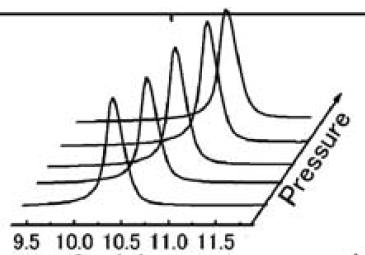
How can I plot some 2d graphs in a 3d fashion like the following picture using excel or matlab?

2Molf.jpg


Any idea is appreciated.
 
Physics news on Phys.org
gnuplot is easiest
 
I don't know how to work with gnuplot. If anyone knows how to plot these with excel/matlab, that would be great.
 
Different versions of Excel do things differently, so see if you can adapt this to yours.

You probably want the Chart Wizard to create a line graph, but before you do that you need to know what data you are going to graph.

Suppose your data points for your first curve are in A1:A10, your second curve are in B1:B10, your third curve are in C1:C10, etc. But you want to include an x and y offset for the second curve, double that offset for the third curve, etc. The offset you want to have will shift each curve up and to the right to give the 3D impression you are looking for. So for the second curve you substitute x-1 for every x (to shift it right) and you add 1 to the function (to shift it up). Then use -2 and +2 for the third curve, etc. This sounds like a lot of work. Maybe you can add constants to each of your cells to make this work. Or maybe there is a trick you might use. ROW() in a formula will give you the number of the row the cell is in, COLUMN() in a formula will give you the number of the column the cell is in. So if you insert ROW() or COLUMN() in your formulas in just the right places then you might be able to get each one offset by just what you need so that when you plot a Series of columns in Chart Wizard, one for each curve, it will give you your desired 3D effect.

Now you are probably going to have to experiment with this until you begin to see how to get it to do what you want. Start simple and make small changes until you hopefully see how to get this to do what you want
 
Brilliant. I didn't think about it that way. Thanks man.
 

Similar threads

  • · Replies 5 ·
Replies
5
Views
3K
  • · Replies 3 ·
Replies
3
Views
3K
  • · Replies 1 ·
Replies
1
Views
2K
  • · Replies 4 ·
Replies
4
Views
4K
  • · Replies 5 ·
Replies
5
Views
3K
  • · Replies 6 ·
Replies
6
Views
2K
  • · Replies 1 ·
Replies
1
Views
2K
  • · Replies 3 ·
Replies
3
Views
3K
  • · Replies 8 ·
Replies
8
Views
3K
  • · Replies 2 ·
Replies
2
Views
2K