TachyonLord
- 54
- 6
Basic Procedure
The experiment basically involves finding the null point on the Carey Foster's bridge with the PRT as the unknown resistance and using a Resistance box as the variable resistance.

In the above diagram, P and Q are 2 fixed resistors of equal resistances.
For obtaining the first balance length l1,
We take X as the PRT and Y as the variable resistance.
Similary, for obtaining the second balance length l2,
We take X as the variable resistance and Y as the PRT, i.e. we interchange their positions.
The experiment demands us to plot a graph of (l2 - l1) vs R(Variable Resistance), which is a straight line, whose slope is the inverse of the Resistance per length of the wire used in the bridge and the x intercept indicates the Resistance of the PRT.
We repeat the entire procedure th6rice for all three temperatures. For Steam point, we immerse the PRT in boiling water(kept on heating plate) and repeat the same procedure.
Ideal Graph
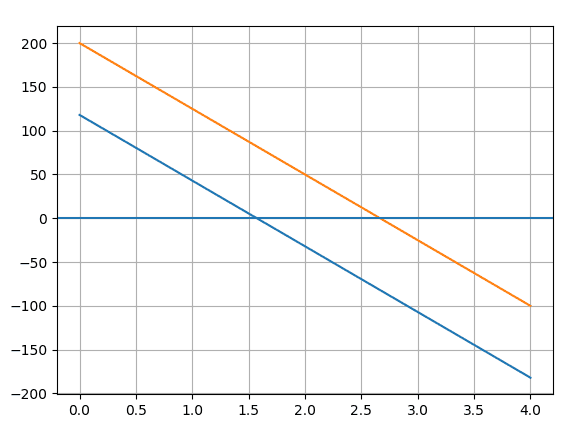 Orange : Steam Point
Blue : Room Temperature
Problem
The discrepancy is arising in my result as once the data for both Room Temperature and steam point are plotted, the Staeam point curve seems to have a lower resistance than the room temperature. I've repeated the experiment 3 times and the result still remains the same.
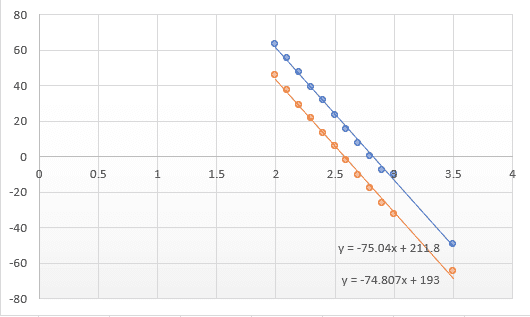
It would be really nice if anyone could help me figure out why this is happening.
Edit1 : I did end up getting the steam point resistance being more than the Room Temp when I did each of the procedures on 2 separate days.
The experiment basically involves finding the null point on the Carey Foster's bridge with the PRT as the unknown resistance and using a Resistance box as the variable resistance.
In the above diagram, P and Q are 2 fixed resistors of equal resistances.
For obtaining the first balance length l1,
We take X as the PRT and Y as the variable resistance.
Similary, for obtaining the second balance length l2,
We take X as the variable resistance and Y as the PRT, i.e. we interchange their positions.
The experiment demands us to plot a graph of (l2 - l1) vs R(Variable Resistance), which is a straight line, whose slope is the inverse of the Resistance per length of the wire used in the bridge and the x intercept indicates the Resistance of the PRT.
We repeat the entire procedure th6rice for all three temperatures. For Steam point, we immerse the PRT in boiling water(kept on heating plate) and repeat the same procedure.
Ideal Graph
Blue : Room Temperature
Problem
The discrepancy is arising in my result as once the data for both Room Temperature and steam point are plotted, the Staeam point curve seems to have a lower resistance than the room temperature. I've repeated the experiment 3 times and the result still remains the same.
It would be really nice if anyone could help me figure out why this is happening.
Edit1 : I did end up getting the steam point resistance being more than the Room Temp when I did each of the procedures on 2 separate days.