Semantic question on cell circuit symbol

Click For Summary
SUMMARY

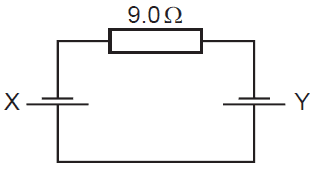
The discussion centers on the circuit symbol for a cell, specifically addressing the ambiguity surrounding the representation of cell ##Y## in relation to cell ##X##, where the electromotive force (emf) of cell ##X## exceeds that of cell ##Y##. It clarifies that the larger bar of cell ##Y##, which is at a higher potential, is designated as the anode, while the smaller bar is the cathode, based on electrochemical principles. The conversation emphasizes that the circuit symbol's orientation does not change regardless of whether the battery is charging or discharging, and the larger bar is not always indicative of higher potential in all contexts.

PREREQUISITES
  • Understanding of electrochemistry principles, particularly anode and cathode definitions.
  • Familiarity with circuit symbols and their meanings in electronic schematics.
  • Knowledge of electromotive force (emf) and its implications in circuit design.
  • Basic concepts of battery operation, including charging and discharging states.
NEXT STEPS
  • Research the standard circuit symbols used in electronics and their interpretations.
  • Study the principles of electrochemistry to deepen understanding of anode and cathode roles.
  • Explore the effects of charging and discharging on battery symbols and circuit representation.
  • Learn about the conventions in circuit design regarding potential differences and current flow.
USEFUL FOR

Electronics students, electrical engineers, and anyone involved in circuit design or battery technology will benefit from this discussion, particularly those seeking clarity on circuit symbols and their electrochemical implications.

etotheipi
Suppose the emf of cell ##X## exceeds that of ##Y##, such that conventional current is driven in in an anti-clockwise direction.
1581249040934.png


There is a little ambiguity in my mind about the circuit symbol for ##Y##. In the above setup, the larger bar of ##Y## is at higher potential and the smaller bar at lower potential, however the larger bar is in this case the anode and the smaller bar the cathode, determined from an electrochemistry standpoint.

Often the larger bar is the cathode and the one at higher potential, and there is no distinction to be made. However, in other cases, is it convention that the larger bar is always the one at higher potential, whether or not it is the cathode/anode? I'm just checking since I can't find a reference anywhere!
 
Last edited by a moderator:
Engineering news on Phys.org
The symbol represents the potential of the battery,
One does not turn the symbol around whether the battery is charging or discharging.
 
  • Like
  • Informative
Likes   Reactions: jim mcnamara and etotheipi
256bits said:
The symbol represents the potential of the battery,
One does not turn the symbol around whether the battery is charging or discharging.

Awesome, thanks for the quick reply!
 
  • Like
Likes   Reactions: 256bits

Similar threads

  • · Replies 3 ·
Replies
3
Views
3K
  • · Replies 19 ·
Replies
19
Views
3K
Replies
3
Views
3K
  • · Replies 4 ·
Replies
4
Views
7K
  • · Replies 1 ·
Replies
1
Views
2K
  • · Replies 10 ·
Replies
10
Views
4K
  • · Replies 1 ·
Replies
1
Views
8K
Replies
1
Views
3K
  • · Replies 5 ·
Replies
5
Views
32K
  • · Replies 7 ·
Replies
7
Views
7K